Some work on the menu system to brighten my mood a little bit. No mouse support yet.
The United States Needs Fewer Bus Stops
American buses in cities like New York and San Francisco crawl along at about eight miles per hour – barely faster than a brisk walk – and one surprisingly simple fix could make them faster without requiring new infrastructure or controversial policy changes. The issue, according to a Works in Progress analysis, is that US bus stops sit far too close together.
Mean spacing in American cities … ⌘ Read more
Anthropic’s Index Shows Job Evolution Over Replacement
Anthropic’s fourth installment of its Economic Index, drawing on an anonymized sample of two million Claude conversations from November 2025, finds that AI is changing how people work rather than whether they work at all. The study tracked usage across the company’s consumer-facing Claude.ai platform and its API, categorizing interactions as either automation (where AI co … ⌘ Read more
Linux Patches Bring Mainline Kernel Support For The ASUS IPMI Expansion Card
DeviceTree patches worked on recently allow for the mainline Linux kernel to run on the ASUS “Kommando” IPMI Expansion Card. This is interesting for opening up new possibilities for this external IPMI/BMC expansion card but too bad that less than three years after launching it’s difficult to find… ⌘ Read more
↳
In-reply-to
»
Frustration level: Through the roof.
⤋ Read More
@prologic@twtxt.net Work and the general state of (gestures broadly) everything.
House Sysadmin Stole 200 Phones, Caught By House IT Desk
An anonymous reader quotes a report from Ars Technica: According to the government’s version of events, 43-year-old Christopher Southerland was working in 2023 as a sysadmin for the House Committee on Transportation and Infrastructure. In his role, Southerland had the authority to order cell phones for committee staffers, of which there are around 80. But during th … ⌘ Read more
UK Scraps Mandatory Digital ID Enrollment for Workers After Public Backlash
The UK government has abandoned its controversial plan to require workers to sign up for a mandatory digital ID system to prove their eligibility to work in the country, opting instead to move existing document-based checks – such as biometric passports – fully online by 2029.
The reversal follows a dramatic collapse in p … ⌘ Read more
Widespread Verizon Outage Prompts Emergency Alerts in Washington, New York City
Verizon said on Wednesday that its wireless service was suffering an outage impacting cellular data and voice services. From a report: The nation’s largest wireless carrier said that its “engineers are engaged and are working to identify and solve the issue quickly.” Verizon’s statement came after a swath of social me … ⌘ Read more
New “Thames” Linux Accelerator Driver Posted Along With Companion Gallium3D Driver
Tomeu Vizoso as the open-source developer behind the “Rocket” driver for reverse-engineered Rockchip NPU support, Teflon as a Mesa framework for TensorFlow Lite and NPU uses, and various Etnaviv driver work, has announced his newest creation: Thames… ⌘ Read more
16 Part Epoxy
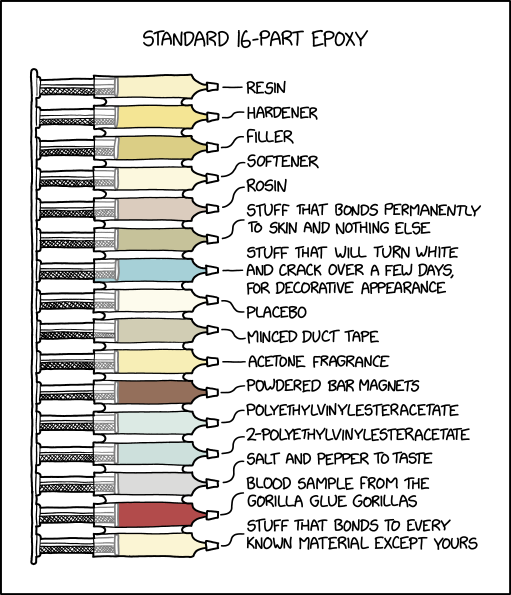 ⌘ Read more
Wine 11.0 Released
BrianFagioli writes: Wine 11.0 has officially landed, wrapping up a year of development with more than 6,000 code changes and a broad set of upgrades that touch gaming, desktop behavior, and long-standing architectural work. The biggest milestone is the completion of the new WoW64 model, which is now considered fully supported and allows 32-bit and even 16-bit applications to run in a cleaner way inside 64-bit prefixes. Wine also gains s … ⌘ Read more
Anthropic Invests $1.5 Million in the Python Software Foundation and Open Source Security
Python Software Foundation: We are thrilled to announce that Anthropic has entered into a two-year partnership with the Python Software Foundation (PSF) to contribute a landmark total of $1.5 million to support the foundation’s work, with an emphasis on Python ecosystem security. This investme … ⌘ Read more
FFmpeg Merges A Number Of Vulkan Improvements To Start 2026
FFmpeg developer Lynne has landed a number of Vulkan-related imporvements to this widely-used open-source multimedia library. Over the past year FFmpeg saw Vulkan shader-based decoding for more video formats, AV1 and VP9 extension work, performance improvements, and other work around Vulkan Video. It will be very exciting to see how FFmpeg delivers in 2026 with Vulkan Video and how the software ecosystem as a whole begins taking up this cross-platform, … ⌘ Read more
↳
In-reply-to
»
(This is a test. Will this work as it should?)
⤋ Read More
@bender@twtxt.net it works fine under jenny. Maybe it is a bug on Yarn?
Yes, if a twtxt contains something like “(This is a test. Will this work as it should?)”, it will show empty on Yarn.
LLVM/Clang 22 Feature Development Ends With Intel Nova Lake, Arm C1 & Ampere1C Support
LLVM/Clang 22 feature development ended overnight with the code now being branched and working toward a stable release likely by the end of February… ⌘ Read more
Meta Plans To Cut Around 10% of Employees In Reality Labs Division
Meta plans to cut roughly 10% of staff in its Reality Labs division, with layoffs hitting metaverse-focused teams hardest. Reuters reports: The cuts to Reality Labs, which has roughly 15,000 employees, could be announced as soon as Tuesday and are set to disproportionately affect those in the metaverse unit who work on virtual reality headsets … ⌘ Read more
Your colleague that’s happy to do the mundane parts of work: AWS announces frontier AI agents
In Las Vegas, AWS’s re:Invent 2025 conference showcased AI that doesn’t just assist, but acts autonomously, highlighting a profound shift in enterprise technology. ⌘ Read more
The modern world seems to want to separate the concepts of beauty and utility. We’re fine with having things that are aesthetic but don’ do anything useful, while the tools of society that get work done are often very ugly–visually, socially and metaphorically. Beauty without utility is worthless; utility without beauty is meaningless. We can’t treat them independently.
LLMinus Working On AI/LLM-Powered Merge Conflict Resolution For The Linux Kernel
Building off an initial request for comments (RFC) patch series posted during the winter holidays, an updated RFC patch series was posted this weekend for LLMinus. LLMinus is an effort led by NVIDIA Linux kernel engineer Sasha Levin to provide a large language model (LLM) assisted merge conflict resolution tool focused on Linux kernel development… ⌘ Read more
Linux 6.19-rc5 Brings Fix For Newer NVIDIA GPUs, Logitech HID++ For Anywhere 3S & Fixes
In addition to Linus Torvalds doing some vibe coding and more with his new “AudioNoise” project this week, Linux 6.19 kernel development ticked back up with the holidays having passed. A variety of fixes made it into today’s Linux 6.19-rc5 release in working toward v6.19 stable in early February… ⌘ Read more
Linux Consulting Firm Linutronix Recently Began A New Chapter
Some news that slipped under the radar prior to the holidays… Linutronix as the Linux consulting firm that has led the real-time “PREEMPT_RT” work and more within the Linux kernel – and Linutronix was acquired by Intel back in 2022 as an independent subsidiary – is beginning a “new chapter”… ⌘ Read more
Linux Lands Safeguard For RISC-V Against Another Microarchitectural Attack Vector
Increasingly complex RISC-V cores aren’t magically immune to the speculative execution / side-channel vulnerabilities that have rattled the x86_64 and ARM64 landscape for years. Following recent work on Spectre V1 handling for RISC-V in the Linux kernel, merged this weekend for Linux 6.19-rc5 is another RISC-V attack vector safeguard… ⌘ Read more
Linus Torvalds’ Latest Open-Source Project Is AudioNoise - Made With The Help Of Vibe Coding
In addition to Linus Torvalds’ recent comments around AI tooling documentation, it turns out in fact that Linus Torvalds has been using vibe coding himself. Over the holidays Linus Torvalds has been working on a new open-source project called AudioNoise that was started with the help of AI vibe coding… ⌘ Read more
Okay, I had heard of “River” before but I was not aware of this:
https://codeberg.org/river/river
River defers all window management policy to a separate window manager implementing the river-window-management-v1 protocol. This includes window position/size, pointer/keyboard bindings, focus management, window decorations, desktop shell graphics, and more.
This sounds promising and it follows the old X11 model. River does all the nasty Wayland work and I can make just the WM? 🤔🤯
AI-Powered Social Media App Hopes To Build More Purposeful Lives
A founder of Twitter and a founder of Pinterest are now working on
“social media for people who hate social media,” writes a Washington Post columnist.
“When I heard that this platform would harness AI to help us live more meaningful lives, I wanted to know more…”
Their bid for redemption is West Co. — the Workshop for Emotional and Spiritual … ⌘ Read more
AI Fails at Most Remote Work, Researchers Find
A new study “compared how well top AI systems and human workers did at hundreds of real work assignments,” reports the Washington Post.
They add that at least one example “illustrates a disconnect three years after the release of ChatGPT that has implications for the whole economy.”
AI can accomplish many impressive tasks involving computer code, documents or images. That has prompt … ⌘ Read more
Linux Working Around Audio Problems On The ASUS ROG Xbox Ally X
For those loading Linux on the ASUS ROG Xbox Ally X gaming handheld, there is currently audio quality issues, including gaps/dropouts in audio playback. A workaround is in the process of making its way to the Linux kernel until a proper solution can be sorted out… ⌘ Read more
How the Free Software Foundation Kept a Videoconferencing Software Free
The Free Software Foundation’s president Ian Kelling is also their senior systems administrator. This week he shared an example of how “the work we put in to making sure a program is free for us also makes it free for the rest of the world.”
During the COVID-19 pandemic, like everyone everywhere, the FSF increased its videoconferen … ⌘ Read more
↳
In-reply-to
»
Mu (µ) is coming along really nicely 🤣 Few things left to do (in order):
⤋ Read More
But hey! The read-eval-print-loop works!
Linux 7.0 Readying Improvement For Rust + LTO Kernel Builds
Alice Ryhl of Google has been working on an improvement to the Linux kernel code for inlining C helpers into Rust when making use of a Link-Time Optimized (LTO) kernel build. At least some of the patches are queued up for merging in the upcoming Linux 6.20~7.0 cycle for helping those enabling the Rust kernel support and also making use of the LLVM/Clang compiler’s LTO capabilities for greater performance… ⌘ Read more
↳
In-reply-to
»
@lyse Ah, the lower right corner is different on purpose: It’s where you can click and drag to resize the window. https://movq.de/v/cbfc575ca6/vid-1767977198.mp4 Not sure how to make this easier to recognize. 🤔 (It’s the only corner where you can drag, btw.)
⤋ Read More
@lyse@lyse.isobeef.org It’s not super comfortable, that’s right.
But these mouse events come with a caveat anyway:
ncurses uses the XM terminfo entry to enable mouse events, but it looks like this entry does not enable motion events for most terminal emulators. Reporting motion events is supported by, say, XTerm, xiate, st, or urxvt, it just isn’t activated by XM. This makes all this dragging stuff useless.
For the moment, I edited the terminfo entry for my terminal to include motion events. That can’t be a proper solution. I’m not sure yet if I’m supposed to send the appropriate sequence manually …
And the terminfo entries for tmux or screen don’t include XM at all. tmux itself supports the mouse, but I’m not sure yet how to make it pass on the events to the programs running inside of it (maybe that’s just not supported).
To make things worse, on the Linux VT (outside of X11 or Wayland), the whole thing works differently: You have to use good old gpm to get mouse events (gpm has been around forever, I already used this on SuSE Linux). ncurses does support this, but this is a build flag and Arch Linux doesn’t set this flag. So, at the moment, I’m running a custom build of ncurses as a quick hack. 😅 And this doesn’t report motion events either! Just clicks. (I don’t know if gpm itself can report motion events, I never used the library directly.)
tl;dr: The whole thing will probably be “keyboard first” and then the mouse stuff is a gimmick on top. As much as I’d like to, this isn’t going to be like TUI applications on DOS. I’ll use “Windows” for popups or a multi-window view (with the “WindowManager” being a tiny little tiling WM).
↳
In-reply-to
»
Mu (µ) is coming along really nicely 🤣 Few things left to do (in order):
⤋ Read More
Most of it should work on other platforms, the bytecode VM that is. You may run into some platform quirks though that rely on syscall() – Let me know what you run into and I’ll try to fix them nw. The problem right now is I haven’t even begun to start work on another platform/architecture yet.
Microsoft May Soon Allow IT Admins To Uninstall Copilot
Microsoft is testing a new Windows policy that lets IT administrators uninstall Microsoft Copilot from managed devices. The change rolls out via Windows Insider builds and works through standard management tools like Intune and SCCM. BleepingComputer reports: The new policy will apply to devices where the Microsoft 365 Copilot and Microsoft Copilot are both installe … ⌘ Read more
↳
In-reply-to
»
@prologic
⤋ Read More
@shinyoukai@neko.laidback.moe the whole bridge idea is a mistake done twice (I encouraged the first time, it was a mistake to do so). In this case, the “Babel Tower” works; there is no need to interact with “others”, let it be just twtxt.
The Golden Age of Vaccine Development
Microbiology had its golden age in the late nineteenth century, when researchers identified the bacterial causes of tuberculosis, cholera, typhoid, and a dozen other diseases in rapid succession. Antibiotics had theirs in the mid-twentieth century. Both booms eventually slowed. Vaccine development, by contrast, appears to be speeding up – and the most productive era may still lie ahead, Works in … ⌘ Read more
Amazon Wants To Know What Every Corporate Employee Accomplished Last Year
Amazon is now requiring its corporate employees to submit a list of three to five accomplishments that represent their best work as part of an overhauled performance review process, according to Business Insider, which cites internal documents.
The company’s internal Forte review system previously asked employees softer questions li … ⌘ Read more
Send To Kindle from Microsoft Word is Discontinued
Microsoft is discontinuing its Send to Kindle integration in Word, ending a feature that allowed Microsoft 365 subscribers to send documents directly to their Kindle e-readers and preserve complex formatting through fixed layouts.
The company updated its documentation to announce that beginning February 9th, 2026, the Send to Kindle feature will no longer work across Web, Wi … ⌘ Read more
Mesa 26.0 RADV Lands Dedicated Transfer-Only Queue Using SDMA
There is another open-source Radeon Vulkan driver (RADV) improvement to look forward to in the upcoming Mesa 26.0 release that was worked on by one of Valve’s Linux graphics driver developers… ⌘ Read more
Qualcomm Sends Out Linux Patches For RAS Support On RISC-V For Reporting Hardware Errors
The latest work by Qualcomm on the RISC-V CPU architecture is sending out their first non-RFC patch series for enabling Reliability, Availability and Serviceability (RAS) support by making use of the RISC-V RERI specification. This RISC-V RAS support is useful for conveying hardware errors to users and will be especially important with future RISC-V Linux servers… ⌘ Read more
‘The Downside To Using AI for All Those Boring Tasks at Work’
The promise of AI-powered workplace tools that sort emails, take meeting notes, and file expense reports is finally delivering meaningful productivity gains – one software startup reported a 20% boost around mid-2025 – but companies are discovering an unexpected tradeoff: employees are burning out from the relentless pace of high-level cognitive work.
Roge … ⌘ Read more
Mesa 26.0 Now Supports GPU Hardware Replay With The Intel Xe Kernel Driver
The Intel Mesa graphics drivers have supported a GPU hardware replay feature for making it easier to reproduce issues. But until now that functionality has only worked with the i915 kernel driver while for Mesa 26.0 the Intel Xe driver will also be supported… ⌘ Read more
↳
In-reply-to
»
Vacation: Doing crazy things like C on DOS, lots of Rust, bare-metal assembly code, everything is fine.
⤋ Read More
Work kills the soul
Since most of the jobs that we do nowadays are simply meaningless: Yes. Work kills the soul.
↳
In-reply-to
»
Vacation: Doing crazy things like C on DOS, lots of Rust, bare-metal assembly code, everything is fine.
⤋ Read More
Work kills the soul
it sure can! 🤣
↳
In-reply-to
»
Vacation: Doing crazy things like C on DOS, lots of Rust, bare-metal assembly code, everything is fine.
⤋ Read More
@prologic@twtxt.net ultimately anyone can be at their 100% if left to their own devices
Work kills the soul
Vacation: Doing crazy things like C on DOS, lots of Rust, bare-metal assembly code, everything is fine.
Back at work: How the fuck do I move an email in this web mail program? Am I stupid? 😮💨
The Inevitable Rise of the Art TV
Several years after Samsung introduced the Frame TV in 2017 – a television designed to display fine art and resemble a framed painting when switched off – competitors are finally catching up in meaningful numbers. Amazon announced the Ember Artline TV at CES 2026 this week, a $899 model that can display one of 2,000 works of art for free and includes an Alexa AI tool to recommend pieces suited to … ⌘ Read more
Acer Laptop Battery Control Driver Looks Toward The Upstream Linux Kernel
For those with Acer laptops running Linux on GitHub there has been an out-of-tree driver providing an experimental “acer-wmi-battery” kernel module to allow controlling battery-related features. Now a cleaned-up version of that driver is working on getting into the mainline Linux kernel… ⌘ Read more
HarperCollins Will Use AI To Translate Harlequin Romance Novels
Book publisher HarperCollins said it will start translating romance novels under its famous Harlequin label in France using AI, reducing or eliminating the pay for the team of human contract translators who previously did this work. 404Media: Publisher’s Weekly broke the news in English after French outlets reported on the story in December. Accord … ⌘ Read more