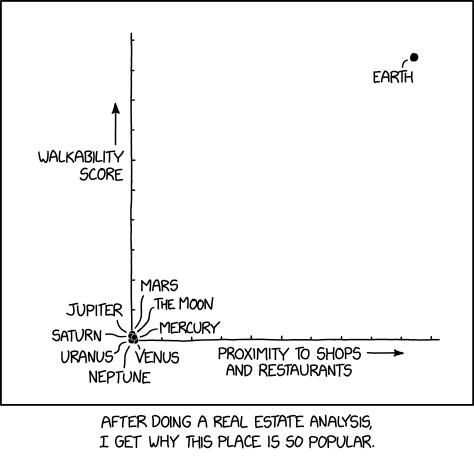
Real Estate Analysis
 ⌘ Read more
💻 Issue 368 - Scala 3 Significant Indentation Woes: Sample ⌘ Read more
QOA Benchmark Results and File Format Specification
The specification for the Quite OK Audio Format,
announced in a previous blog post,
is now finalized. QOA is a lossy audio compression format. Typical audio
signals (44100hz, stereo) are encoded into 278 kbits/s, or more precisely 3.2
bits per sample – exactly 1/5 of the bits needed for an uncompressed WAV.
The QOA-Specification [fits on a single … ⌘ Read more
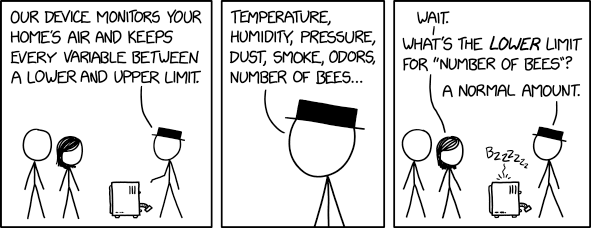
Air Handler
 ⌘ Read more
Air Handler
⌘ Read more
premiere: Patten – In Me
Patten shares the stunning video for hallucinatory ‘90s R&B fever dream “ In Me”, taken from his new LP Mirage FM, “the 1st album fully made from text-to-audio AI samples”… Continue reading… ⌘ Read more
PEP 709: Inlined comprehensions
Comprehensions are currently compiled as nested functions, which provides isolation of the comprehension’s iteration variable, but is inefficient at runtime. This PEP proposes to inline list, dictionary, and set comprehensions into the function where they are defined, and provide the expected isolation by pushing/popping clashing locals on the stack. This change makes comprehensions much faster: up to 2x faster for a microbenchmark of a comprehension alone, translating to an 11% speedup for one sample … ⌘ Read more
Time Domain Audio Compression at 3.2 bits per Sample
Audio formats typically fall into one of three categories: “lossless”,
“complicated” or “bad”. After developing a
simple image format
last year, I tried to come up with an audio format that fits neither of these
categories.
In other words: a format that is lossy, simple and quite ok.
Naturally, it’s called QOA — the Quite OK Audio Format.
 ⌘ Read more
Asking Scientists Questions
⌘ Read more
Polio back in UK after virus detected in London sewage samples
Health officials in Britain warned parents to ensure their children have been vaccinated against polio after the virus that causes the disease was found in London sewage samples. ⌘ Read more
China’s Mars mission on track to lead the world in retrieving Martian rocks by 2031, says programme veteran
China’s timeline is two years ahead of a US-European planned Mars mission to return samples to Earth for laboratory testing, according to Sun Zezhou. ⌘ Read more
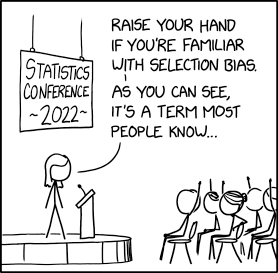
Selection Bias
 ⌘ Read more
Selection Bias
⌘ Read more
patchnotes – baby
Portland producer patchnotes shows us how to a flip a vocal sample for full emotional impact on the hypnotically seductive new single "Baby", taken from his new record Golden Hour, coming January 29th on limited cassette via Pacific Plaza Records… Continue reading… ⌘ Read more
introducing: the !trikuf. code samples included. #halfbakedideas
@adi@twtxt.net “I usually seen the opposite. Women are more interested in longevity and happy that studies show that they live more than men.” -> I probably could have been clearer: It seems to me that women are on average much less interested in life-extension (methods beyond usual health advice such as the old “exercise, eat vegetables”) than men. This might just be founder/sampling bias (life extension comes out of the relatively male dominated libertarian/techno-optimist cluster). Actually, maybe there’s just a variance thing here: median man cares less about his longevity than the median woman, but the variance for men is higher.
rounded rectangle recipe in #cairo [[https://www.cairographics.org/samples/rounded_rectangle/]] #links #vector #graphics
Just copied over more samples today from my sample collection from one drive to another. Things are in more than one place for the first time in a long time, maybe ever in some cases? Feels nice.
I’ve already implemented like 4 new features today just out of necessity with my !sample_curation project.
to start my sample !zettelkasten, I imported some waveform collections I had nearby: AKWF, Architecture Waveforms 2010, and WaveEdit #samples #curation #zet
a collection of high-res wavetables with a !CC0 license: [[https://waveeditonline.com/]] #links #samples
implemented initial crate import in !weewiki. one step closer towards !sample_curation
I’ve recently been reading up on zettelkastens again, since it is very closely related to the ethos of a personal wiki system like !weewiki. The thing that interests me is the emergent patterns that come from linking things to things. Which is exactly the sort of solution I’m looking for !sample_curation. #halfbakedideas
saw this great writeup once on how somebody visualized data by drawing faces with them, and letting our brain’s natural face feature-extraction algorithms interpret the data. Kinda want to try to do that with some of these samples and waveforms I’m curating. #halfbakedideas
more attempts at articulating the !sample_curation problem space today. #updates
updating my wiki index, so some pages are not going to be featured there anymore: !MIDI_sucks !sample_curation !howyousay !sixtycolumnrule
🚀 fgprof is a sampling Go profiler for On-CPU as well as Off-CPU (e.g. I/O) time ⌘ https://github.com/felixge/fgprof
Diary of your life. Mine’s gonna be more boring than the ones in the WWDC sample…
GitHub - emina/rosette: The Rosette solver-aided host language, sample solver-aided DSLs, and demos https://github.com/emina/rosette
The Big Data Revolution Will Be Sampled: How ‘Big Data’ Has Come To Mean ‘Small Sampled Data’ https://www.forbes.com/sites/kalevleetaru/2019/02/17/the-big-data-revolution-will-be-sampled-how-big-data-has-come-to-mean-small-sampled-data/
The sample they chose to highlight here resembles the kind of paper a 14 year old would try & fail to bullshit after staying up all night partying right before the due date: https://blog.openai.com/better-language-models/#sample1
If you sample your own thoughts at twice the Nyquist frequency, you can theoretically achieve full-fidelity introspection - but only for a very short time, since that frequency doubles every few samples
with enough samples, it shouldn’t be hard to extract a content filter’s opinions, for example you could use your botnet to map what twitter really considers bannable and then generate maximally bannable tweets
Whenever you’re near the sample, the geiger counter’s ticking turns regular, modulated, like some kind of radio hail
Bad idea of the day: Feed all those KMart recordings into sample-rnn and generate infinite automatic mallsoft
I like to imagine that when people repeat letters in txtspk, their voice is being sampled to say the same word over and over again
sample every madness, try every sin↵the exquisite and the vulgar ones, the chemical and the mystical↵give your identity a dozen STDs
Grow leather from lab cultivated samples of your own skin, tailor clothes from it, wear a second face on the back of your head
Soil samples taken disappear over night, digging sites close over. Sonar shows a chamber in its heart, but all attempts to breach it fail.
acquired a sample of this potion that made you fly↵mixed it into ink, did not drink↵the words flew away as soon as the paper dried