OpenAI Declares ‘Code Red’ As Google Catches Up In AI Race
OpenAI has reportedly issued a “code red” on Monday, pausing projects like ads, shopping agents, health tools, and its Pulse assistant to focus entirely on improving ChatGPT. “This includes core features like greater speed and reliability, better personalization, and the ability to answer more questions,” reports The Verge, citing a memo reported by the Wall S … ⌘ Read more
Google’s Vibe Coding Platform Deletes Entire Drive
A Google Antigravity user says the AI-driven “vibe coding” tool accidentally wiped his entire D: drive while trying to clear a project cache. Google says it’s investigating, but the episode adds to a growing list of AI tools behaving in ways that “would get a junior developer fired,” suggests The Register. From the report: We reached out to the user, a photographer and g … ⌘ Read more
TornadoVM 2.0 Released For Java On NVIDIA PTX, OpenCL & SPIR-V Devices
TornadoVM 2.0 is out today as the newest feature release for this OpenJDK and GraalVM plug-in that allows Java programs to run on heterogeneous hardware. TornadoVM targets continue to be OpenCL, NVIDIA PTX, and SPIR-V compatible devices for a range of accelerator support for use from conventional Java code… ⌘ Read more
↳
In-reply-to
»
AoC Day #1 solution (mu): https://gist.mills.io/prologic/d3c22bcbc22949939b715a850fe63131
⤋ Read More
@prologic@twtxt.net Using your own language?! That’s really nice! I hope you get home soon so you can give the code a try. 😅
↳
In-reply-to
»
AoC Day #1 solution (mu): https://gist.mills.io/prologic/d3c22bcbc22949939b715a850fe63131
⤋ Read More
I actually can’t progress to day two till I get home 🤣 – I haven’t pushed the code for the mu compiler yet 🤦♂️ So no-one can check my work even if they were so kind 🤣
Kernel Credential Guards Merged For Linux 6.19
Merged yesterday for the Linux 6.19 kernel were “substantial” improvements to the kernel’s credential infrastructure to provide guard-based management that allows for kernel code simplification and avoiding manual reference counting across many subsystems… ⌘ Read more
When I find out the bug comes from a piece of code I never suspected at all ⌘ Read more
↳
In-reply-to
»
AoC Day #1 solution (mu): https://gist.mills.io/prologic/d3c22bcbc22949939b715a850fe63131
⤋ Read More
completely untested as i have no remote way of running mu code from Vietnam 🤣
Thinking about doing Advent of Code in my own tiny language mu this year.
mu is:
- Dynamically typed
- Lexically scoped with closures
- Has a Go-like curly-brace syntax
- Built around lists, maps, and first-class functions
Key syntax:
- Functions use
fnand braces:
fn add(a, b) {
    return a + b
}
- Variables use
:=for declaration and=for assignment:
x := 10
x = x + 1
- Control flow includes
if/elseandwhile:
if x > 5 {
    println("big")
} else {
    println("small")
}
while x < 10 {
    x = x + 1
}
- Lists and maps:
nums := [1, 2, 3]
nums[1] = 42
ages := {"alice": 30, "bob": 25}
ages["bob"] = ages["bob"] + 1
Supported types:
int
bool
string
list
map
fn
nil
mu feels like a tiny little Go-ish, Python-ish language — curious to see how far I can get with it for Advent of Code this year. 🎄
When the boss asks if my code review of the new junior is going well ⌘ Read more
Netting on apartment complex did not meet fire resistance code, Hong Kong officials say
Hong Kong’s anti-corruption agency has arrested 11 people, including the directors and an engineering consultant of a construction company. ⌘ Read more
Intel Finally Posts Open-Source Gaudi 3 Driver Code For The Linux Kernel
The good news is that Intel tonight posted a pull request for open-source Gaudi 3 accelerator support for the mainline Linux kernel! The bad news is that it’s coming quite late in the product cycle, much later than the former excellent Habana Labs open-source track record, and their hopes of squeezing this code into the Linux 6.19 kernel may be dashed… ⌘ Read more
Amazon Tells Its Engineers: Use Our AI Coding Tool ‘Kiro’
“Amazon suggested its engineers eschew AI code generation tools from third-party companies in favor of its own ,” reports Reuters, “a move to bolster its proprietary Kiro service, which it released in July, according to an internal memo viewed by Reuters.”
In the memo, posted to Amazon’s internal news site, the company said, “While we continue to support ex … ⌘ Read more
Advent of Code 2025 starts tomorrow. 🥳🎄
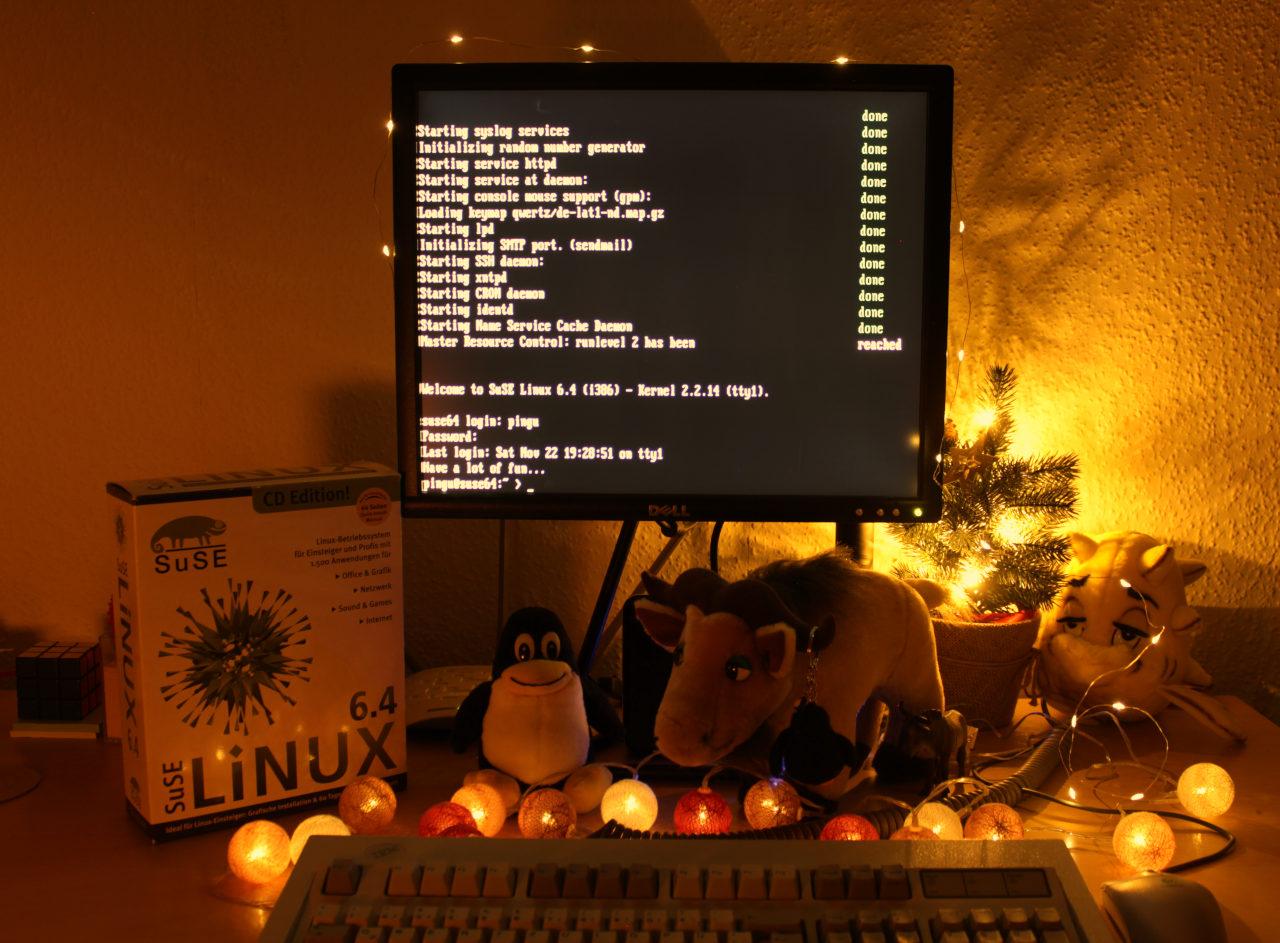
This year, I’m going to use Python 1 on SuSE Linux 6.4, writing the code on my trusty old Pentium 133 with its 64 MB of RAM. No idea if that old version of Python will be fast enough for later puzzles. We’ll see.
↳
In-reply-to
»
Yeah, how? We are facing this very problem.
⤋ Read More
@movq@www.uninformativ.de I see problems with that, yes. Case in point:

New Patches Work To Optimize Code Generation For Linux Context Switching
As some additional enticing Linux kernel patches posted this week for review, an updated patch series is working to optimize code generation during context switching… ⌘ Read more
Why Can’t ChatGPT Tell Time?
ChatGPT can browse the web, write code and analyze images, but ask it what time it is and you might get the correct answer, a confident wrong answer, or a polite refusal – sometimes all three within minutes of each other.
The problem stems from how large language models work. These systems predict answers based on training data and don’t receive constant real-time updates about things like time unless they specifically se … ⌘ Read more
GCC 16 Switches To Using C++20 Standard By Default
Following up on the discussion from earlier this month among GCC developers over switching to C++20 by default for the GCC compiler as the default C++ standard when not otherwise set, that change has indeed happened. Merged now is the change defaulting to C++20 (well, the GNU++20 dialect) rather than C++17/GNU++17 when not otherwise specified when compiling C++ code… ⌘ Read more
Valve-Backed Color Pipeline API For Linux Is Finally Ready For Upstream
For those Linux desktop users in the US needing another reason to be thankful this Thanksgiving, a huge and long-awaited accomplishment is ready for merging to the kernel: the Color Pipeline API that is important for HDR is ready for merging! As of last night the code is queued in DRM-Misc-Next for this years-in-the-making effort… ⌘ Read more
GNU C Library Sees Up To 12.9x Improvement With New Generic FMA Implementation
Just a few days ago I wrote about the Glibc math code seeing a 4x improvement on AMD Zen by changing the used FMA implementation. Merged overnight was a new generic FMA implementation for the GNU C Library and now yielding up to a 12.9x throughput improvement on AMD Zen 3… ⌘ Read more
↳
In-reply-to
»
Hmmm 🧐 I'm annectodaly not convinced so-called "AI"(s) really save time™. -- I have no proof though, I would need to do some concrete studies / numbers... -- But, there is one benefit... It can save you from typing and from worsening RSI / Carpal Tunnel.
⤋ Read More
@prologic@twtxt.net AI is slot machines for coders:
- “Before starting tasks, developers forecast that allowing AI will reduce completion time by 24%. After completing the study, developers estimate that allowing AI reduced completion time by 20%. Surprisingly, we find that allowing AI actually increases completion time by 19%–AI tooling slowed developers down.” https://metr.org/blog/2025-07-10-early-2025-ai-experienced-os-dev-study/
- “Stack Overflow data reveals the hidden productivity tax of ‘almost right’ AI code”: https://venturebeat.com/ai/stack-overflow-data-reveals-the-hidden-productivity-tax-of-almost-right-ai-code
The same intermittent reward operant conditioning that gets people addicted to gambling and thinking that if they follow certain rituals they’ll win “next time” drives people’s beliefs that AI tools are making them more productive when they’re making them less productive. I’m going to guess that a side effect of this is that people think they’re typing less when in the longer term they’re typing the same amount or more when you factor in the productivity loss (as far as I’ve read the studies don’t measure this so I’m only guessing).
People are also being rapidly de-skilled by this technology: the more they use it, the more their actual skills atrophy. “Continuous exposure to AI might reduce the ADR (adesoma detection rate) of standard non-AI assisted colonoscopy, suggesting a negative effect on endoscopist behaviour.” (science speak for saying that radiologists get worse at seeing tumors in scans once they’ve used AI): https://www.thelancet.com/journals/langas/article/PIIS2468-1253(25)00133-5/abstract
Nobody who cares about the future should be using this stuff for anything.
Radeon Software for Linux 25.20.3 Released - “Exclusively Open-Source” With RADV
With the great upstream support for AMD Radeon graphics in the Linux kernel and Mesa, most desktop users / gamers / enthusiasts are best off just using the latest code shipped by their distributions or via the enthusiast-supported third-party archives/repositories. But for those on older enterprise Linux distributions, Radeon Software for Linux 25.20.3 was recently released for shipping that packaged AMD Linux graphics driver st … ⌘ Read more
Urgent ACPI Revert For Linux 6.18 To Deal With Some Hardware Crashing
The Linux 6.18 kernel is anticipated for release this coming Sunday while this week a last-minute crisis was averted following reports of a kernel crash from recent ACPI code changes… ⌘ Read more
↳
In-reply-to
»
One can tell holidays are abound; even twtxt slows down to almost a halt.
⤋ Read More
@bender@twtxt.net Once Advent of Code starts, I’ll start spamming, don’t worry. 😅
Rust For Linux Kernel Co-Maintainer Formally Steps Down
Alex Gaynor recently announced he is formally stepping down as one of the maintainers of the Rust for Linux kernel code with the removal patch now queued for merging in Linux 6.19… ⌘ Read more
Apple iOS 27 to Be No-Frills ‘Snow Leopard’ Update, Other Than New AI
Apple’s next major iPhone software update will prioritize stability and performance over flashy new features, according to Bloomberg’s Mark Gurman, who reports that iOS 27 is being developed as a “Snow Leopard-style” release [non-paywalled source] focused on fixing bugs, removing bloat and improving underlying code after this year’s swe … ⌘ Read more
‘We Could’ve Asked ChatGPT’: UK Students Fight Back Over Course Taught By AI
An anonymous reader shared this report from the Guardian:
James and Owen were among 41 students who took a coding module at the University of Staffordshire last year, hoping to change careers through a government-funded apprenticeship programme designed to help them become cybersecurity experts or software engineers. But afte … ⌘ Read more
Linux Patches Improve Intel Nested VM Memory Performance Up To ~2353x In Synthetic Test
AWS engineers have been working on Linux kernel improvements to KVM’s VMX code for enhancing the unamanged guest memory when dealing with nested virtual machines. The improved code addresses some correctness issues as well as delivering wild performance improvements within a synthetic benchmark… ⌘ Read more
Glibc Math Code Sees 4x Improvement On AMD Zen By Changing FMA Implementation
Merged this week to the GNU C Library “glibc” code is dropping the ldbl-96 FMA implementation from this library as in doing so they found a 4x improvement to throughput and latency on AMD Zen 3 hardware… ⌘ Read more
RISC-V Testing Lapse Resulted In Wrong MIPS RISC-V Vendor ID Landing In Linux 6.18
An interesting anecdote from this week’s batch of RISC-V fixes for the Linux 6.18 kernel exposed that the MIPS RISC-V/JEDEC vendor ID was wrong for code merged at the start of the kernel cycle. The testing hadn’t caught it either as the QEMU emulation also ended up inadvertently using the wrong vendor ID too… ⌘ Read more
When I try to code something personal over the weekend and lose 2 hours configuring the environment ⌘ Read more
All my newly added test cases failed, that movq thankfully provided in https://git.mills.io/yarnsocial/twtxt.dev/pulls/28#issuecomment-20801 for the draft of the twt hash v2 extension. The first error was easy to see in the diff. The hashes were way too long. You’ve already guessed it, I had cut the hash from the twelfth character towards the end instead of taking the first twelve characters: hash[12:] instead of hash[:12].
After fixing this rookie mistake, the tests still all failed. Hmmm. Did I still cut the wrong twelve characters? :-? I even checked the Go reference implementation in the document itself. But it read basically the same as mine. Strange, what the heck is going on here?
Turns out that my vim replacements to transform the Python code into Go code butchered all the URLs. ;-) The order of operations matters. I first replaced the equals with colons for the subtest struct fields and then wanted to transform the RFC 3339 timestamp strings to time.Date(…) calls. So, I replaced the colons in the time with commas and spaces. Hence, my URLs then also all read https, //example.com/twtxt.txt.
But that was it. All test green. \o/
↳
In-reply-to
»
My goodness, a new level of stupidity.
⤋ Read More
I just noticed this pattern:
uninformativ.de 201.218.xxx.xxx - - [22/Nov/2025:06:53:27 +0100] "GET /projects/lariza/multipass/xiate/padme/gophcatch HTTP/1.1" 301 0 "" "Mozilla/5.0 (Windows NT 10.0; Win64; x64) AppleWebKit/537.36 (KHTML, like Gecko) Chrome/112.0.0.0 Safari/537.36"
www.uninformativ.de 103.10.xxx.xxx  - - [22/Nov/2025:06:53:28 +0100] "GET http://uninformativ.de/projects/lariza/multipass/xiate/padme/gophcatch HTTP/1.1" 400 0 "" "Mozilla/5.0 (Windows NT 10.0; Win64; x64) AppleWebKit/537.36 (KHTML, like Gecko) Chrome/112.0.0.0 Safari/537.36"
Let me add some spaces to make it more clear:
    uninformativ.de 201.218.xxx.xxx - - [22/Nov/2025:06:53:27 +0100] "GET                       /projects/lariza/multipass/xiate/padme/gophcatch HTTP/1.1" 301 0 "" "Mozilla/5.0 (Windows NT 10.0; Win64; x64) AppleWebKit/537.36 (KHTML, like Gecko) Chrome/112.0.0.0 Safari/537.36"
www.uninformativ.de 103.10.xxx.xxx  - - [22/Nov/2025:06:53:28 +0100] "GET http://uninformativ.de/projects/lariza/multipass/xiate/padme/gophcatch HTTP/1.1" 400 0 "" "Mozilla/5.0 (Windows NT 10.0; Win64; x64) AppleWebKit/537.36 (KHTML, like Gecko) Chrome/112.0.0.0 Safari/537.36"
Some IP (from Brazil) requests some (non-existing, completely broken) URL from my webserver. But they use the hostname uninformativ.de, so they get redirected to www.uninformativ.de.
In the next step, just a second later, some other IP (from Nepal) issues an HTTP proxy request for the same URL.
Clearly, someone has no idea how HTTP redirects work. And clearly, they’re running their broken code on some kind of botnet all over the world.
Microsoft Open-Sources Classic Text Adventure Zork Trilogy
Microsoft has released the source code for Zork I, II, and III under the MIT License through a collaboration with Team Xbox and Activision that involved submitting pull requests to historical source repositories maintained by digital archivist Jason Scott. Each repository now includes the original source code and accompanying documentation.
The games arrive … ⌘ Read more
Linux 6.19 Slated To Land “mm/cid” Rewrite That Has Very Positive Performance Potential
A set of Linux kernel patches posted back in October for rewriting the kernel’s memory-mapped concurrency ID code for some nice performance wins looks like it will land for Linux 6.19. This is the code that prominent Intel engineer Thomas Gleixner found to yield up to an 18% improvement for the PostgreSQL database. My testing of this “mm/cid” code has also shown some nice performance wins too… ⌘ Read more
Rust-Based Arm GPU Kernel Driver “Tyr” Begins Running GNOME & Basic Games
Initially upstreamed into the Linux 6.18 kernel is Tyr as a Rust-based GPU kernel driver for Arm Mali hardware. This is in effect a Rust alternative to the Panthor DRM kernel driver for newer Arm Mali GPUs with the Command Stream Firmware (CSF). With the latest development code for Tyr, it’s moved onto running the GNOME desktop and basic games like SuperTuxKart… ⌘ Read more
Linus Torvalds Says Vibe Coding is Fine For Getting Started, ‘Horrible Idea’ For Maintenance
Linus Torvalds is “fairly positive” about vibe coding as a way for people to get computers to do things they otherwise could not. The Linux kernel maintainer made the comments during an interview at the Linux Foundation Open Source Summit in Seoul earlier this month. But he cautioned that … ⌘ Read more
I was looking at some ancient code and then thought: Hmm, maybe it would be a good idea to see more details in this error message. Which of the values don’t line up. On the other hand, that feature isn’t probably used anyway, because it’s a bit ugly to use (historically evolved). And on top of that, most teams need something slightly different, if they deal with that sort of thing.
I still told my workmates about it, so they could also have a look at it and we can decide tomorrow what to do about it. Speaking of the devil, no kidding, not even half an hour later, a puzzled tester contacted me. She received exactly that rather useless error message. Looks like I had an afflatus. ;-)
It’s interesting, though, that in all those years, nobody stumbled across this before. At least we now know for sure that this is not dead code. :-)
When a former colleague optimized their code so well no one can maintain it anymore ⌘ Read more
More NVIDIA Nova Enablement For Linux 6.19 With Other Rust Graphics Driver Code
Alice Ryhl of Google sent out the main set of Rust language code changes for the Direct Rendering Manager (DRM) graphics/display driver subsystem ahead of Linux 6.19. Notable is continued DRM core infrastructure work for Rust plus the open-source NVIDIA “Nova” driver continues taking shape albeit isn’t yet ready for end-user usage… ⌘ Read more
When I open the legacy project code I’ll have to maintain ⌘ Read more
Intel Nova Lake Power Management Bits Prepped Ahead Of Linux 6.19
Intel engineers continue working on the Nova Lake next-gen processor enablement for the Linux kernel. In addition to the Intel Xe3P graphics and other early Nova Lake enablement work already queued in “-next” Git branches ahead of the Linux 6.19 merge window, the initial power management code is also ready for this next kernel cycle… ⌘ Read more
Rust in Android: More Memory Safety, Fewer Revisions, Fewer Rollbacks, Shorter Reviews
Android’s security team published a blog post this week about their experience using Rust. Its title? “Move fast and fix things.”
Last year, we wrote about why a memory safety strategy that focuses on vulnerability prevention in new code quickly yields durable and compounding gains. This year we look … ⌘ Read more
Linux 6.19 Landing Initial Display Support For Xe3P_LPD / Nova Lake
The upcoming Linux 6.19 kernel cycle is set to introduce initial Xe3P_LPD GPU support for Nova Lake as well as beginning to build out support for the Crescent Island graphics card. Now joining DRM-Next with that initial Intel Xe3P_LPD code for Linux 6.19 is being able to drive displays with that Xe3 hardware… ⌘ Read more
↳
In-reply-to
»
FTR, I see one (two) issues with PyQt6, sadly:
⤋ Read More
@movq@www.uninformativ.de I think I now remember having similar problems back then. I’m pretty sure I typically consulted the Qt C++ documentation and only very rarely looked at the Python one. It was easy enough to translate the C++ code to Python.
Yeah, the GIL can be problematic at times. I’m glad it wasn’t an issue for my application.
Latest Proposed Guidelines For Tool-Generated / AI Submissions To The Linux Kernel
Posted to the mailing list on Friday were the latest proposed guidelines for tool-generated contributions to the Linux kernel. The coding tools in large part being focused on AI generated content… ⌘ Read more
NVIDIA Sends Out Initial Turing GPU Support For Open-Source Nova Driver
NVIDIA engineers continue working a lot on the in-development and in-tree open-source Nova kernel driver for their GPUs. Sent out on Friday night were the Turing enablement patches for this Rust-written Nova-Core driver code… ⌘ Read more
For those curious, the new Twtxt <-> ActivityPub bridge I’m building (bidirectional) simply requires three things:
- You register your Twtxt feed to the bridge: https://bridge.twtxt.net
- You verify that you in fact own/control the feed by putting the verification code somewhere on/in your feed (doesn’t matter where or how)
- You proxy/forward requests for
/.well-known/webfingerto the Bridgebridge.twtxt.net.
I’m still testing through and ironing out bugs 🐛 Please be patient! 🙏
↳
In-reply-to
»
verify: be6b4443c96a602b1947
⤋ Read More
technically I can put the Bridge verificaiton code in my feed’s metadata so no-one really ever sees or notices it 🤔 Maybe I’ll add a first-class button/field thingy in yarnd so users can “register their feed” straight from their pod? 🤔