Space Adventure
 ⌘ Read more
Space Adventure
⌘ Read more
asbjorn: “Ay det gav lige en førsteplads…”
Ay det gav lige en førsteplads til Kalmarunionen i ASIS CTF.
Det putter os tilbage i top 10 hold på verdensplan 🎉 🇩🇰 ⌘ Read more
asbjorn: “Det er da universelt at conlan…”
Det er da universelt at conlangs er sexede, ikke? ⌘ Read more
asbjorn: “Jeg har snart haft en Toki Pon…”
Jeg har snart haft en Toki Pona-hilsen på min tinder profil i over et år.
Stadig ingen tokiponister der vil samtale.
Har heller ikke været på nogle dates… er der måske en sammenhæng? ⌘ Read more
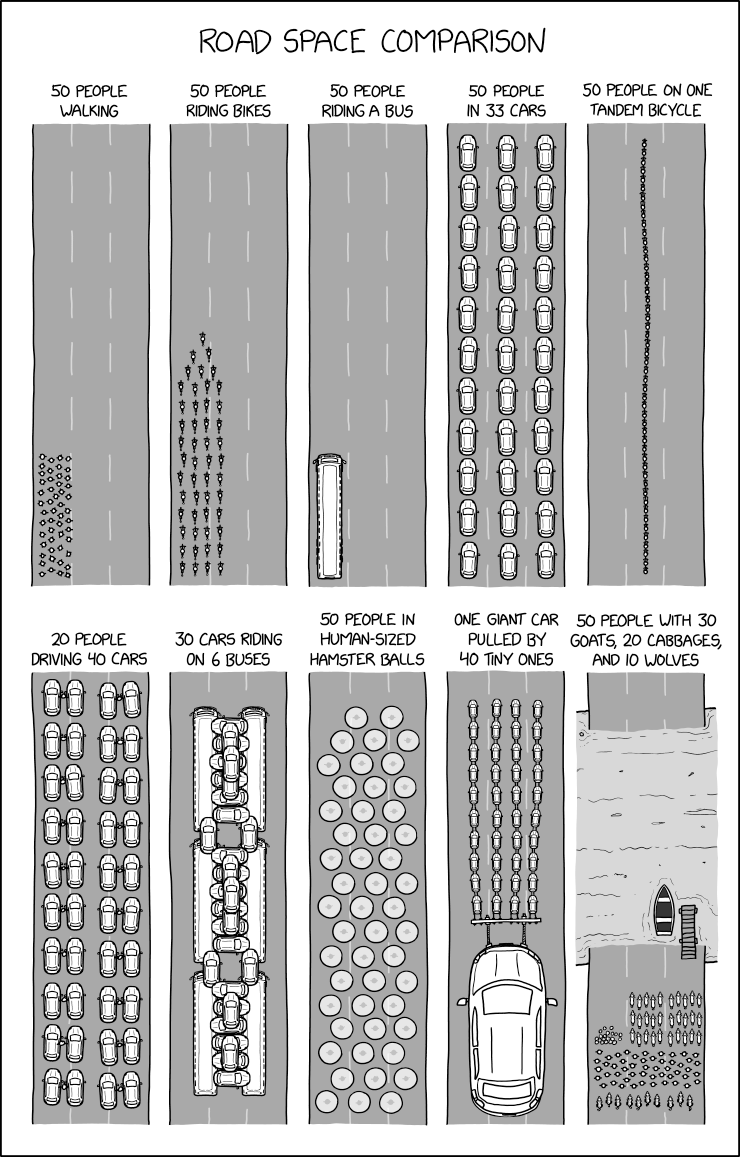
Road Space Comparison
 ⌘ Read more
Road Space Comparison
⌘ Read more
asbjorn: “hej jeg hedder asbjørn og velk…”
hej jeg hedder asbjørn og velkommen til min sæbekasse ⌘ Read more
asbjorn: “Lad os lige få afklaret at tyv…”
Lad os lige få afklaret at tyveri ikke er det samme som efterligning.
Man kan ikke “stjæle” en idé, ligesom man ikke kan “stjæle” en tanke eller en drøm.
Delte drømme er bedre. Afskaf idégrådighed i dag! ⌘ Read more
** uxn laboratory **
As I look to assembly nights 2, and think of trying my own take on it, I wanna have a cozy space ready to play with uxn.
The setup I’ve landed on is sort of inspired by plan9port.
Prepare the way- in home directory, create a
udirectory
- in
ucloneuxnand build it
- add
~/u/uxn/to your path as$UXN
- add
$UXN/binto your path
- moving forward we’ll put any and all
*.romfiles into … ⌘ Read more
asbjorn: “Vent er Signal bare platform-a…”
Vent er Signal bare platform-agnostisk iMessage? ⌘ Read more
🌠 Community Contest & Spaced Repetition Improvements
There’s a new interactive medical terminology dictionary, & a step-by-step guide to setting up a second brain in minutes per day. ⌘ Read more
Maybe just not have your search space contain Turing complete elements?
video: Panda Bear + Sonic Boom – Livin’ in the After
One of our favorites from Reset, thanks in part to that inspired Drifters sample. Video by Space is Green… Continue reading… ⌘ Read more
🌠 Visual Notetaking Guides & Demo Vaults for Managers
You can now push notes to Readwise’s Reader app for improved spaced repetition review. You can also comment on the Roundup! ⌘ Read more
Live from London: Space Sustainability with Neil deGrasse Tyson, Steve Wozniak, & Expert Guests ⌘ Read more
🌠 Obsidian Shirts, Grouped Tasks & 1-min Guides
New ways to group tasks, customizable spaced repetition buttons, & default theme discussions. ⌘ Read more
↳
In-reply-to
»
The original twt is unavailable. It may have been edited or deleted, or is from an unknown or muted feed.
⤋ Read More
@screem@twtxt.net @prologic@twtxt.net @movq@www.uninformativ.de Now you can write everything as oneliners! Java developers will appreciate the new space they got. ;-)
Launching GitHub Community: Powered by GitHub Discussions
Today, we’re launching GitHub Community, which brings together GitHub Community Forum, GitHub Education Forum, and product feedback into a free, in-product, single space for all user-to-user interactions. ⌘ Read more
↳
In-reply-to
»
Oh look at those beautiful photos from JWST! Now I want to become an astronomer.
⤋ Read More
@prologic@twtxt.net Just found this comparison, even with a slider. Bloody awesome! Holy moly, what a difference.
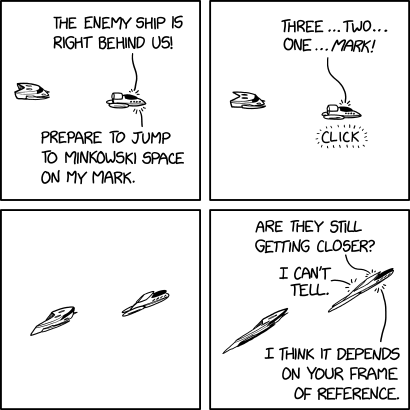
Minkowski Space
 ⌘ Read more
Minkowski Space
⌘ Read more
[Cosmic Queries] How To Not Die in Space w/ Neil deGrasse Tyson & Ana Diaz-Artiles ⌘ Read more
↳
In-reply-to
»
The original twt is unavailable. It may have been edited or deleted, or is from an unknown or muted feed.
⤋ Read More
@movq@www.uninformativ.de @prologic@twtxt.net I just reread the spec and it seems to be even a bit outdated regarding machine-parsable conversation grouping. We long dropped the need to specify a whole hash tag with URL (#<hash url>), the simplified version without the URL (#hash) is enough.
The hash tag extension specification is kind of missing the same. However, I’m not sure if that short form is considered supported in general (as opposed to be a special case for subjects only) by the majority of the twtxt/yarn community.
Now the question arises, in order to keep things simple, should we even only allow the simplified twt hash tag for subjects and forbid the long version? This would also save quite a bit of space. The URL is probably not shown anyways in most clients. And if so, clients might rewrite URLs to their own instances. On the other hand, there’s technically nothing wrong with the long version in current parser implementations. And deprecating stuff without very good reason isn’t cool.
duf: Check free drive space from the terminal
… and it looks pretty sweet too. ⌘ Read more
It’s a wrap for China’s Tianwen-1 Mars mission, but rover and orbiter still ready to work
China’s space agency marks completion of Tianwen-1 mission with new photos of red planet volcano and polar cap. ⌘ Read more
Singapore’s US$40 billion mega-port aims to solve shipping chaos
The world’s largest automated port, to be completed by 2040, will double the existing space and feature drones as well as driverless vehicles. ⌘ Read more
Priced out of Hong Kong, young home buyers look to Greater Bay Area for space and value
Twenty-five years after the handover, home ownership in Hong Kong is further out of reach than ever for first-time buyers, some of whom are finding value in Dongguan and other cities in the Pearl River Delta. ⌘ Read more
Australia hosts ‘historic’ Nasa launch – first from commercial site outside US
Australian Prime Minister Anthony Albanese hailed the launch as the start of a ‘new era’ for the country’s space industry. ⌘ Read more
Iran launches rocket into space as nuclear talks to resume
It is unclear when or where the rocket, Zuljanah, was launched, but the announcement came after satellite photos showed preparations at Imam Khomeini Spaceport. ⌘ Read more
China’s space station may get the most precise clock in orbit – if it passes key test
Optical atomic clock will be delivered to Tiangong in October if it clears technical evaluation next week, according to scientist familiar with project. ⌘ Read more
Chinese satellites evade US surveillance probe, then stare back, according to report
The close encounter in orbit prompts experts to call for new rules and norms for the use of outer space. ⌘ Read more
Erlang Solutions: Modern Software Engineering Principles for Fintechs by Daniel Pilon at SumUp
Daniel Pilon is a Software Engineering Manager at SumUp. Since 2007 he has worked across several industries before arriving in the fintech space. He has experience in many programming languages, such as C#, Java and JavaScript but since discovering Elixir and the power of functional programming a few years ago, he hasn’t looked back.
Right now he is building SumUp Bank, a complete digital banking solution … ⌘ Read more
Linux is Freaking Weird
Watch now (31 min) | Powering the space ships, flying drones, robotic surf boards, and crock pots of Earth. ⌘ Read more
closest pairs of points are not necessarily reflexive. there are some points in euclidean space that are just fundamentally abandoned
Welcome to Maintainer Month! 🎉
During the month of June, we’re holding space for open source maintainers to gather, share, and be celebrated. ⌘ Read more
“Upscale” Sierra adventure game backgrounds in high resolution
Make King’s Quest and Space Quest backgrounds look smooth and high resolution. ⌘ Read more
**RT by @mind_booster: .@OpenSourceOrg to the European Commission: make space for patent-free standards too
some supposedly “open“ standards – including those ratified by SDOs like ISO, CEN and ETSI – can’t be implemented without buying a license
https://blog.opensource.org/osi-to-the-european-commission-make-space-for-patent-free-standards-too/**
. @OpenSourceOrg to the European Commission: make space for patent-free standards too
some supposedly “op … ⌘ Read more
the buddha vector is calculated by finding the path in the space of possible attractors that maximizes the number of attractors it could fall into with an ε perturbation, but falls into none.
Gemini capsule
Gemini is a lightweight Internet protocol. It’s heavier than Gopher
but lighter than HTTP(S), especially if combined with all other web
technologies. The name makes sense if Gopher is Project Mercury and
the web is the Apollo program.
One of its uses is to serve gemtext, which is a lightweight
Markdown-like markup language, instead of HTML. Gemini browsers don’t
have support for neither Javascript, nor CSS, nor any of the other new
web technologies. It can be beautiful anyway, s … ⌘ Read more
I was reading something to make a little pause from work. I saw a gnat on the screen. I thought ‘wow imagine how’s it perceiving the screen-space world’. So I went on and browsed Shadertoy for an hour LoL #shader #visual #trip #psychedelic #coding
new favorite color: space cadet (#1E2952) (not really)
Humans in Space with Neil deGrasse Tyson, Astronaut Leland Melvin, & Dr. Sheyna Gifford ⌘ Read more
@thegibson there is no preferred reference frame. no truth, only empty space. ⌘ Read more
Tess Roby – Path
Tess Roby’s Ideas of Space is out later this month on Tess’ own label, SSURROUNDSS… Continue reading… ⌘ Read more
Mastodon 3.5 finally supports the Update ActivityPub activity. GoBlog supports sending updates for quite a while already, but only Pleroma showed the updated posts and not Mastodon. That would have been useful recently, when I posted “Spaces!” but wanted to post “Tabs!” and updated my post. 😅 ⌘ Read more
Tabs versus Spaces? Spaces! ⌘ Read more
Understanding Color Management
I worked on a project where I dived deep into understanding how modern
color management works, including things like color spaces, ICC profiles
and more. As I learnt here and there, I decided to write this post, both
for my future self, and others who may struggle with some of the
concepts as well.
Color management deals with translating between representations of
colors across a variety of devices. Throughout this post, we’ll use
natural language as … ⌘ Read more
Understanding Color Management
I worked on a project where I dived deep into understanding how modern
color management works, including things like color spaces, ICC profiles
and more. As I learnt here and there, I decided to write this post, both
for my future self, and others who may struggle with some of the
concepts as well.
This post only aims to help you understand the basic concepts without
having to delve into dense literature and hard to grok technical
documents.
Color … ⌘ Read more
Are we talking about space or… the French cuisine? ⌘ Read more