Linux ThinkPad Driver Ready For Reporting Damage Device - Starting With Bad USB-C Ports
Queued yesterday into the platform-drivers-x86.git’s “for-next” branch are the patches for the Lenovo ThinkPad ACPI driver to begin reporting damaged device detection. This code being in the “for-next” branch makes it material for the next version of the Linux kernel and initially will be able to report to the user on damaged USB-C ports… ⌘ Read more
More widget system progress:
https://movq.de/v/87e2bce376/vid-1767467193.mp4
I like the oldschool shadow effect. 😅 Not sure if I’ll keep it, but it’s neat.
The menu bar is still fake.
Had to spend quite a bit of time optimizing the rendering today. This can get really slow really quickly.
Unicode is Pain.
I might be able to start porting my first program (currently uses urwid) soon. 🤔
↳
In-reply-to
»
Mu (µ) is now getting much closer to where I want it to be, it now has:
⤋ Read More
@prologic@twtxt.net porting SQLite would be kick-ass
Fish 4.3 Brings Scripting & Interactivity Improvements, Enhanced Terminal Support
Fish 4.3 is out today as the newest update to this user-friendly command line shell. Fish 4.0 released at the beginning of this year in porting the codebase from C++ to Rust and now before closing out 2025 they have out Fish 4.3… ⌘ Read more
LoongArch Promoted To Being An Official Architecture For Debian 14
Two years and a few months after LoongArch 64-bit “Loong64” was added to Debian Ports, it’s now been promoted to being an official architecture for Debian Linux… ⌘ Read more
Haiku OS Sees Port Of Go 1.18 Programming Language
The BeOS-inspired Haiku operating system has received a recent port of the Go programming language to the platform. Plus Haiku also saw app improvements and more over the month of November… ⌘ Read more
↳
In-reply-to
»
My current PC is from 2013, so I never even bothered to check, but as it turns out: My motherboard still has a serial port. 🤯 I thought these had long died out by then. To be honest, I didn’t have the need for one, either, not until recently … So I completely lost track if PCs have these things or not.
⤋ Read More
@movq@www.uninformativ.de I think even modern PC still come with serial ports they just don’t wire them up anymore right? They’re still there in the board itself, though just unwired.
My current PC is from 2013, so I never even bothered to check, but as it turns out: My motherboard still has a serial port. 🤯 I thought these had long died out by then. To be honest, I didn’t have the need for one, either, not until recently … So I completely lost track if PCs have these things or not.
All I needed was one of those slot-cable-thingies. (And if the order of pins is correct, then it actually works. 🤦)
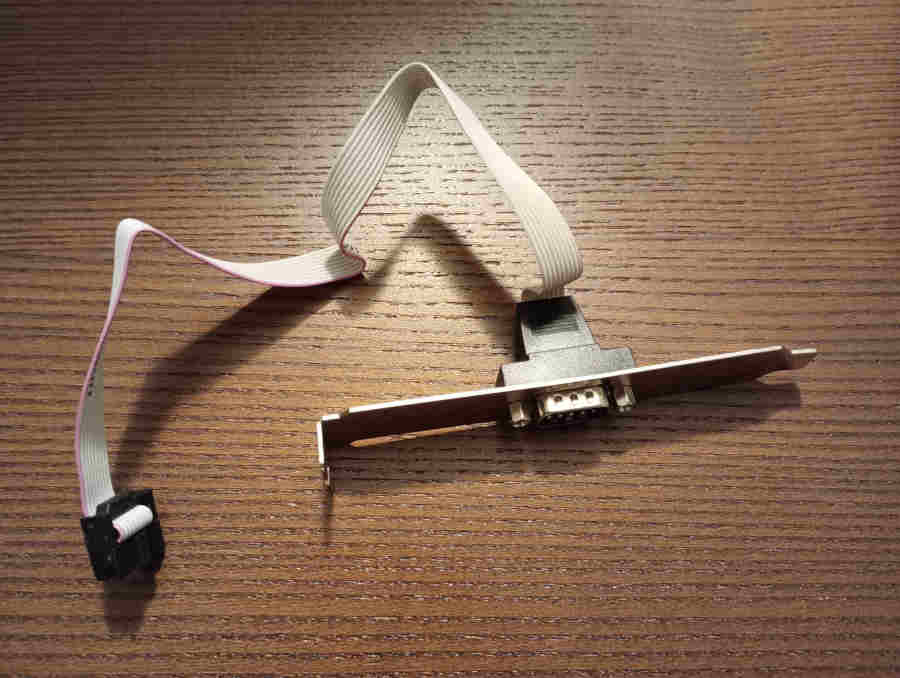
Cool! One less USB device. 😃
New FreeBSD 15 Retires 32-Bit Ports and Modernizes Builds
FreeBSD 15.0-RELEASE arrived this week, notes this report from The Register, which calls it the latest release “of the Unix world’s leading alternative to Linux.”
As well as numerous bug fixes and upgrades to many of its components, the major changes in this version are reductions in the number of platforms the OS supports, and in how it’s built and how its … ⌘ Read more
Cyclone Joan’s fury remembered 50 years on
Cyclone Joan made landfall near the WA mining town of Port Hedland a year after Cyclone Tracy flattened Darwin, and it was almost as powerful. ⌘ Read more
Rust-Written Redox OS Sees Initial Wayland Port
Developers behind Redox OS, the original open-source operating system written from scratch in the Rust programming language, have ported Wayland to it with initially getting the Smallvil Wayland compositor up and running along with the Smithay framework and the Wayland version of the GTK toolkit… ⌘ Read more
3mdeb Ports Their Dasharo Firmware To A Recent ASRock Rack Motherboard
Open-source firmware consulting firm 3mdeb published a blog post today outlining their work on bringing their Coreboot-downstream Dasharo to the ASRock Rack SPC741D8/2L2T, a recent server motherboard for supporting Intel Xeon Sapphire Rapids and Emerald Rapids processors… ⌘ Read more
Family of Port Lincoln sailor fears she has died overseas
The Department of Foreign Affairs and Trade says it is providing consular assistance to the family of an Australian missing in the Mozambique Channel off the coast of Africa. ⌘ Read more
Protesters arrested for blocking world’s largest coal port
Police arrest more than 30 people in Newcastle Harbour for alleged marine-related offences during an anti-fossil fuel protest. ⌘ Read more
SA woman suffered permanent brain injury after hospital failed to diagnose stroke, court hears
An Adelaide woman is suing a southern suburbs hospital for $1.5 million in damages alleging she suffered a “permanent neurological injury” when doctors failed to diagnose her with a stroke, court documents reveal. ⌘ Read more
Family sues Geelong Hospital over alleged medical negligence
Court documents allege the hospital breached its duty of care while caring for Port Fairy woman Jennifer Buchanan. ⌘ Read more
Electric Vehicle Sales Are Booming In South America
Chinese automakers are rapidly expanding across South America, boosted by the new Chinese-built Port of Chancay, aggressive pricing, local partnerships, and growing regional demand. Reuters reports: China has been ramping up sales since the opening last year of the Port of Chancay, north of Lima. The Chinese-built megaport has halved trans-Pacific shipping times just as C … ⌘ Read more
Trump envoy warns Greece that US wants China out of Piraeus port ⌘ Read more
Exclusive footage reveals boats at the centre of secretive Australian Border Force scheme
The footage, captured by a 9News Perth drone, shows the Australian Border Force’s 110-metre Ocean Shield leaving Broome Port carrying the four fishing boats. ⌘ Read more
EasyEffects 8.0 Released In Porting From GTK4 To Qt / QML / Kirigami
EasyEffects is the open-source application formerly known as PulseEffects that transitioned to using native PipeWire filters for providing simple audio effects on the Linux desktop. EasyEffects makes it easy to apply different audio effects like bass enhancer, compressor, pitch shift, reverberation, and many more. With this week’s release of EasyEffects 8.0, the user interface has been rewritten in Qt / QML / Kirigami rather than GTK4… ⌘ Read more
Russia’s Tuapse port hit again — ship burns, pier damaged, Russian officials scramble to rewrite reports ⌘ Read more
Typhoon exposes centuries-old shipwreck off Vietnam port
Severe coastal erosion caused by Typhoon Kalmaegi exposed a centuries-old shipwreck in Vietnam, providing a narrow window to salvage what experts say could be a historically significant find. ⌘ Read more
Qt Merges Wayland Color Management “color-management-v1”
The Qt toolkit has merged support for Wayland’s color-management-v1 protocol to replace the former xx-color-management-v4 protocol shipped by this open-source toolkit. The change was merged for Qt 6.11 development but also back-ported for the Qt 6.10 series… ⌘ Read more
R1 Neo leverages GPS & compact rugged design for Meshtastic networks
The R1 Neo is a compact, water-resistant Meshtastic device for off-grid communication and navigation. Developed by Muzi, it features an aircraft-grade aluminum base with a carbon-fiber PETG shell, offering a 16% reduction in size compared to the previous R1. The enclosure includes O-ring and compression gaskets, an IP68-rated USB-C port, and a battery capable of […] ⌘ Read more
Mesa Lands Fixes For HDR With Vulkan Drivers
Merged overnight to Mesa 26.0-devel and likely to be back-ported for the upcoming Mesa 23.3 release are a few fixes around high dynamic range (HDR) support within the common Vulkan windowing system integration (WSI) / display code… ⌘ Read more
Servo ported to Redox
Redox keeps improving every month, and this past one is certainly a banger. The big news this past month is that Servo, the browser engine written in Rust, has been ported to Redox. It’s extremely spartan at the moment, and crashes when a second website is loaded, but it’s a promising start. It also just makes sense to have the premier Rust browser engine running on the premier Rust operating system. Htop and bottom have been ported to Redox for much improved system monitoring, and they’ … ⌘ Read more
3mdeb Achieves Good Progress Porting Coreboot+OpenSIL To AMD Turin Motherboard
Over the past few months the open-source firmware consulting firm 3mdeb has been porting Coreboot and AMD’s new openSIL silicon initialization library to the Gigabyte MZ33-AR1. The Gigabyte MZ33-AR1 is a broadly available motherboard that supports the latest-generation AMD EPYC 9005 “Turin” server processors. 3mdeb has been fairly successful in their quest and an early demonstrator for openSIL… ⌘ Read more
Debian to add hard Rust dependency to APT
It seems like a number of Debian ports are going to face difficult times over the coming months. Debian developer Julian Andres Klode has sent a message to the Debian mailing lists that APT will very soon start requiring Rust. I plan to introduce hard Rust dependencies and Rust code into APT, no earlier than May 2026. This extends at first to the Rust compiler and standard library, and the Sequoia ecosystem. In particular, our code to parse .deb, . … ⌘ Read more
Ukrainian drone attack damages Russia’s Tuapse port, sparks fire, Russia says ⌘ Read more
↳
In-reply-to
»
@lyse
⤋ Read More
@movq@www.uninformativ.de Uh, that actually looks not that terrible. Somehow, I remember Swing GUIs being way uglier.
As for Visual Basic, I only had to use VBA once in my life. That was in the beginning of my career when I inherited a project from a leaving coworker. Fuck me, was that awful. Just alone the damn compiler error dialog box popping up in my face all the time while editing and the compiler already trying to parse the unfinished and hence of course uncompilable code. Boy, that left a lasting impression on me. I ported everything to Java very quickly. Luckily, the code base wasn’t all that large at that point in time. I had to add a bunch of new features after that, so I was very glad that I convinced my workmate/project manager to do that first. We didn’t even need a GUI, the button in Excel was transformed to a command line program that just generated the large file.
But I cannot comment on the VB GUI designer, I never used that. Your screenshot looks very similar to the Delphi one, though. Only towards the end of my Delphi days I found out about the possibility to make the widgets snap to window edges and corners (I don’t remember how that was called), so that resizing the windows was actually possible without messing up their entire contents.
Switching to Linux, Delphi wasn’t an option anymore. For some reason I couldn’t use Kylix. Maybe it was already dead by the time I changed OSes. Or I couldn’t get it to run. I just don’t remember. I just recall that the unavailability of Delphi was the reason it took me a while to actually settle on Linux. I then fully switched to Java. The GridBagLayout was my absolutely favorite Swing layout manager. I reckon I used it 98% of the time, because it was so powerful and made the windows resize properly, just as I had learned to do in Delphi shortly before.
Up until discovering Swing, I used Java’s AWT for a short amount of time. That was very limited I think and I hit the limits fairly quickly. Later at uni, we had one project making use of SWT. Didn’t convince me either. I could be wrong, but I think there was also a SWT GUI designer plugin for Eclipse. If there really was, that one wasn’t in the same street as Delphi’s (there must be a reason I forgot about it ;-)).
↳
In-reply-to
»
@aelaraji tell us all about it, without omitting details!
⤋ Read More
Just typing twts directly into my twtxt file.
Details:
- Opening my twtxt file remotely using
vim scp://user@remote:port//path/to/twtxt.txt
- Inserting the date, time and tab part of the twt with
:.!echo "$(date -Is)\t"
- In case I need to add a new line I just
Ctrl+Shift+u, type in the2028and hitEnter
- In order to replay, you just steal a twt hash from your favorite Yarn instance.
It looks tedious, but it’s fun to know I can twt no matter where I am, as long as can ssh in.
Le dernier chef-d’œuvre du Louvre : le délitement national
La seule surprise qu’on peut avoir en découvrant que le Louvre s’est fait cambrioler, c’est de constater qu’il aura fallu attendre autant de temps avant que ça arrive. En effet, à voir l’état lamentable des boiseries des fenêtres et des portes de ce vieux musée, à voir la décontraction pour ne pas dire le laisser-aller […] ⌘ Read more
China retaliates against U.S. port fees with new charges on American ships ⌘ Read more
Orange Pi Previews Orange Pi 6 Plus with 12-core architecture and dual 5G Ethernet ports
Orange Pi has introduced the Orange Pi 6 Plus, a single-board computer intended for high-performance and AI-oriented computing tasks. It uses the CIX CD8180/CD8160 SoC with a 12-core 64-bit CPU and an NPU rated at up to 45 TOPS. The SoC includes a 12-core architecture paired with an integrated graphics processor supporting hardware-accelerated ray tracing […] ⌘ Read more
Lobsters Interview with Zdsmith
I had the pleasure of interviewing, befriending @zdsmith whose passions are very close to my heart. He explores the different forms of notation (Iverson, Naur), makes combinatory programming approachable, ported J to Janet, created an ergonomic notation for requirements gathering, designed his own [shorthands](https://blog.zdsmith.com/series/sh … ⌘ Read more
DL40N Fanless 1.3L Mini PC with Intel Twin Lake Processors
The DL40N is a fanless 1.3-liter mini PC powered by Intel Twin Lake processors and up to 16GB DDR5 memory. It supports triple 4K display output, dual 2.5G Ethernet, and multiple USB and COM ports for reliable 24/7 operation in applications such as factory automation, digital signage, kiosks, and more. Built on Intel’s Twin Lake […] ⌘ Read more
↳
In-reply-to
»
Sooooooooo, things happened, and I now have a dot matrix printer again. 😍😂
⤋ Read More
@movq@www.uninformativ.de Kind of curious now… Is there a (to buy new) dot matrix printer you’d recommend if someone wanted to get into this sort of thing (sending plain ‘ol bytes to a printer port)? 🤔 (I remember this back in the ye ‘old days!)
↳
In-reply-to
»
Sooooooooo, things happened, and I now have a dot matrix printer again. 😍😂
⤋ Read More
This is why I love tech from that era.
Write bytes to a parallel port and stuff happens. If it’s just ASCII bytes, then it will print ASCII text. Even the simplest programs can use a printer this way.
With a little bit of ESC/P, you can print images and other fancy stuff. That’s what I did this morning – never worked with ESC/P before, now I can print images. It’s not that hard.
Hayes-compatible modems are similar: Write some AT commands to the serial port and the modem does things. This isn’t even arcane knowledge, it’s explained in the printed manual.
Maybe I’m wearing rose-tinted glasses here, but I think with all this old stuff, you get useful results very quickly and the manuals are usually actually helpful. It’s so much easier to get started and to use this hardware to the full extent. Much less complexity than what we have today, not a ton of libraries and dependencies and SDKs and cloud services and what not.


In 1996, they came up with the X11 “SECURITY” extension:
https://www.reddit.com/r/linux/comments/4w548u/what_is_up_with_the_x11_security_extension/
This is what could have (eventually) solved the security issues that we’re currently seeing with X11. Those issues are cited as one of the reasons for switching to Wayland.
That extension never took off. The person on reddit wonders why – I think it’s simple: Containers and sandboxes weren’t a thing in 1996. It hardly mattered if X11 was “insecure”. If you could run an X11 client, you probably already had access to the machine and could just do all kinds of other nasty things.
Today, sandboxing is a thing. Today, this matters.
I’ve heard so many times that “X11 is beyond fixable, it’s hopeless.” I don’t believe that. I believe that these problems are solveable with X11 and some devs have said “yeah, we could have kept working on it”. It’s that people don’t want to do it:
Why not extend the X server?
Because for the first time we have a realistic chance of not having to do that.
https://wayland.freedesktop.org/faq.html
I’m not in a position to judge the devs. Maybe the X.Org code really is so bad that you want to run away, screaming in horror. I don’t know.
But all this was a choice. I don’t buy the argument that we never would have gotten rid of things like core fonts.
All the toolkits and programs had to be ported to Wayland. A huge, still unfinished effort. If that was an acceptable thing to do, then it would have been acceptable to make an “X12” that keeps all the good things about X11, remains compatible where feasible, eliminates the problems, and requires some clients to be adjusted. (You could have still made “X11X12” like “XWayland” for actual legacy programs.)
↳
In-reply-to
»
guys i use VPS systems from time to time and they scare me. wdym they have every port open by default and the firewall is your responsibility. what the fuck bro
⤋ Read More
@kat@yarn.girlonthemoon.xyz i’m a self hoster at heart man i open those ports MYSELF with EXTREME RECKLESSNESS
guys i use VPS systems from time to time and they scare me. wdym they have every port open by default and the firewall is your responsibility. what the fuck bro
↳
In-reply-to
»
PSA:
⤋ Read More
setpriv on Linux supports Landlock.
@movq@www.uninformativ.de That’s really cool! I wanted to experiment with Landlock in tt as well. But other than just thinking about it, nothing really happened.
Depending on the available Landlock ABI version your kernel supports, you might even restrict connect(…) calls to ports 80, 443 and maybe whatever else has been configured in the subscription list.
↳
In-reply-to
»
@movq Yeah, luckily, there is the suckless project. I couldn't live without dmenu!
⤋ Read More
@lyse@lyse.isobeef.org dmenu is a great example.
There have been several attempts at porting dmenu from X11 to Wayland. Well, not exactly “porting” it, more like rewriting it from scratch. Turns out: It’s not that easy.
dmenu is super fast and reliable. None of the Wayland rewrites are (at least none of the popular ones that I know of). They are either bloated and/or slow.
It takes a lot of discipline and restraint to write simple software and not blow up the codebase. This is much harder than people think. It’s a form of art, really.
↳
In-reply-to
»
I wanted to port this to Rust as an excercise, but they still have no random number generator in the core library: https://github.com/rust-lang/rust/issues/130703
⤋ Read More
@prologic@twtxt.net Yeah, it’s difficult, you often don’t get what you’d expect. They also make heavy use of 3rd party libraries. IIUC, for random numbers, they refer to this library. I’ve read many times that the Rust stdlib is intentionally minimalistic (to make it easier to maintain and port and all that).
I’m struggling with this, using 3rd party libs for so many things isn’t really my cup of tea. I’ll probably make my own tiny little “standard library”. It’s silly, but I don’t see any other options. 🤷
Israeli Navy commandos intercept ‘Gaza flotilla’ vessel, redirect it to Ashdod port ⌘ Read more