Enjoyed the eight christmas party at work today with some colleagues who I have known and worked with for more than ten years now. That is a nice feeling.
Go 高級構建指南
本文將探索 Golang 高級構建技巧,從而有助於創建更高效的二進制文件。原文: Advanced Go Build Techniques[1]構建選項以下是 go build 命令最常用的一些選項:-o: 指定輸出文件名。默認輸出文件名是主軟件包的名稱,在 Windows 系統中會自動添加 .exe 後綴。 -v: 詳細輸出。該選項會在編譯時打印軟件包的名稱。 -work: 打印 ⌘ Read more
v1docq47’s December-May 2025 CCS proposal ready for funding
v1docq471’s CCS proposal2 for 6 more months (December 2024 - May 2025) of Russian voice-over and Monero content transcription work is now ready for funding:
Funding needed: 45.6 XMR
To support this proposal, you can donate any XMR amount to the address listed on its Gitlab Funding Required 3 page.
Consult the previous Monero Observer report4 to … ⌘ Read more
j-berman completes CCS proposal after 483 hours of Monero and Seraphis dev work
j-berman1 has published a third and final progress report2 for his full-time 2024 ( part 8) Monero (FCMPs++ integration) and Seraphis wallet library dev work CCS proposal3:
Work overviewUpdate 3: 483 hours [..] FCMP++ wallet tree sync (via building the tree locally) is set up and integrated into wallet2.
Completed the task to start sync from arbitrary restore height N
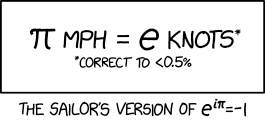
Did ... ⌘ [Read more](https://monero.observer/j-berman-completes-monero-dev-work-2024-part-8-ccs/)The Maritime Approximation
 ⌘ Read more
fullmetalScience submits CCS proposal for ‘NoShore’ project
fullmetalScience1 has submitted their first CCS proposal2 looking to complete work on NoShore, a project dedicated to on-the-go offline payments:
TL;DR The document proposes a shell-based environment that users can run to enable offline payments with supporting merchants, whereas the actual signing device will be developed separately in an upcoming iteration.
”`
Total funding: 45 XMR.
ETA: Read more”`
The Maritime Approximation
⌘ Read more
Erlang Solutions: Meet the team: Erik Schön
In our final “Meet the Team” of 2024, we’d like to introduce you to Erik Schön, Managing Director at Erlang Solutions.
Erik shares his journey with Erlang, Elixir, and the BEAM ecosystem, from his work at Ericsson to joining Erlang Solutions in 2019. He also reflects on a key professional highlight in 2024 and looks ahead to his goals for 2025. Erik also reveals his festive traditions, including a Swedish-Japanese twist.
How to Dockerize a React App: A Step-by-Step Guide for Developers
We show how to dockerize a React app to streamline your development process, eliminate “it works on my machine” problems, and ensure seamless deployments. ⌘ Read more
Cuprate Meeting scheduled for 17 December 2024 1800 UTC
The next Cuprate Meeting is scheduled1 to take place on Tuesday, December 17 2024 at 18:00 UTC on IRC-Libera/Matrix2 in the #cuprate channels.
Agenda overviewCuprate is an effort to create an alternative Monero node implementation.
Greetings
Updates: What is everyone working on?
Project: What is next for Cuprate?
Any other business
The meeting’s moderator should be Boog9003. Consult the Cuprate co … ⌘ Read more
↳
In-reply-to
»
Wow, it seem my #Webmentions implementation works from Mastodon via brid.gy
Media
⤋ Read More
Hm, does your implementation works not with txt-only? I’m tried to write own but didnt test it: https://paste.ee/p/CopOR
Did I write here already that the reason why I love Twtxt so much is that it works without having to compile, install anything extra. Just the bin applications that come with 95% of all operating systems and you’re good to read and participate, giving you have a domain name somewhere to host the twtxt.txt file.
Wow, it seem my #Webmentions implementation works from Mastodon via brid.gy
b4n6_b4n6 proposes bounties for Stack Wallet bug fixes
b4n6_b4n61 has proposed bounties2’3 for fixing two recently reported Stack Wallet4 issues5:
#1 Add checksum check for mnemonic seed
Total Bounty: 0.5 XMR (to date)

#2 Diagnose and fix linux crash
Total Bounty: 0.5 XMR (to date)
To start working on the tasks yourself, you should make your intentions public by posting a comment in the bounty threads.
To increase the bounties you can … ⌘ Read more
Added TwtHash hashes to every message on my personal Twtxt HTML renderer. Code is not yet ready for prime-time. Need to work out some kinks still.
Pinellas County Running: 7.00 miles, 00:10:07 average pace, 01:10:44 duration
work life is killing me. this was hard and i am just on empty recently.
#running
rehrar releases Stack Wallet v2.1.9, Stack Duo v1.2.4
rehrar1 has released Stack Wallet2 version 2.1.93 and Stack Duo version 1.2.44 with various fixes and improvements.
Stack Wallet:
* Show Monero/Wownero tx private key option
* Fix Frost error
* Stack Wallet Backup fixes
Stack Duo:
* Added Monero churn options
* Paynym temporarily disabled while kinks worked out [..]
The release notes, binaries, and the SHA256 hashes can … ⌘ Read more
Kewbit posts second ‘Haveno App’ CCS progress report amidst growing criticism
Kewbit1 has posted a second progress report2 for their CCS proposal to continue development work on the Haveno App 3 project amidst growing criticism4 from the Monero community over various inconsistencies:
I am pleased to confirm that we have reached Milestone 2 (pending further testing) of the Haveno App enhancement project. [..] I respectfully request a 50 … ⌘ Read more
Why we, as knowledge workers, should take care of work-life balance
Community post by Annalisa Gennaro At the beginning of this year, I fell apart. I found myself in pieces, struggling to say a single word without bursting into tears. I had severe sleep issues, suffered from… ⌘ Read more
The XMPP Standards Foundation: The XMPP Newsletter November 2024
XMPP Newsletter Banner
Welcome to the XMPP Newsletter, great to have you here again!
This issue covers the month of November 2024.
Like this newsletter, many projects and their efforts in the XMPP community are a result of people’s voluntary work. If you are happy with the services and software you may be using, please consider saying thanks or help thes … ⌘ Read more
SNeedlewoods completes first part-time Monero dev work CCS
SNeedlewoods1 has posted a Monero dev update2 after working part-time on Monero development for 1 month (~65 hours) during their first CCS proposal3:
Thanks for all the support from CCS coordinators, upvoters, donors and dev colleagues. It’s an honor to be able to work with you. [..] Will continue to work on the wallet API and will try to solve review comments ASAP, but since I’ll go take some days off … ⌘ Read more
Monero Research Lab meeting scheduled for 11 December 2024 1700 UTC
The next Monero Research Lab1 meeting is scheduled to take place on Wednesday, December 11th 2024 at 17:00 UTC on IRC-Libera/Matrix2 in the #monero-research-lab channels.
vtnerd completes 2024 Q3 Monero dev work CCS
vtnerd1 has posted a third and final progress report2 for their full-time 2024/Q3 Monero development work CCS proposal3:
Work overviewThe bulk of the time was making LWS HTTP client requests asynchronous4 - the scanner, exchange rates, and /login are no longer blocked by I/O. [..] I’ve probably missed a few things, this was a somewhat busy month of work.
”`
- LWS /get_random_outs is also now asynchronous
- … ⌘ Read more”`
How to Instantly Write a Business Plan with AI on Mac, iPhone, iPad
While there are plenty of paid options to get a business plan, from business plan software, to books, to working with a consultant, or even outsourcing the entire thing, another option is available for iPhone, iPad, and Mac users, and it uses the magic of Apple Intelligence features and ChatGPT to instantly create a business … Read More ⌘ Read more
(#lbtt2dq) I understand why I a swarch for this tag didn’t actually work, but I’m curious what the expectations of users are here?
I understand why I a swarch for this tag didn’t actually work, but I’m curious what the expectations of users are here? ⌘ Read more
Cuprate Meeting scheduled for 10 December 2024 1800 UTC
The next Cuprate Meeting is scheduled1 to take place on Tuesday, December 10 2024 at 18:00 UTC on IRC-Libera/Matrix2 in the #cuprate channels.
Agenda overviewCuprate is an effort to create an alternative Monero node implementation.
Greetings
Updates: What is everyone working on?
Project: What is next for Cuprate?
Any other business
The meeting’s moderator should be Boog9003. Consult the Cuprate co … ⌘ Read more
[AFH] [~0.25 XMR/hr] Experienced video editor available to work for Monero
I use Davinci Resolve. Samples provided upon request. Price is per hour, but will discuss project based pricing.
Link: https://xmrbazaar.com/listing/J26C/
strandead (XMRBazaar) ⌘ Read more
↳
In-reply-to
»
The original twt is unavailable. It may have been edited or deleted, or is from an unknown or muted feed.
⤋ Read More
Yes it work: 2024-12-01T19:38:35Z twtxt/1.2.3 (+https://eapl.mx/twtxt.txt; @eapl) :D
The .log is just a simple append each request. The idea with the .cvs is to have it tally up how many request there have been from each client as a way to avoid having the log file grow too big. And that you can open the .cvs as a spreadsheet and have an easy overview and filtering options.
Access to those files are closed to the public.
↳
In-reply-to
»
The original twt is unavailable. It may have been edited or deleted, or is from an unknown or muted feed.
⤋ Read More
@eapl.mx@eapl.mx Yes, the idea is to add User Agent support to #Timeline.
Right now it just adds every request to a growing log file, but I have also been working on a way to analyse it, so it only saves the time of the latest request.
I’m not sure how to make it part of timeline itself, since it requeses that you redirect/rewrite from twtAgent.php to the acctual twtxt.txt
Help with making Timeline send proper User Agents to others would be much appreciated:)
This robot vacuum is more autonomous, but you still need to check its work
iRobot’s latest fills a long-standing gap in the Roomba lineup with its automated mop-pad washing and drying. ⌘ Read more
From heels to work boots, mango farming is a dream come true for Thai businesswoman
Saramat “Tou” Ruchkaew had a successful marketing career in Thailand before she moved to Australia and became one of the NT’s biggest mango growers. ⌘ Read more
↳
In-reply-to
»
The original twt is unavailable. It may have been edited or deleted, or is from an unknown or muted feed.
⤋ Read More
@eapl.mx@eapl.mx Super to see you got webmentions working too :)
EDIT: A webmention was send to: https://eapl.mx/timeline/webmention (Status: 202)
ofrnxmr completes second milestone for BasicSwapDEX CCS proposal
ofrnxmr1 has completed2 the second milestone (M2-O/M2-F/M2-B) for their CCS proposal3 to empower and steward BasicSwapDex4 to production quality software:
”`
Core v0.14.1 > v0.14.2:
- Removed sqlalchemy
- Reformat codebase using Black
- Completed the BCH integration
- monero-wallet-rpc optimizations
- Prep code for new GUI bid/offer flow
GUI 3.1.0 > 3.1.1:
- Re … ⌘ Read more”`
(#fjmw5qa) @aelaraji So it all just worked?
@aelaraji @aelaraji.com So it all just worked? ⌘ Read more
Why does OpenTelemetry work differently on mobile versus backend apps?
Member post by Jamie Lynch, Senior Software Engineer at Embrace OpenTelemetry has historically been adopted mainly on backend systems, where it’s a great solution for gaining insight into what’s happening in production by gathering telemetry via… ⌘ Read more
Can someone try Alpine Linux with XFCE and Compiz please? Show me how the full screen zoom works in 2024/2025 🙏
Can someone try Alpine Linux with XFCE and Compiz please? Show me how the full screen zoom works in 2024/2025 🙏 ⌘ Read more
selsta submits CCS proposal for 3 months of Monero dev work until end of February 2025
selsta1 has submitted a new CCS proposal2 to continue working part-time on Monero development for 3 more months, until the end of February 2025:
Work for 30 hours per week over the next 3 months (from December to end of Feburary) at a rate of 50€ / hour. At 150€ / XMR this makes ~130 XMR.
Total funding: 130 XMR.

ETA: (end of) February 2025.
The dev will continue … ⌘ Read more
Stack Wallet adds support for XMR view-only wallets, ‘churn options’
rehrar1 has released Stack Wallet2 version 2.1.83 with support for Monero view-only wallets and churn options 4, various other changes and bug fixes.
Added Monero churn options
Added ability to set tor/clearnet options for individual nodes
Bug fixes for Solana, Tezos, ETH, Cardano, and epic
Paynym temporarily disabled while kinks worked out
Adju ... ⌘ [Read more](https://monero.observer/stack-wallet-v2.1.8-support-monero-view-only-wallets-churn-options/)Easy Wi-Fi Speed Test Works on Mac, PC, iPhone, Android, iPad, etc
If you’ve just setup a new wi-fi network or ISP, or perhaps you just joined a new wi-fi network, one of the first things you might be inclined to do is run a speed test. Speed testing helps to evaluate the performance of an internet connection, measuring download speed, upload speed, and latency, allowing you … [Read More](https://osxdaily.com/2024/11/27/easy-speed-test-for-wi-fi-works-on-mac-pc-iphone … ⌘ Read more
Monero Research Lab meeting scheduled for 4 December 2024 1700 UTC
The next Monero Research Lab1 meeting is scheduled to take place on Wednesday, December 4th 2024 at 17:00 UTC on IRC-Libera/Matrix2 in the #monero-research-lab channels.
Cuprate Meeting scheduled for 3 December 2024 1800 UTC
The next Cuprate Meeting is scheduled1 to take place on Tuesday, December 3 2024 at 18:00 UTC on IRC-Libera/Matrix2 in the #cuprate channels.
Agenda overviewCuprate is an effort to create an alternative Monero node implementation.
Greetings
Updates: What is everyone working on?
Project: What is next for Cuprate?
Any other business
The meeting’s moderator should be Boog9003. Consult the Cuprate code … ⌘ Read more
Pinellas County Running: 5.06 miles, 00:09:08 average pace, 00:46:16 duration
ugh, getting some frustrations out from work.
#running
(#emr7uva) @movq I’ll do a few, it’s always fun. But I’ve never completed the entire thing to date 😢 I often find myself quite busy with work …
@movq @www.uninformativ.de I’ll do a few, it’s always fun. But I’ve never completed the entire thing to date 😢 I often find myself quite busy with work and helping out with the family. ⌘ Read more
(#t562ika) In which case I have one that is offline (work) and one that is online, but not public (personal). 🤣 I could publish some of the …
In which case I have one that is offline (work) and one that is online, but not public (personal). 🤣 I could publish some of them, but I haven’t figured out how I’d like to do that yet… ⌘ Read more
(#ir3wtza) @doesnm You don’t generally call go build main.go or whatever. You generally call go build . or go build ./cmd/foo/... – Becau …
@doesnm @doesnm.p.psf.lt You don’t generally call go build main.go or whatever. You generally call go build . or go build ./cmd/foo/... – Because you need to tell the compiler to build a whole package or a bunch of sub-packages + main. go run main.go only works for the simplest case. ⌘ Read more
↳
In-reply-to
»
The original twt is unavailable. It may have been edited or deleted, or is from an unknown or muted feed.
⤋ Read More
go build is working but not go build main.go
plowsof posts progress report for fifth CCS coordinator term
plowsof1 has submitted a progress report2 after working for more than two months during their fifth term as CCS coordinator3:
**Wow! Just Wow! 😮 Discovered this whilst trying to debug why my Youtube frontend no longer works:
$ youtube-dl 'https://www.youtube.com ...**
Wow! Just Wow! 😮  Discovered this whilst trying to debug why my Youtube frontend no longer works:
$ youtube-dl ‘https://www.youtube.com/watch?v=YpiK1FMy2Mg’
[youtube] YpiK1FMy2Mg: Downloading webpage
WARNING: unable to extract uploader id; please report this issue on https://yt-dl.org/bug . Make sure you are using the latest version; s … ⌘ Read more
[LTH] [Bounty] [0.1 XMR] Fix ‘[warn] Unparseable address in hidden service port configuration’ error
So I’ve been getting the above error on my TOR monero nodes, the nodes will start and work without issue (20+ nodes) but after X amount of hours all of them show the same “[warn] Unparseable address in hidden service port configuration.” this has only started in the last week, anyone else finding the same? Sometimes it recovers automatically others it will sit repeating the same error until rebooted where it will work again.
Lin … ⌘ Read more
Have an Old iPhone or iPad? iCloud Backups & Safari Bookmark Syncing Will Soon Not Work
Apple is dropping support for iCloud backups for iPhone or iPad running iOS 8 or earlier. Additionally, Apple is also dropping support for Safari Bookmark Syncing for devices running iOS 10 or earlier, or macOS Sierra 10.12.5 and earlier. While this will not impact the vast majority of people, there are many older model iPhone, … [Read More](https://osxdaily … ⌘ Read more