↳
In-reply-to
»
The original twt is unavailable. It may have been edited or deleted, or is from an unknown or muted feed.
⤋ Read More
Here is just a small list of things™ that I’m aware will break, some quite badly, others in minor ways:
- Link rot & migrations: domain changes, path reshuffles, CDN/mirror use, or moving from txt → jsonfeed will orphan replies unless every reader implements perfect 301/410 history, which they won’t.
- Duplication & forks: mirrors/relays produce multiple valid locations for the same post; readers see several “parents” and split the thread.
- Verification & spam-resistance: content addressing lets you dedupe and verify you’re pointing at exactly the post you meant (hash matches bytes). Location anchors can be replayed or spoofed more easily unless you add signing and canonicalization.
- Offline/cached reading: without the original URL being reachable, readers can’t resolve anchors; with hashes they can match against local caches/archives.
- Ecosystem churn: all existing clients, archives, and tools that assume content-derived IDs need migrations, mapping layers, and fallback logic. Expect long-lived threads to fracture across implementations.
↳
In-reply-to
»
whyyyyy is my discover page only showing 7 twts!!!
⤋ Read More
@kat@yarn.girlonthemoon.xyz Mine shows 1/1 of 14 Twts 😆 I think this is a bug 🤯
🧮 USERS:1 FEEDS:2 TWTS:1471 ARCHIVED:90021 CACHE:2680 FOLLOWERS:22 FOLLOWING:14
🧮 USERS:1 FEEDS:2 TWTS:1470 ARCHIVED:90004 CACHE:2669 FOLLOWERS:22 FOLLOWING:14
🧮 USERS:1 FEEDS:2 TWTS:1469 ARCHIVED:89989 CACHE:2669 FOLLOWERS:22 FOLLOWING:14
Here’s one possible hobby: 1. Take something you don’t like. 2. Try to like it. You can try to like stuff
🧮 USERS:1 FEEDS:2 TWTS:1468 ARCHIVED:89982 CACHE:2683 FOLLOWERS:22 FOLLOWING:14
🧮 USERS:1 FEEDS:2 TWTS:1467 ARCHIVED:89975 CACHE:2680 FOLLOWERS:22 FOLLOWING:14
Watermill Quickstart
1 points posted by roblaszczak ⌘ Read more
🧮 USERS:1 FEEDS:2 TWTS:1466 ARCHIVED:89964 CACHE:2691 FOLLOWERS:22 FOLLOWING:14
🧮 USERS:1 FEEDS:2 TWTS:1465 ARCHIVED:89956 CACHE:2696 FOLLOWERS:22 FOLLOWING:14
🧮 USERS:1 FEEDS:2 TWTS:1464 ARCHIVED:89943 CACHE:2694 FOLLOWERS:22 FOLLOWING:14
🧮 USERS:1 FEEDS:2 TWTS:1463 ARCHIVED:89933 CACHE:2719 FOLLOWERS:22 FOLLOWING:14
🧮 USERS:1 FEEDS:2 TWTS:1462 ARCHIVED:89926 CACHE:2715 FOLLOWERS:22 FOLLOWING:14
お知らせ:JPCERT/CC Eyes「解説:脆弱性関連情報取扱制度の運用と今後の課題について(前編)~公益性のある脆弱性情報開示とは何か~」 ⌘ Read more
🧮 USERS:1 FEEDS:2 TWTS:1461 ARCHIVED:89907 CACHE:2729 FOLLOWERS:22 FOLLOWING:14
🧮 USERS:1 FEEDS:2 TWTS:1460 ARCHIVED:89905 CACHE:2731 FOLLOWERS:22 FOLLOWING:14
🧮 USERS:1 FEEDS:2 TWTS:1459 ARCHIVED:89894 CACHE:2727 FOLLOWERS:22 FOLLOWING:14
🧮 USERS:1 FEEDS:2 TWTS:1458 ARCHIVED:89883 CACHE:2723 FOLLOWERS:22 FOLLOWING:14
Made this a few weeks ago, just listened to it again and I quite like it:
https://www.uninformativ.de/music/2025-1-ebow/Fog.ogg
This is just one instrument: Electric bass guitar + EBow. And echo/delay on top. But it’s a single track, single take. It amazes me quite a bit how much you can do with that little thing. 🤯

🧮 USERS:1 FEEDS:2 TWTS:1457 ARCHIVED:89869 CACHE:2715 FOLLOWERS:22 FOLLOWING:14
🧮 USERS:1 FEEDS:2 TWTS:1456 ARCHIVED:89837 CACHE:2703 FOLLOWERS:22 FOLLOWING:14
Go Language: Productivity for Software Engineering
1 points posted by Everton Marques ⌘ Read more
🧮 USERS:1 FEEDS:2 TWTS:1455 ARCHIVED:89815 CACHE:2688 FOLLOWERS:22 FOLLOWING:14
The chemtrails have fallen down!!1 https://lyse.isobeef.org/abendhimmel-2025-09-05/
🧮 USERS:1 FEEDS:2 TWTS:1454 ARCHIVED:89800 CACHE:2675 FOLLOWERS:22 FOLLOWING:14
Hmm, gnu.org is slow as heck. Shorter HTML pages load in about ten seconds. This complete AWK manual all in one large HTML page took a full minute: https://www.gnu.org/software/gawk/manual/gawk.html Is there maybe some anti AI shenanigans going on?
In any case, I find the user guide super interesting. My AWK skills are basically non-existent, so I finally decided to change that. This document is incredibly well written and makes it really fun to keep reading and learning. I’m very impressed. So far, I made it to section 1.6, happy to continue.
🧮 USERS:1 FEEDS:2 TWTS:1453 ARCHIVED:89786 CACHE:2676 FOLLOWERS:22 FOLLOWING:14
ProcessOne: Spotify’s Direct Messaging Gambit
Last week, Spotify quietly launched direct messaging across its platform in selected areas, allowing users to share tracks and playlists through private conversations within the app. The feature was rolled out with mini … ⌘ Read more
🧮 USERS:1 FEEDS:2 TWTS:1452 ARCHIVED:89778 CACHE:2673 FOLLOWERS:22 FOLLOWING:14
Mathieu Pasquet: slixmpp v1.11
This new version includes a few new XEP plugins as well as fixes, notably
for some leftover issues in our rust JID code, as well as one for a bug that
caused issues in Home Assistant.
Thanks to everyone who contributed with code, issues, suggestions, and reviews!
CI and buildNicoco put in a lot of work in order to get all possible wheels built in CI. We now have manylinux and musl builds of everything doable within codeberg,
published to the codeberg pypi repo, and published on pypi. … ⌘ Read more
🧮 USERS:1 FEEDS:2 TWTS:1451 ARCHIVED:89768 CACHE:2666 FOLLOWERS:22 FOLLOWING:14
🧮 USERS:1 FEEDS:2 TWTS:1450 ARCHIVED:89755 CACHE:2658 FOLLOWERS:22 FOLLOWING:14
↳
In-reply-to
»
The bots have begun to access my website way more often. I’m getting about 120k hits on https://www.uninformativ.de/git/ now in a couple of hours.
⤋ Read More
Why do I care about this?
- The load will become a problem at some point.
- These crawlers and the current “AI” in general are breaking the rules. I am supposed to be paying for every little thing, I get sued for “piracy”. But apparently, these rules only apply to me. If I had more money, I could break them. Fuck that.
- I simply don’t want it. Period.
🧮 USERS:1 FEEDS:2 TWTS:1449 ARCHIVED:89735 CACHE:2650 FOLLOWERS:22 FOLLOWING:14
🧮 USERS:1 FEEDS:2 TWTS:1448 ARCHIVED:89727 CACHE:2644 FOLLOWERS:22 FOLLOWING:14
🧮 USERS:1 FEEDS:2 TWTS:1447 ARCHIVED:89714 CACHE:2638 FOLLOWERS:22 FOLLOWING:14
🧮 USERS:1 FEEDS:2 TWTS:1446 ARCHIVED:89680 CACHE:2640 FOLLOWERS:22 FOLLOWING:14
I’ve got a prototype of my hardcopy simulator going. I’m typing on the keyboard and the “display” goes to the printer:
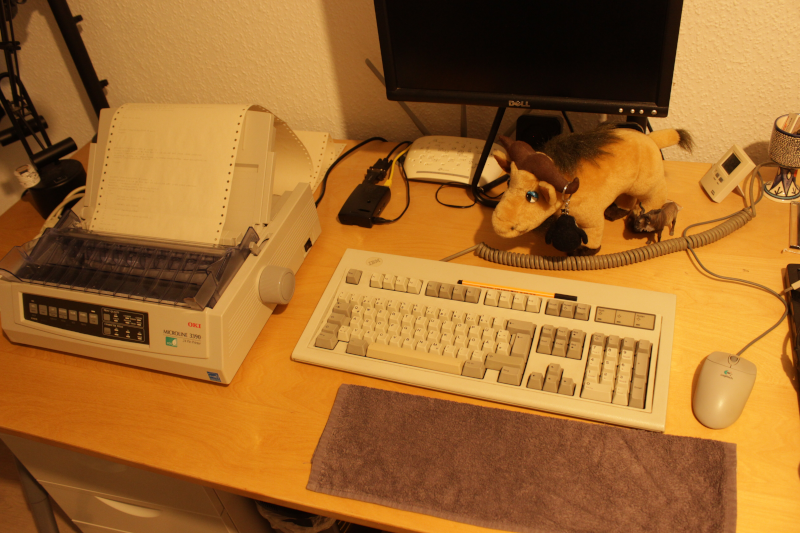
https://movq.de/v/235c1eabac/MVI_8810.MOV.mp4
The biiiiiiiiiig problem is that the print head and plastic cover make it impossible to see what’s currently being printed, because this is not a typewriter. This means: In order to see what I just entered, I have to feed the paper back and forth and back and forth … it’s not ideal.
I got that idea of moving back/forth from Drew DeVault, who – as it turned out – did something similar a few years back. (I tried hard to read as little as possible of his blog post, because figuring things out myself is more fun. But that could mean I missed a great idea here or there.)
But hey, at least this is running on my Pentium 133 on SuSE Linux 6.4, printer connected with a parallel cable. 😍
(Also, yes, you can see the printouts of earlier tests and, yes, I used ed(1) wrong at one point. 🤪 And ls insisted on using colors …)
🧮 USERS:1 FEEDS:2 TWTS:1445 ARCHIVED:89665 CACHE:2626 FOLLOWERS:22 FOLLOWING:14
🧮 USERS:1 FEEDS:2 TWTS:1444 ARCHIVED:89656 CACHE:2618 FOLLOWERS:22 FOLLOWING:14
🧮 USERS:1 FEEDS:2 TWTS:1443 ARCHIVED:89640 CACHE:2613 FOLLOWERS:22 FOLLOWING:14
🧮 USERS:1 FEEDS:2 TWTS:1442 ARCHIVED:89622 CACHE:2606 FOLLOWERS:22 FOLLOWING:14
🧮 USERS:1 FEEDS:2 TWTS:1441 ARCHIVED:89619 CACHE:2612 FOLLOWERS:22 FOLLOWING:14
↳
In-reply-to
»
Bloody AI clowns:
⤋ Read More
Here’s an interesting thought/angle on this topic:
gemini://gemini.conman.org/boston/2025/08/21.1
A further check showed that all the network blocks are owned by one organization—Tencent [4]. I’m seriously thinking that the CCP (Chinese Communist Party) encourage this with maybe the hope of externalizing the cost of the Great Firewall [5] to the rest of the world.
🧮 USERS:1 FEEDS:2 TWTS:1440 ARCHIVED:89613 CACHE:2612 FOLLOWERS:22 FOLLOWING:14
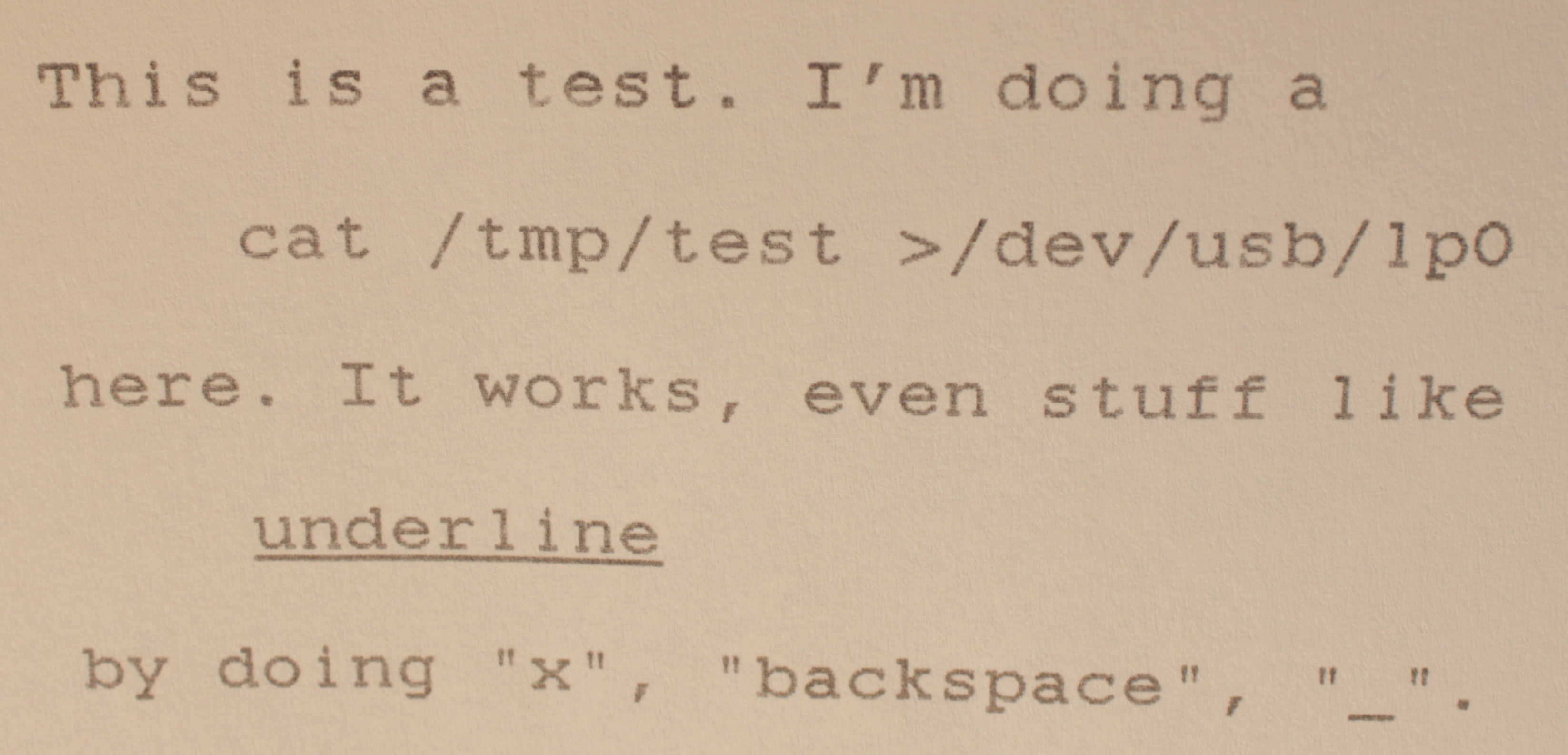
Sooooooooo, things happened, and I now have a dot matrix printer again. 😍😂
(One of the end goals is to simulate a hardcopy terminal on my old box. I’m waiting for another cable to arrive, I don’t have USB there. And then use ed(1) like it was meant to be used! 😅)
https://movq.de/v/850e04ba36/VID_20250821_180801.mp4.mp4
Erlang Solutions: MongooseIM 6.4: Simplified and Unified
MongooseIM is a scalable and efficient instant messaging server. With the latest release 6.4.0, it has become more powerful yet easier to use and maintain. Thanks to the internal unification of listeners and connection handling, the configuration is easier and more intuitive, while numerous new options are supported.
New features include support for TLS 1.3 with optional channel binding for improved security, single round-trip authent … ⌘ Read more
🧮 USERS:1 FEEDS:2 TWTS:1439 ARCHIVED:89607 CACHE:2612 FOLLOWERS:22 FOLLOWING:14
🧮 USERS:1 FEEDS:2 TWTS:1438 ARCHIVED:89599 CACHE:2610 FOLLOWERS:22 FOLLOWING:14