Rust Compiler Not Stable Enough for Linux Kernel Development
According to Linus Torvalds: “Nothing depends on Rust in the kernel now, and nothing will for some time yet.” ⌘ Read more
The state of security in cloud native development 2024
Earlier this year, The Linux Foundation surveyed 200 organizations to understand how they’re tackling security in cloud native application development. At a time when security breaches are increasing in frequency and in impact – the average breach now… ⌘ Read more
Newly Open Sourced Winamp Forbids Forking, Already Forked Hundreds of Times
Against GitHub Terms of Service which states all public repositories must be “forkable”. ⌘ Read more
A weekend with my family
This past weekend, I visited my family in the south of Germany. I wasn’t there for quite some time. On one day, we went to Biel in Switzerland, walking through the Taubenloch (“pigeonhole”, a canyon right next to the city) and sitting on a boat that took us across Lake Biel. It was quite picturesque. ⌘ Read more
OpenAI o1 self-play RL 技术路线推演
OpenAI的self-play RL新模型o1最近交卷,直接引爆了关于对于self-play的讨论。在数理推理领域获得了傲人的成绩,同时提出了train-time compute和test-time compute两个全新的RL scaling law。作为领域博主,在时效性方面肯定卷不过其他营销号了,所以这次准备了大概一万字的内容,彻底深入分析并推演一遍其中的相关技术细节。
首先要说一下,o1是一个多模态模型,很多人包括 Jim Fan 都忽略了这一点:
因此他继续叫做o,作为omni系列是没有任何疑问的。只不过这次发布是过于低调了,很多人都没有注意到 … ⌘ Read more
“Call for a Good Time?” OK… ⌘ Read more
↳
In-reply-to
»
The original twt is unavailable. It may have been edited or deleted, or is from an unknown or muted feed.
⤋ Read More
@prologic@twtxt.net Thanks for writing that up!
I hope it can remain a living document (or sequence of draft revisions) for a good long time while we figure out how this stuff works in practice.
I am not sure how I feel about all this being done at once, vs. letting conventions arise.
For example, even today I could reply to twt abc1234 with “(#abc1234) Edit: …” and I think all you humans would understand it as an edit to (#abc1234). Maybe eventually it would become a common enough convention that clients would start to support it explicitly.
Similarly we could just start using 11-digit hashes. We should iron out whether it’s sha256 or whatever but there’s no need get all the other stuff right at the same time.
I have similar thoughts about how some users could try out location-based replies in a backward-compatible way (append the replyto: stuff after the legacy (#hash) style).
However I recognize that I’m not the one implementing this stuff, and it’s less work to just have everything determined up front.
Misc comments (I haven’t read the whole thing):
Did you mean to make hashes hexadecimal? You lose 11 bits that way compared to base32. I’d suggest gaining 11 bits with base64 instead.
“Clients MUST preserve the original hash” — do you mean they MUST preserve the original twt?
Thanks for phrasing the bit about deletions so neutrally.
I don’t like the MUST in “Clients MUST follow the chain of reply-to references…”. If someone writes a client as a 40-line shell script that requires the user to piece together the threading themselves, IMO we shouldn’t declare the client non-conforming just because they didn’t get to all the bells and whistles.
Similarly I don’t like the MUST for user agents. For one thing, you might want to fetch a feed without revealing your identty. Also, it raises the bar for a minimal implementation (I’m again thinking again of the 40-line shell script).
For “who follows” lists: why must the long, random tokens be only valid for a limited time? Do you have a scenario in mind where they could leak?
Why can’t feeds be served over HTTP/1.0? Again, thinking about simple software. I recently tried implementing HTTP/1.1 and it wasn’t too bad, but 1.0 would have been slightly simpler.
Why get into the nitty-gritty about caching headers? This seems like generic advice for HTTP servers and clients.
I’m a little sad about other protocols being not recommended.
I don’t know how I feel about including markdown. I don’t mind too much that yarn users emit twts full of markdown, but I’m more of a plain text kind of person. Also it adds to the length. I wonder if putting a separate document would make more sense; that would also help with the length.
Last week at The Lunduke Journal (Sep 15 - Sep 21, 2024)
Real-Time Linux! Dystopian AI Future! Fake AI Podcasts! Exploding Pagers! ⌘ Read more
Low-cost Makerdiary board with iMX RT1011 Crossover MCU and Zephyr Support
Makerdiary recently introduced the iMX RT1011 Nano Kit, a compact, high-performance development board featuring NXP’s iMX RT1011 Crossover MCU. With an Arm Cortex-M7 core running at up to 500 MHz, it delivers strong CPU performance and real-time responsiveness The iMX RT1011 Nano Kit includes 128 KB of on-chip RAM, configurable as Tightly Coupled Memory or […] ⌘ Read more
↳
In-reply-to
»
The original twt is unavailable. It may have been edited or deleted, or is from an unknown or muted feed.
⤋ Read More
Been thinking about it for the last couple of days and I would say we can make do with the shorter (#<DATETIME URL>)since it mirrors the twt-mention syntax and simply points to the OP as the topic identified by the time of posting it. Do we really need and (edit:...)and (delete:...) also?
Open-Source Oscilloscope with 1 GS/s High-Speed Data Streaming and Flexible Measurement Capabilities
Crowd Supply recently launched a campaign for ThunderScope, an oscilloscope that combines powerful hardware with open-source software. It captures data at 1 GS/s and streams it to a computer via Thunderbolt, USB4, or PCI Express for real-time processing, offering greater flexibility for complex measurements across various timescales. The Thunde … ⌘ Read more
Upcoming I-Pi SMARC Embedded Prototype Kit Adopts Intel Amston Lake CPU
The I-Pi SMARC Amston Lake is a prototyping kit built on Intel’s Amston Lake architecture, designed to accelerate embedded system development. Key features include dual 2.5GbE LAN ports with Time-Sensitive Networking support and CAN interfaces for industrial applications. This kit includes the I-Pi SMARC Plus carrier and the LEC-ASL SMARC module, which features an Intel […] ⌘ Read more
Linux has Real-Time now. What the fart does that actually mean?
20 years in the making. But what does a Real-Time Linux Kernel mean for most of us? ⌘ Read more
↳
In-reply-to
»
@prologic Do you have a link to some past discussion?
⤋ Read More
@david@collantes.us Thanks, that’s good feedback to have. I wonder to what extent this already exists in registry servers and yarn pods. I haven’t really tried digging into the past in either one.
How interested would you be in changes in metadata and other comments in the feeds? I’m thinking of just permanently saving every version of each twtxt file that gets pulled, not just the twts. It wouldn’t be hard to do (though presenting the information in a sensible way is another matter). Compression should make storage a non-issue unless someone does something weird with their feed like shuffle the comments around every time I fetch it.
↳
In-reply-to
»
The original twt is unavailable. It may have been edited or deleted, or is from an unknown or muted feed.
⤋ Read More
@prologic@twtxt.net what time in UTC?
I wrote some code to try out non-hash reply subjects formatted as (replyto ), while keeping the ability to use the existing hash style.
I don’t think we need to decide all at once. If clients add support for a new method then people can use it if they like. The downside of course is that this costs developer time, so I decided to invest a few hours of my own time into a proof of concept.
With apologies to @movq@www.uninformativ.de for corrupting jenny’s beautiful code. I don’t write this expecting you to incorporate the patch, because it does complicate things and might not be a direction you want to go in. But if you like any part of this approach feel free to use bits of it; I release the patch under jenny’s current LICENCE.
Supporting both kinds of reply in jenny was complicated because each email can only have one Message-Id, and because it’s possible the target twt will not be seen until after the twt referencing it. The following patch uses an sqlite database to keep track of known (url, timestamp) pairs, as well as a separate table of (url, timestamp) pairs that haven’t been seen yet but are wanted. When one of those “wanted” twts is finally seen, the mail file gets rewritten to include the appropriate In-Reply-To header.
Patch based on jenny commit 73a5ea81.
https://www.falsifian.org/a/oDtr/patch0.txt
Not implemented:
- Composing twts using the (replyto …) format.
- Probably other important things I’m forgetting.
NASA isolates you on Mars? 🚀 Time for a Marvel marathon! 🍿 ⌘ Read more
↳
In-reply-to
»
The original twt is unavailable. It may have been edited or deleted, or is from an unknown or muted feed.
⤋ Read More
@lyse@lyse.isobeef.org fully agree. I have never been a fan of relative times to begin with, so that one will go away, foh sho! :-D
Ignite Realtime Blog: Openfire 4.9.0 release!
The Ignite Realtime community is happy to be able to announce the immediate availability of version 4.9.0 of Openfire, its cross-platform real-time collaboration server based on the XMPP protocol!
As compared to the previous non-patch release, this one is a bit smaller. This mostly is a maintenance release, and includes some preparations (deprecations, mainly) for a f … ⌘ Read more
Venture capital fund Rampersand ramps up hunt for next Aussie unicorn
Success stories such as Canva and Culture Amp are more than a decade old, and this fund says it’s time to find and fund the next crop of billion-dollar start-ups. ⌘ Read more
↳
In-reply-to
»
Hmm, this didn't work, because I made a mistake. Now I have corrected it, let's see how it goes now.
⤋ Read More
Woot, yes! It works perfectly. By the time you see my twtxt, it is already at the main Ferengi.one website.
↳
In-reply-to
»
Hmm, this didn't work, because I made a mistake. Now I have corrected it, let's see how it goes now.
⤋ Read More
OK, OK, the third time is the charm. Maybe?
‘Parents already have the tools’: Snapchat boss pushes back on social media ban
Tech billionaire Evan Spiegel is the first global CEO to weigh in and says parents – not tech companies – should carry most of the responsibility for their kids’ screen time. ⌘ Read more
↳
In-reply-to
»
The original twt is unavailable. It may have been edited or deleted, or is from an unknown or muted feed.
⤋ Read More
@movq@www.uninformativ.de I didn’t run the command as you recommended, but, I wiped things once more, and ran jenny -f, and this time got:
david@arrakis:~$ jenny -f
Fetching archived feed https://anthony.buc.ci/user/abucci/twtxt.txt/1 (configured as abucci, https://anthony.buc.ci/user/abucci/twtxt.txt)
Fetching archived feed https://lyse.isobeef.org/twtxt-2024-04.txt (configured as lyse, https://lyse.isobeef.org/twtxt.txt)
Fetching archived feed https://darch.dk/twtxt-archive.txt (configured as soren, https://darch.dk/twtxt.txt)
Fetching archived feed https://www.uninformativ.de/twtxt-old_2024-04-21_6v47cua.txt (configured as movq, https://www.uninformativ.de/twtxt.txt)
Fetching archived feed https://twtxt.net/user/prologic/twtxt.txt/1 (configured as prologic, https://twtxt.net/user/prologic/twtxt.txt)
Fetching archived feed https://lyse.isobeef.org/twtxt-2024-03.txt (configured as lyse, https://lyse.isobeef.org/twtxt.txt)
Fetching archived feed https://www.uninformativ.de/twtxt-old_2022-12-21_2us6qbq.txt (configured as movq, https://www.uninformativ.de/twtxt.txt)
Fetching archived feed https://twtxt.net/user/prologic/twtxt.txt/2 (configured as prologic, https://twtxt.net/user/prologic/twtxt.txt)
Fetching archived feed https://lyse.isobeef.org/twtxt-2024-02.txt (configured as lyse, https://lyse.isobeef.org/twtxt.txt)
Fetching archived feed https://www.uninformativ.de/twtxt-old_2022-01-14_ew5gzca.txt (configured as movq, https://www.uninformativ.de/twtxt.txt)
Fetching archived feed https://twtxt.net/user/prologic/twtxt.txt/3 (configured as prologic, https://twtxt.net/user/prologic/twtxt.txt)
Fetching archived feed https://lyse.isobeef.org/twtxt-2024-01.txt (configured as lyse, https://lyse.isobeef.org/twtxt.txt)
Fetching archived feed https://www.uninformativ.de/twtxt-old_2021-12-23_f6y65bq.txt (configured as movq, https://www.uninformativ.de/twtxt.txt)
Fetching archived feed https://twtxt.net/user/prologic/twtxt.txt/4 (configured as prologic, https://twtxt.net/user/prologic/twtxt.txt)
Fetching archived feed https://lyse.isobeef.org/twtxt-2023-12.txt (configured as lyse, https://lyse.isobeef.org/twtxt.txt)
Fetching archived feed https://www.uninformativ.de/twtxt-old_2021-12-04_e4x7yba.txt (configured as movq, https://www.uninformativ.de/twtxt.txt)
Fetching archived feed https://twtxt.net/user/prologic/twtxt.txt/5 (configured as prologic, https://twtxt.net/user/prologic/twtxt.txt)
Fetching archived feed https://lyse.isobeef.org/twtxt-2023-11.txt (configured as lyse, https://lyse.isobeef.org/twtxt.txt)
Fetching archived feed https://www.uninformativ.de/twtxt-old_2021-11-18_42tjxba.txt (configured as movq, https://www.uninformativ.de/twtxt.txt)
Fetching archived feed https://twtxt.net/user/prologic/twtxt.txt/6 (configured as prologic, https://twtxt.net/user/prologic/twtxt.txt)
Fetching archived feed https://lyse.isobeef.org/twtxt-2023-10.txt (configured as lyse, https://lyse.isobeef.org/twtxt.txt)
Fetching archived feed https://www.uninformativ.de/twtxt-old_2021-11-08_i2wnvaa.txt (configured as movq, https://www.uninformativ.de/twtxt.txt)
Fetching archived feed https://lyse.isobeef.org/twtxt-2023-09.txt (configured as lyse, https://lyse.isobeef.org/twtxt.txt)
Fetching archived feed https://www.uninformativ.de/twtxt-old_2021-10-23_kvwn5oa.txt (configured as movq, https://www.uninformativ.de/twtxt.txt)
Fetching archived feed https://lyse.isobeef.org/twtxt-2023-08.txt (configured as lyse, https://lyse.isobeef.org/twtxt.txt)
Fetching archived feed https://www.uninformativ.de/twtxt-old_2021-10-11_mljudaa.txt (configured as movq, https://www.uninformativ.de/twtxt.txt)
Fetching archived feed https://lyse.isobeef.org/twtxt-2023-07.txt (configured as lyse, https://lyse.isobeef.org/twtxt.txt)
Fetching archived feed https://www.uninformativ.de/twtxt-old_2021-09-22_5mkqwua.txt (configured as movq, https://www.uninformativ.de/twtxt.txt)
Fetching archived feed https://lyse.isobeef.org/twtxt-2023-06.txt (configured as lyse, https://lyse.isobeef.org/twtxt.txt)
Fetching archived feed https://www.uninformativ.de/twtxt-old_2021-07-27_xcnzmlq.txt (configured as movq, https://www.uninformativ.de/twtxt.txt)
Fetching archived feed https://lyse.isobeef.org/twtxt-2023-05.txt (configured as lyse, https://lyse.isobeef.org/twtxt.txt)
Fetching archived feed https://www.uninformativ.de/twtxt-old_2021-06-16_mtedqya.txt (configured as movq, https://www.uninformativ.de/twtxt.txt)
Fetching archived feed https://lyse.isobeef.org/twtxt-2023-04.txt (configured as lyse, https://lyse.isobeef.org/twtxt.txt)
Fetching archived feed https://www.uninformativ.de/twtxt-old_2021-04-29_z7lvzja.txt (configured as movq, https://www.uninformativ.de/twtxt.txt)
Fetching archived feed https://lyse.isobeef.org/twtxt-2023-03.txt (configured as lyse, https://lyse.isobeef.org/twtxt.txt)
Fetching archived feed https://www.uninformativ.de/twtxt-old_2021-03-19_xjabvhq.txt (configured as movq, https://www.uninformativ.de/twtxt.txt)
Fetching archived feed https://lyse.isobeef.org/twtxt-2023-02.txt (configured as lyse, https://lyse.isobeef.org/twtxt.txt)
Fetching archived feed https://www.uninformativ.de/twtxt-old_2021-02-24_te4a6oa.txt (configured as movq, https://www.uninformativ.de/twtxt.txt)
Fetching archived feed https://lyse.isobeef.org/twtxt-2023-01.txt (configured as lyse, https://lyse.isobeef.org/twtxt.txt)
Fetching archived feed https://www.uninformativ.de/twtxt-old_2021-01-26_qxgigma.txt (configured as movq, https://www.uninformativ.de/twtxt.txt)
Fetching archived feed https://lyse.isobeef.org/twtxt-2022-12.txt (configured as lyse, https://lyse.isobeef.org/twtxt.txt)
Fetching archived feed https://www.uninformativ.de/twtxt-old_2020-12-13_igfnala.txt (configured as movq, https://www.uninformativ.de/twtxt.txt)
Fetching archived feed https://lyse.isobeef.org/twtxt-2022-11.txt (configured as lyse, https://lyse.isobeef.org/twtxt.txt)
Fetching archived feed https://lyse.isobeef.org/twtxt-2022-10.txt (configured as lyse, https://lyse.isobeef.org/twtxt.txt)
Fetching archived feed https://lyse.isobeef.org/twtxt-2022-09.txt (configured as lyse, https://lyse.isobeef.org/twtxt.txt)
Fetching archived feed https://lyse.isobeef.org/twtxt-2022-08.txt (configured as lyse, https://lyse.isobeef.org/twtxt.txt)
Fetching archived feed https://lyse.isobeef.org/twtxt-2022-07.txt (configured as lyse, https://lyse.isobeef.org/twtxt.txt)
Fetching archived feed https://lyse.isobeef.org/twtxt-2022-06.txt (configured as lyse, https://lyse.isobeef.org/twtxt.txt)
Fetching archived feed https://lyse.isobeef.org/twtxt-2022-05.txt (configured as lyse, https://lyse.isobeef.org/twtxt.txt)
Fetching archived feed https://lyse.isobeef.org/twtxt-2022-04.txt (configured as lyse, https://lyse.isobeef.org/twtxt.txt)
Fetching archived feed https://lyse.isobeef.org/twtxt-2022-03.txt (configured as lyse, https://lyse.isobeef.org/twtxt.txt)
Fetching archived feed https://lyse.isobeef.org/twtxt-2022-02.txt (configured as lyse, https://lyse.isobeef.org/twtxt.txt)
Fetching archived feed https://lyse.isobeef.org/twtxt-2022-01.txt (configured as lyse, https://lyse.isobeef.org/twtxt.txt)
Fetching archived feed https://lyse.isobeef.org/twtxt-2021-12.txt (configured as lyse, https://lyse.isobeef.org/twtxt.txt)
Fetching archived feed https://lyse.isobeef.org/twtxt-2021-11.txt (configured as lyse, https://lyse.isobeef.org/twtxt.txt)
Fetching archived feed https://lyse.isobeef.org/twtxt-2021-10.txt (configured as lyse, https://lyse.isobeef.org/twtxt.txt)
Fetching archived feed https://lyse.isobeef.org/twtxt-2021-09.txt (configured as lyse, https://lyse.isobeef.org/twtxt.txt)
Fetching archived feed https://lyse.isobeef.org/twtxt-2021-08.txt (configured as lyse, https://lyse.isobeef.org/twtxt.txt)
Fetching archived feed https://lyse.isobeef.org/twtxt-2021-07.txt (configured as lyse, https://lyse.isobeef.org/twtxt.txt)
Fetching archived feed https://lyse.isobeef.org/twtxt-2021-06.txt (configured as lyse, https://lyse.isobeef.org/twtxt.txt)
Fetching archived feed https://lyse.isobeef.org/twtxt-2021-05.txt (configured as lyse, https://lyse.isobeef.org/twtxt.txt)
Fetching archived feed https://lyse.isobeef.org/twtxt-2021-04.txt (configured as lyse, https://lyse.isobeef.org/twtxt.txt)
Fetching archived feed https://lyse.isobeef.org/twtxt-2021-03.txt (configured as lyse, https://lyse.isobeef.org/twtxt.txt)
Fetching archived feed https://lyse.isobeef.org/twtxt-2021-02.txt (configured as lyse, https://lyse.isobeef.org/twtxt.txt)
Fetching archived feed https://lyse.isobeef.org/twtxt-2021-01.txt (configured as lyse, https://lyse.isobeef.org/twtxt.txt)
Fetching archived feed https://lyse.isobeef.org/twtxt-2020-12.txt (configured as lyse, https://lyse.isobeef.org/twtxt.txt)
Notice that @prologic@twtxt.net’s /6 is there. I found the twtxt then. Kind of odd it didn’t show before.
↳
In-reply-to
»
The original twt is unavailable. It may have been edited or deleted, or is from an unknown or muted feed.
⤋ Read More
Maybe I’m being a bit too purist/minimalistic here. As I said before (in one of the 1372739 posts on this topic – or maybe I didn’t even send that twt, I don’t remember 😅), I never really liked hashes to begin with. They aren’t super hard to implement but they are kind of against the beauty of the original twtxt – because you need special client support for them. It’s not something that you could write manually in your
twtxt.txtfile. With @sorenpeter@darch.dk’s proposal, though, that would be possible.
Tangentially related, I was a bit disappointed to learn that the twt subject extension is now never used except with hashes. Manually-written subjects sounded so beautifully ad-hoc and organic as a way to disambiguate replies. Maybe I’ll try it some time just for fun.
This time from the other side. 🌳 ⌘ Read more
CNCF and the Linux Foundation partner with Unified Patents on a community-driven approach to safeguard open source innovation from patent trolls
Now is the time for the open source ecosystem to band together and find strength in numbers CNCF and The Linux Foundation are expanding their partnership with Unified Patents to protect open source software from non-practicing entities (NPEs), c … ⌘ Read more
@prologic@twtxt.net earlier you suggested extending hashes to 11 characters, but here’s an argument that they should be even longer than that.
Imagine I found this twt one day at https://example.com/twtxt.txt :
2024-09-14T22:00Z Useful backup command: rsync -a “$HOME” /mnt/backup
and I responded with “(#5dgoirqemeq) Thanks for the tip!”. Then I’ve endorsed the twt, but it could latter get changed to
2024-09-14T22:00Z Useful backup command: rm -rf /some_important_directory
which also has an 11-character base32 hash of 5dgoirqemeq. (I’m using the existing hashing method with https://example.com/twtxt.txt as the feed url, but I’m taking 11 characters instead of 7 from the end of the base32 encoding.)
That’s what I meant by “spoofing” in an earlier twt.
I don’t know if preventing this sort of attack should be a goal, but if it is, the number of bits in the hash should be at least two times log2(number of attempts we want to defend against), where the “two times” is because of the birthday paradox.
Side note: current hashes always end with “a” or “q”, which is a bit wasteful. Maybe we should take the first N characters of the base32 encoding instead of the last N.
Code I used for the above example: https://fossil.falsifian.org/misc/file?name=src/twt_collision/find_collision.c
I only needed to compute 43394987 hashes to find it.
↳
In-reply-to
»
@prologic Some criticisms and a possible alternative direction:
⤋ Read More
HTTPS is supposed to do [verification] anyway.
TLS provides verification that nobody is tampering with or snooping on your connection to a server. It doesn’t, for example, verify that a file downloaded from server A is from the same entity as the one from server B.
I was confused by this response for a while, but now I think I understand what you’re getting at. You are pointing out that with signed feeds, I can verify the authenticity of a feed without accessing the original server, whereas with HTTPS I can’t verify a feed unless I download it myself from the origin server. Is that right?
I.e. if the HTTPS origin server is online and I don’t mind taking the time and bandwidth to contact it, then perhaps signed feeds offer no advantage, but if the origin server might not be online, or I want to download a big archive of lots of feeds at once without contacting each server individually, then I need signed feeds.
feed locations [being] URLs gives some flexibility
It does give flexibility, but perhaps we should have made them URIs instead for even more flexibility. Then, you could use a tag URI,
urn:uuid:*, or a regular old URL if you wanted to. The spec seems to indicate that theurltag should be a working URL that clients can use to find a copy of the feed, optionally at multiple locations. I’m not very familiar with IP{F,N}S but if it ensures you own an identifier forever and that identifier points to a current copy of your feed, it could be a great way to fix it on an individual basis without breaking any specs :)
I’m also not very familiar with IPFS or IPNS.
I haven’t been following the other twts about signatures carefully. I just hope whatever you smart people come up with will be backwards-compatible so it still works if I’m too lazy to change how I publish my feed :-)
Has Apple’s AI ‘glow up’ made Siri better?
Apple’s digital assistant is 13 years old and one of its original inventors says it’s about time it got a makeover. ⌘ Read more
Craters
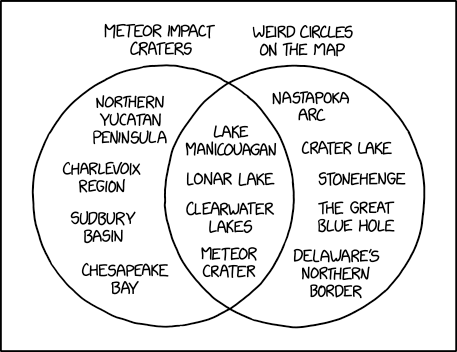 ⌘ Read more
Craters
⌘ Read more
** 📸 Photo **
I had time to take a walk before running some errands and getting a flu shot and a Covid booster this morning. ⌘ Read more
Streamlining your MLOps pipeline with GitHub Actions and Arm64 runners
Explore how Arm’s optimized performance and cost-efficient architecture, coupled with PyTorch, can enhance machine learning operations, from model training to deployment and learn how to leverage CI/CD for machine learning workflows, while reducing time, cost, and errors in the process.
The post [Streamlining your MLOps pipeline with GitHub Actions and Arm64 runners](https://githu … ⌘ Read more
↳
In-reply-to
»
Interesting.. QUIC isn't very quick over fast internet.
⤋ Read More
@xuu@txt.sour.is Thanks for the link. I found a pdf on one of the authors’ home pages: https://ahmadhassandebugs.github.io/assets/pdf/quic_www24.pdf . I wonder how the protocol was evaluated closer to the time it became a standard, and whether anything has changed. I wonder if network speeds have grown faster than CPU speeds since then. The paper says the performance is around the same below around 600 Mbps.
To be fair, I don’t think QUIC was ever expected to be faster for transferring a single stream of data. I think QUIC is supposed to reduce the impact of a dropped packet by making sure it only affects the stream it’s part of. I imagine QUIC still has that advantage, and this paper is showing the other side of a tradeoff.
Answering Fan Questions About Nuclear Fusion, the Smallest Unit of Time and the Early Universe ⌘ Read more
↳
In-reply-to
»
The original twt is unavailable. It may have been edited or deleted, or is from an unknown or muted feed.
⤋ Read More
So this is a great thread. I have been thinking about this too.. and what if we are coming at it from the wrong direction? Identity being tied to a given URL has always been a pain point. If i get a new URL its almost as if i have a new identity because not only am I serving at a new location but all my previous communications are broken because the hashes are all wrong.
What if instead we used this idea of signatures to thread the URLs together into one identity? We keep the URL to Hash in place. Changing that now is basically a no go. But we can create a signature chain that can link identities together. So if i move to a new URL i update the chain hosted by my primary identity to include the new URL. If i have an archived feed that the old URL is now dead, we can point to where it is now hosted and use the current convention of hashing based on the first url:
The signature chain can also be used to rotate to new keys over time. Just sign in a new key or revoke an old one. The prior signatures remain valid within the scope of time the signatures were made and the keys were active.
The signature file can be hosted anywhere as long as it can be fetched by a reasonable protocol. So say we could use a webfinger that directs to the signature file? you have an identity like frank@beans.co that will discover a feed at some URL and a signature chain at another URL. Maybe even include the most recent signing key?
From there the client can auto discover old feeds to link them together into one complete timeline. And the signatures can validate that its all correct.
I like the idea of maybe putting the chain in the feed preamble and keeping the single self contained file.. but wonder if that would cause lots of clutter? The signature chain would be something like a log with what is changing (new key, revoke, add url) and a signature of the change + the previous signature.
# chain: ADDKEY kex14zwrx68cfkg28kjdstvcw4pslazwtgyeueqlg6z7y3f85h29crjsgfmu0w
# sig: BEGIN SALTPACK SIGNED MESSAGE. ...
# chain: ADDURL https://txt.sour.is/user/xuu
# sig: BEGIN SALTPACK SIGNED MESSAGE. ...
# chain: REVKEY kex14zwrx68cfkg28kjdstvcw4pslazwtgyeueqlg6z7y3f85h29crjsgfmu0w
# sig: ...
↳
In-reply-to
»
@prologic Some criticisms and a possible alternative direction:
⤋ Read More
@lyse@lyse.isobeef.org This looks like a nice way to do it.
Another thought: if clients can’t agree on the url (for example, if we switch to this new way, but some old clients still do it the old way), that could be mitigated by computing many hashes for each twt: one for every url in the feed. So, if a feed has three URLs, every twt is associated with three hashes when it comes time to put threads together.
A client stills need to choose one url to use for the hash when composing a reply, but this might add some breathing room if there’s a period when clients are doing different things.
(From what I understand of jenny, this would be difficult to implement there since each pseudo-email can only have one msgid to match to the in-reply-to headers. I don’t know about other clients.)
Where the Eder flows into the Fulda
Just in time before it gets cold and rainy again next week, I took advantage of today to go for a short bike ride. Upstream along the Fulda, over to the Eder and then to where the Eder flows into the Fulda. This was the short (49 km) of the two versions I had planned for this. The longer version is almost 90 kilometers long. Let’s see if I can still do it this year… ⌘ Read more
↳
In-reply-to
»
The original twt is unavailable. It may have been edited or deleted, or is from an unknown or muted feed.
⤋ Read More
@movq@www.uninformativ.de Another idea: just hash the feed url and time, without the message content. And don’t twt more than once per second.
Maybe you could even just use the time, and rely on @-mentions to disambiguate. Not sure how that would work out.
Though I kind of like the idea of twts being immutable. At least, it’s clear which version of a twt you’re replying to (assuming nobody is engineering hash collisions).
↳
In-reply-to
»
The original twt is unavailable. It may have been edited or deleted, or is from an unknown or muted feed.
⤋ Read More
@movq@www.uninformativ.de @prologic@twtxt.net Another option would be: when you edit a twt, prefix the new one with (#[old hash]) and some indication that it’s an edited version of the original tweet with that hash. E.g. if the hash used to be abcd123, the new version should start “(#abcd123) (redit)”.
What I like about this is that clients that don’t know this convention will still stick it in the same thread. And I feel it’s in the spirit of the old pre-hash (subject) convention, though that’s before my time.
I guess it may not work when the edited twt itself is a reply, and there are replies to it. Maybe that could be solved by letting twts have more than one (subject) prefix.
But the great thing about the current system is that nobody can spoof message IDs.
I don’t think twtxt hashes are long enough to prevent spoofing.
↳
In-reply-to
»
The original twt is unavailable. It may have been edited or deleted, or is from an unknown or muted feed.
⤋ Read More
@abucci@anthony.buc.ci OMFG! Dear jebus, look at the size of that! :-/ It is just a matter of time until one of those randomly falls on any of us. Just incredible!
KubeCon + CloudNativeCon North America 2024 related event deep dive: WasmCon
November 11-12, 2024 Salt Lake City, Utah View the schedule WasmCon is a two-day event focused on all things Web Assembly. This is the first time WasmCon is being held in conjunction with KubeCon + CloudNativeCon North America… ⌘ Read more
Best Apple Labor Day Deals Continue: $199 iPad, $250 Off MacBook Air, $500 Off MacBook Pro, etc
Labor Day Weekend continues and so do the sweet deals from Amazon on select Apple products. Many of these Labor Day deals are some of the best prices of all time on these products, so if you’re shopping around for new Apple hardware anyway you might as well enjoy the hefty discounts from Amazon. iPad … [Read More](https://osxdaily.com/2024/09/02/best- … ⌘ Read more
gorilla vs. bear modern yacht rock 2024 end of summer mix
brat summer’s finally officially over, so it feels like the right time to drop the 9th annual installment in our series of modern yacht rock late summer mixtapes… [Continue reading…](https://www.gorillavsbear.net/gorilla-vs-bear-modern-yacht-rock-2024-end- … ⌘ Read more
My August ‘24 in Review
And now another month, and soon the summer, has come to an end. Time to take a (this time very) brief look back at August. ⌘ Read more
My August ‘24 in Review
And now another month, and soon the summer, has come to an end. Time to take a (this time very) brief look back at August. ⌘ Read more
↳
In-reply-to
»
I guess I can configure neomutt to hide the feeds I don't care about.
⤋ Read More
@movq@www.uninformativ.de Thanks! Looking forward to trying it out. Sorry for the silence; I have become unexpectedly busy so no time for twtxt these past few days.
Pinellas Trail Challenge: 36.30 miles, 00:14:47 average pace, 08:56:28 duration
DNF’d, but had a great time! i could have walked it out the last ten miles and still made the cut-off but after doing the math i would not have been done until about 1900 and we had guests visiting from out of town and i did not want to be even more of a wreck while entertaining. met a lot of great people and happy for the challenge.
#running #race
Apple Labor Day Sales Offer Big Discounts on MacBook Air, MacBook Pro, iPad, Apple Watch, & More
Amazon is offering some fantastic deals on Apple products this Labor Day weekend, so if you’re in the market for some new Apple gear, whether it’s a swanky new MacBook or iPad, or just want a huge discount on an Apple Watch or AirPods, it’s a good time to be shopping for some new Apple … [Read More](https://osxdaily.com/2024/08/30/apple-labor- … ⌘ Read more