Beyond the AI Hype: Guido van Rossum on Python’s Philosophy, Simplicity, and the Future of Programming
Comments ⌘ Read more
Carney announces long-awaited automatic tax filing, makes school food program permanent ⌘ Read more
Programming in the sun with Vim and DC1 ⌘ Read more
It happened.
“Can you help me debug this program? I vibe coded it and I have no idea what’s going on. I had no choice – learning this new language and frameworks would have taken ages, and I have severe time constraints.”
Did I say “no”? Of course not, I’m a “nice guy”. So I’m at fault as well, because I endorsed this whole thing. The other guy is also guilty, because he didn’t communicate clearly to his boss what can be done and how much time it takes. And the boss and his bosses are guilty a lot, because they’re all pushing for “AI”.
The end result is garbage software.
This particular project is still relatively small, so it might be okay at the moment. But normalizing this will yield nothing but garbage. And actually, especially if this small project works out fine, this contributes to the shittiness because management will interpret this as “hey, AI works”, so they will keep asking for it in future projects.
How utterly frustrating. This is not what I want to do every day from now on.
Lobsters Interview with Zdsmith
I had the pleasure of interviewing, befriending @zdsmith whose passions are very close to my heart. He explores the different forms of notation (Iverson, Naur), makes combinatory programming approachable, ported J to Janet, created an ergonomic notation for requirements gathering, designed his own [shorthands](https://blog.zdsmith.com/series/sh … ⌘ Read more
Pivničania na oslavách v Liptovskom Mikuláši
Spevokol a členovia Slovenského evanjelického a. v. cirkvného zboru v Pivnici sa v dňoch 2. až 5. októbra 2025 zúčastnili osláv 240. výročia posviacky chrámu Božieho v Liptovskom Mikuláši. Zájazdu sa zúčastnilo 46 členov zboru, medzi ktorými boli speváci, zborový farár a priaznivci cirkevného spevokolu. Bohatý štvor¬dňový program priniesol duchovné, kultúrne i spoločenské zážitky a upevnil vzťahy medzi slovenskými evanjelikmi z … ⌘ Read more
Python 3.14.0 (final) is here
This is the stable release of Python 3.14.0
Python 3.14.0, the newest major release of the Python programming language is here!
A case for learning GPU programming with a compute-first mindset – Maister’s Graphics Adventures
Comments ⌘ Read more
Wheat diversity discovery could provide an urgently-needed solution to global food security
Wheat has a very large and complex genome. Researchers have found that different varieties can use their genes in different ways. By studying RNA—the molecules that carry out instructions from DNA—researchers can see which genes are active and when. By mapping this gene activity for the first time, researchers are able to accelerate international wheat breeding programs, developing new varieties of … ⌘ Read more
↳
In-reply-to
»
@lyse Xfce is nice, but it’s also mostly GTK. I don’t really know the answer yet. For now, I’ll just avoid anything that uses GTK4.
⤋ Read More
@movq@www.uninformativ.de I never programmed with Tkinter myself and it’s been ages that I ran a program which used it. I always thought that it looks awful. But maybe there are nicer themes these days. I just wanted to give the demo python3 -m tkinter a try, but this module doesn’t exist. I was always under the wrong impression that Tkinter is bundled with Python.
↳
In-reply-to
»
It’s time to say goodbye to the GTK world.
⤋ Read More
@lyse@lyse.isobeef.org Xfce is nice, but it’s also mostly GTK. I don’t really know the answer yet. For now, I’ll just avoid anything that uses GTK4.
For my own programs, I might have a closer look at Tkinter. I was complaining recently that I couldn’t find a good file manager, so it might be an interesting excercise to write one in Python+Tkinter. 🤔 (Or maybe that’s too much work, I don’t know yet.)
2 Ways to Install Homebrew in MacOS Tahoe
Homebrew is a powerful command line package manager that allows you to easily install, update, and manage popular command line programs and tools, as well as traditional graphical apps with cask (and third party tools like Applite help you manage cask through the GUI too). It’s a popular tool with advanced Mac users and those … Read More ⌘ Read more
How to write a complete GNOME application in Lua
This article is intended to be a comprehensive guide to writing your first GNOME app in Lua using LuaGObject. The article assumes that you already understand Lua and want to get started with building beautiful native applications for GNOME. I also assume you know how to use a command line to install and compile software. Having some knowledge of the C programming language, as well as the Make, Gettext, and Flatpak software will be hel … ⌘ Read more
Spec-driven development: Using Markdown as a programming language when building with AI
I coded my latest app entirely in Markdown and let GitHub Copilot compile it into Go. This resulted in cleaner specs, faster iteration, and no more context loss. ✨
The post [Spec-driven development: Using Markdown as a programming language when building with AI](https://github.blog/ai-and-ml/generative-ai/spec-driven-development-using-markdown-as-a-p … ⌘ Read more
Why was Windows 3.0’s WinHelp called an online help system when it ran offline?
Some time ago, I described Windows 3.0’s WinHelp as “a program for browsing online help files.” But Windows 3.0 predated the Internet, and these help files were available even if the computer was not connected to any other network. How can it be “online”? ↫ Raymond Chen at The Old New Thing I doubt this will be a conceptual problem for many people reading OSNews, but I can de … ⌘ Read more
Tiny RISC-V Development Board with WCH CH32V317WCU6 Available from $6.80
The nanoCH32V317 is a compact development board created by MuseLab to simplify prototyping and embedded system development. It integrates USB connectivity, Ethernet support, and a straightforward programming interface through USB Type-C, providing an accessible platform for engineers and hobbyists working with RISC-V microcontrollers. The board is powered by the WCH CH32V317WCU6, a RISC-V microcontro … ⌘ Read more
UNIX99: UNIX for the TI-99/4A
I’ve been working on developing an operating system for the TI-99 for the last 18 months or so. I didn’t intend this—my original plan was to develop enough of the standard C libraries to help with writing cartridge-based and EA5 programs. But that trek led me quickly towards developing an OS. As Unix is by far my preferred OS, this OS is an approximation. Developing an OS within the resources available, particularly the RAM, has been challenging, but also surprisingly doab … ⌘ Read more
Another win for the Digital Markets Act: Microsoft gives truly free access to additional year of Windows 10 updates to EU users
A few months ago, Microsoft finally blinked and provided a way for Windows 10 users to gain “free” access to the Windows 10 Extended Security Update program. For regular users to gain access to this program, their options are to either pay around $30, pay 1000 Microsoft points, or … ⌘ Read more
yt-dlp will soon require a full JS runtime to overcome YouTube’s JS challenges
If you download YouTube videos, there’s a real chance you’re using yt-dlp, the long-running and widely-used command-line program for downloading YouTube videos. Even if you’re not using it directly, many other tools for downloading YouTube videos are built on top of yt-dlp, and even some media players which offer YouTube playback use it in the background. Now, yt-dlp has alway … ⌘ Read more
Brisbane roastery wins gold at national coffee competition
Coffee Mentality founder Ian Abadiano spills the beans on what it takes to stand out in Australia’s competitive coffee industry. ⌘ Read more
First Beta of iOS 26.1, MacOS Tahoe 26.1 is Available for Testing
Apple has issued the first beta versions of iOS 26.1, MacOS Tahoe 26.1, iPadOS 26.1, and the rest of the OS 26 suite. The first betas are available for any user registered in the developer beta program, and soon after for public beta testers too. It’s not entirely clear what the focus of iOS 26.1 … [Read More](https://osxdaily.com/2025/09/22/first-beta-of-ios-26-1-macos-tahoe-26-1-is-available-for-testin … ⌘ Read more
World wine award for Tasmania
A wine from the Coal River Valley has been named the Best White Wine in the world at the International Wine Challenge held in London. ⌘ Read more
↳
In-reply-to
»
Good morning. Driving the dot matrix printer from my little real-mode toy OS. 🖨️
⤋ Read More
@lyse@lyse.isobeef.org @dce@hashnix.club It’s pretty cool, I won’t argue that, but also really simple, to be completely honest. 😅 The BIOS already provides all you need to send data to the printer:
https://helppc.netcore2k.net/interrupt/bios-printer-services
The BIOS actually does provide a great deal of things, which, to me, was one of the most surprising learnings of this project (the project of writing a little 16-bit real-mode OS, that is). It often doesn’t feel like I was writing an operating system – it felt more like writing a normal program that just uses BIOS calls like we would use syscalls these days.
(I’ve also read a lot of warnings, like “don’t use the BIOS for this or that”. Mostly because it tends to be very slow.)
Vegetable growing awards
A north west Vegetable growing family has taken out the major award and a second award at the annual Harvest Moon Presentation. ⌘ Read more
We use all the Microsoft programs at work - Teams and Outlook especially.
After all kinds of technical problems with Teams, that sometimes go unresolved for over a year, Microsoft shifted their priorities away from fixing things and towards adding an annoying AI Copilot button, that just takes up space and all it does, is loads the website in Teams, so I disabled it. Soon they just add it back, but in a different row of icons, therefore it’s now a different button, you have to disable (I think they added yet another one, to the Teams, on my work phone and I had to disabled that too). Not too long after, the desktop one just enabled itself, because of “an error” and I can disable it, but doing so activates a popup, that begs you to turn it back on, every once in a while. You can’t disable the popup and can only click “Yes” or “Not now” on it. I still keep it disabled, out of principle, but yesterday I noticed yet another Copilot button, this time in the top right corner of my Outlook and this one cannot be disabled, on the business version of Outlook and even on the personal one, it’s only possible to do it through hidden privacy settings, by prohibiting the program from connecting to Microsoft servers, for extra “features”.
There’s people complaining about it online, so it’s clear nobody really wants it, but at this point Microsofts position is that you will have at least one useless AI button on your screen, at any given time, and you will be happy. And yes, their AI sucks and if I absolutely have to use AI for something, there’s already 2 better options, we have access to, at work.
** To the surprise of literally no one, I’m working on implementing a programming language all my own **
Inspired by conversation at a recent Future of Coding event, I decided I’d write up a little something about the programming language I’ve been working on (for what feels like forever) before I’ve gotten it to a totally shareable state. I have a working interpreter that I’m pretty pleased with, but I don’t yet have an interact … ⌘ Read more
Small vineyard with a major trophy
Surprise trophy win for small Tasmanian vineyard ⌘ Read more
↳
In-reply-to
»
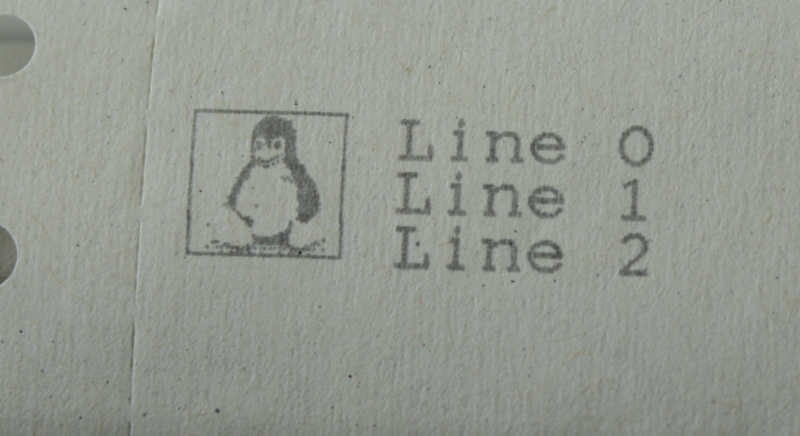
Sooooooooo, things happened, and I now have a dot matrix printer again. 😍😂
⤋ Read More
This is why I love tech from that era.
Write bytes to a parallel port and stuff happens. If it’s just ASCII bytes, then it will print ASCII text. Even the simplest programs can use a printer this way.
With a little bit of ESC/P, you can print images and other fancy stuff. That’s what I did this morning – never worked with ESC/P before, now I can print images. It’s not that hard.
Hayes-compatible modems are similar: Write some AT commands to the serial port and the modem does things. This isn’t even arcane knowledge, it’s explained in the printed manual.
Maybe I’m wearing rose-tinted glasses here, but I think with all this old stuff, you get useful results very quickly and the manuals are usually actually helpful. It’s so much easier to get started and to use this hardware to the full extent. Much less complexity than what we have today, not a ton of libraries and dependencies and SDKs and cloud services and what not.

↳
In-reply-to
»
After around 3 years, I managed to make my "smallest recognizable canine", even smaller. So here's the all new, smallest recognizable canine 2.0:
Media
⤋ Read More
@thecanine@twtxt.net Wow. I’m not an artist in any way, but I have tried to make icons for programs or fonts every now and then. Making something that is still recognizable at so few pixels is hard. Hats off!
Barossa mirco-winery, Ballycroft, powered by a second-hand EV
A micro-winery in the Barossa Valley has achieved a world first in their efforts to keep the vineyard eco-friendly. ⌘ Read more
Adelaide leads the charge to replace single-use fruit stickers
A Riverland citrus grower has started using laser printing on fruit eliminating the need for traditional stickers. ⌘ Read more
Video: C Programming on System 6 - VCFMW, CMaster ⌘ Read more
↳
In-reply-to
»
Speaking of manpages:
⤋ Read More
You can explicitly use colors in manpages. I saw this in the apt manpage of Ubuntu recently, which, for some reason, uses blue text in one place:
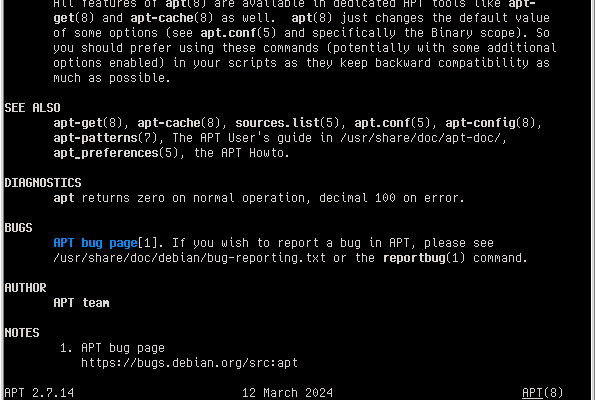
Makes little sense to me. I’m glad that most manpages don’t do this. I wouldn’t want unicorn vomit all over the place.
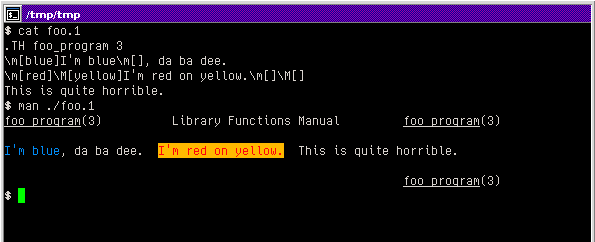
Using colors can be done using the low level commands \m and \M:
.TH foo_program 3
\m[blue]I'm blue\m[], da ba dee.
\m[red]\M[yellow]I'm red on yellow.\m[]\M[]
This is quite horrible.
↳
In-reply-to
»
Speaking of manpages:
⤋ Read More
@kat@yarn.girlonthemoon.xyz On the one hand, all these programs have a very long history and the technology behind manpages is actually very powerful – you can use it to write books:
https://www.troff.org/pubs.html
I have two books from that list, for example “The UNIX programming environment”:
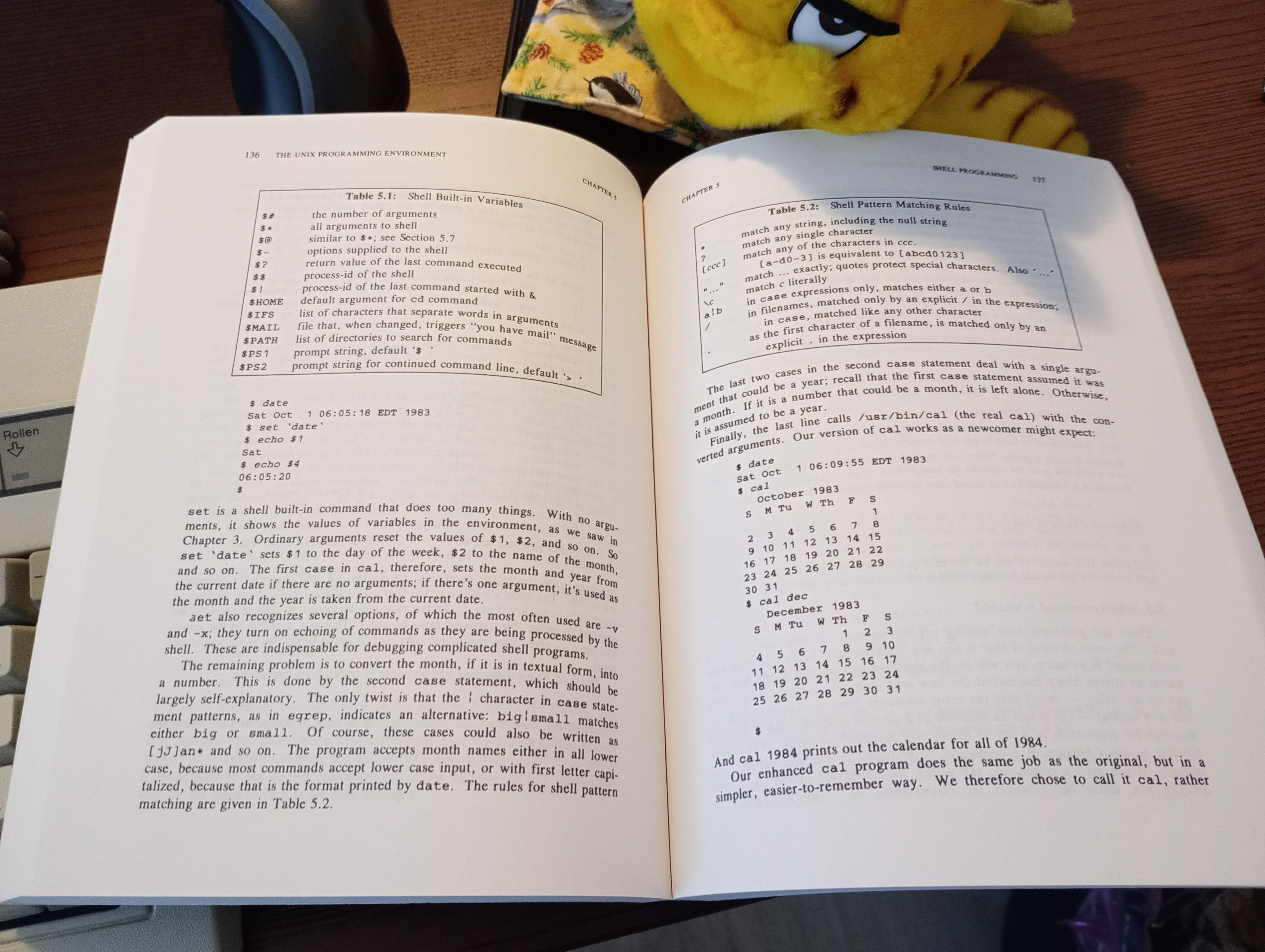
It’s a bit older, of course, but it looks and feels like a normal book, and it uses the same tech as manpages – which I think is really cool. 😎
It’s comparable to LaTeX (just harder/different to use) but much faster than LaTeX. You can also do stuff like render manpages as a PDF (man -Tpdf cp >cp.pdf) or as an HTML file (man -Thtml cp >cp.html). I think I once made slides for a talk this way.
On the other hand, traditional manpages (i.e., ones that are not written in mandoc) do not use semantic markup. They literally say, “this text is bold, that text over here is italics”, and so on.
So when you run man foo, it has no other choice but to show it in black, white, bold, underline – showing it in color would be wrong, because that’s not what the source code of that manpage says.
Colorizing them is a hack, to be honest. You’re not meant to do this. (The devs actually broke this by accident recently. They themselves aren’t really aware that people use colors.)
If mandoc and semantic markup was more commonly used, I think it would be easier to convince the devs to add proper customizable colors.
In 1996, they came up with the X11 “SECURITY” extension:
https://www.reddit.com/r/linux/comments/4w548u/what_is_up_with_the_x11_security_extension/
This is what could have (eventually) solved the security issues that we’re currently seeing with X11. Those issues are cited as one of the reasons for switching to Wayland.
That extension never took off. The person on reddit wonders why – I think it’s simple: Containers and sandboxes weren’t a thing in 1996. It hardly mattered if X11 was “insecure”. If you could run an X11 client, you probably already had access to the machine and could just do all kinds of other nasty things.
Today, sandboxing is a thing. Today, this matters.
I’ve heard so many times that “X11 is beyond fixable, it’s hopeless.” I don’t believe that. I believe that these problems are solveable with X11 and some devs have said “yeah, we could have kept working on it”. It’s that people don’t want to do it:
Why not extend the X server?
Because for the first time we have a realistic chance of not having to do that.
https://wayland.freedesktop.org/faq.html
I’m not in a position to judge the devs. Maybe the X.Org code really is so bad that you want to run away, screaming in horror. I don’t know.
But all this was a choice. I don’t buy the argument that we never would have gotten rid of things like core fonts.
All the toolkits and programs had to be ported to Wayland. A huge, still unfinished effort. If that was an acceptable thing to do, then it would have been acceptable to make an “X12” that keeps all the good things about X11, remains compatible where feasible, eliminates the problems, and requires some clients to be adjusted. (You could have still made “X11X12” like “XWayland” for actual legacy programs.)
↳
In-reply-to
»
“Wayland Will Never Be Ready For Every X.Org User”
⤋ Read More
I wasn’t really aware until recently that programs can’t choose their own window’s position on Wayland. This is very weird to me, because this was not an issue on X11 to begin with: X11 programs can request a certain position and size, but the X11 WM ultimately decides if that request is being honored or not. And users can configure that.
But apparently, this whole thing is a heated debate in the Wayland world. 🤔
New World Chaos 7: Program of Life-and-Death | https://nilfm.cc/mixes.html
↳
In-reply-to
»
Been mucking around with designing my own camper (floor plan). Media
⤋ Read More
@prologic@twtxt.net Cool! What program do you use to draw this up?
↳
In-reply-to
»
The original twt is unavailable. It may have been edited or deleted, or is from an unknown or muted feed.
⤋ Read More
@movq@www.uninformativ.de Huuuhhh?! Did I get this correctly? There are programs installed that miss (some of) their dependencies?! What the heck! O_o
gomdn: Yet another Static Site Generator
Yet another Static Site Generator (SSG), but this one is mine.
It’s a stupidly simple Go program ( wc says 229 lines), more like a
hack, really, but I don’t need something like Hugo. Most of the real
work is done by the goldmark package, of course. This is mostly just a
wrapper, deciding if something needs to be rebuilt.
I’ve been using a Perl script together with cmark (originally
Markdown.pl) since forever. And before that the old [txt2tags](htt … ⌘ Read more
PEP 800: Disjoint bases in the type system
To analyze Python programs precisely, type checkers need to know when two classes can and cannot have a common child class. However, the information necessary to determine this is not currently part of the type system. This PEP adds a new decorator, @typing.disjoint_base, that indicates that a class is a “disjoint base”. Two classes that have distinct, unrelated disjoint bases cannot have a common child class. ⌘ Read more
↳
In-reply-to
»
PSA:
⤋ Read More
setpriv on Linux supports Landlock.
Another example:
$ setpriv \
    --landlock-access fs \
    --landlock-rule path-beneath:execute,read-file:/bin/ls-static \
    --landlock-rule path-beneath:read-dir:/tmp \
    /bin/ls-static /tmp/tmp/xorg.atom
The first argument --landlock-access fs says that nothing is allowed.
--landlock-rule path-beneath:execute,read-file:/bin/ls-static says that reading and executing that file is allowed. It’s a statically linked ls program (not GNU ls).
--landlock-rule path-beneath:read-dir:/tmp says that reading the /tmp directory and everything below it is allowed.
The output of the ls-static program is this line:
─rw─r──r────x 3000 200 07-12 09:19 22'491 │ /tmp/tmp/xorg.atom
It was able to read the directory, see the file, do stat() on it and everything, the little x indicates that getting xattrs also worked.
3000 and 200 are user name and group name – they are shown as numeric, because the program does not have access to /etc/passwd and /etc/group.
Adding --landlock-rule path-beneath:read-file:/etc/passwd, for example, allows resolving users and yields this:
─rw─r──r────x cathy 200 07-12 09:19 22'491 │ /tmp/tmp/xorg.atom
The WM_CLASS Property is used on X11 to assign rules to certain windows, e.g. “this is a GIMP window, it should appear on workspace number 16.” It consists of two fields, name and class.
Wayland (or rather, the XDG shell protocol – core Wayland knows nothing about this) only has a single field called app_id.
When you run X11 programs under Wayland, you use XWayland, which is baked into most compositors. Then you have to deal with all three fields.
Some compositors map name to app_id, others map class to app_id, and even others directly expose the original name and class.
Apparently, there is no consensus.
↳
In-reply-to
»
The lack of suckless-like simple, hackable software these days is appalling.
⤋ Read More
@prologic@twtxt.net Yeah, this really could use a proper definition or a “manifest”. 😅 Many of these ideas are not very wide spread. And I haven’t come across similar projects in all these years.
Let’s take the farbfeld image format as an example again. I think this captures the “spirit” quite well, because this isn’t even about code.
This is the entire farbfeld spec:
farbfeld is a lossless image format which is easy to parse, pipe and compress. It has the following format:

╔════════╤═════════════════════════════════════════════════════════╗
║ Bytes  │ Description                                             ║
╠════════╪═════════════════════════════════════════════════════════╣
║ 8      │ "farbfeld" magic value                                  ║
╟────────┼─────────────────────────────────────────────────────────╢
║ 4      │ 32-Bit BE unsigned integer (width)                      ║
╟────────┼─────────────────────────────────────────────────────────╢
║ 4      │ 32-Bit BE unsigned integer (height)                     ║
╟────────┼─────────────────────────────────────────────────────────╢
║ [2222] │ 4x16-Bit BE unsigned integers [RGBA] / pixel, row-major ║
╚════════╧═════════════════════════════════════════════════════════╝

The RGB-data should be sRGB for best interoperability and not alpha-premultiplied.
(Now, I don’t know if your screen reader can work with this. Let me know if it doesn’t.)
I think these are some of the properties worth mentioning:
- The spec is extremely short. You can read this in under a minute and fully understand it. That alone is gold.
- There are no “knobs”: It’s just a single version, it’s not like there’s also an 8-bit color depth version and one for 16-bit and one for extra large images and one that supports layers and so on. This makes it much easier to implement a fully compliant program.
- Despite being so simple, it’s useful. I’ve used it in various programs, like my window manager, my status bars, some toy programs like “tuxeyes” (an Xeyes variant), or Advent of Code.
- The format does not include compression because it doesn’t need to. Just use something like bzip2 to get file sizes similar to PNG.
- It doesn’t cover every use case under the sun, but it does cover the most important ones (imho). They have discussed using something other than RGBA and decided it’s not worth the trouble.
- They refrained from adding extra baggage like metadata. It would have needlessly complicated things.
** Om nom nom LLMs, in which I respond to Simon Willison’s analogy **
I am hesitant to wade into the tumultuous waters that are the discourse around generative AI and LLMs, but this morning I came across a thing that so thoroughly melted my brain I feel uncontrollably compelled to respond.
This morning, at evidently 4:10 AM (no mention of timezone), Simon Willison shared the following blog post, quoted here in full:
Quitting programming as … ⌘ Read more
Just realized: One of the reasons why I don’t like “flat UIs” is that they look broken to me. Like the program has a bug, missing pixmaps or whatever.
Take this for example:
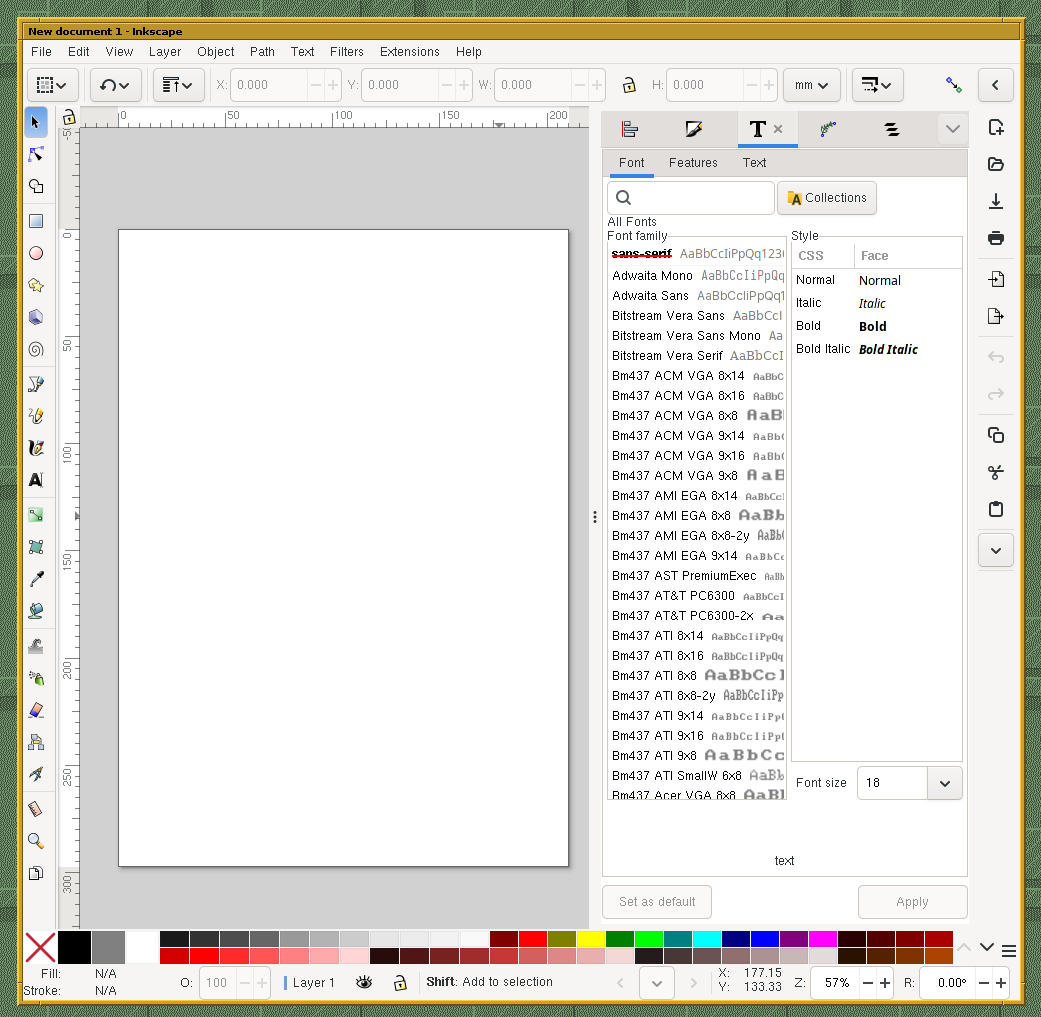
I’m talking about this area specifically:
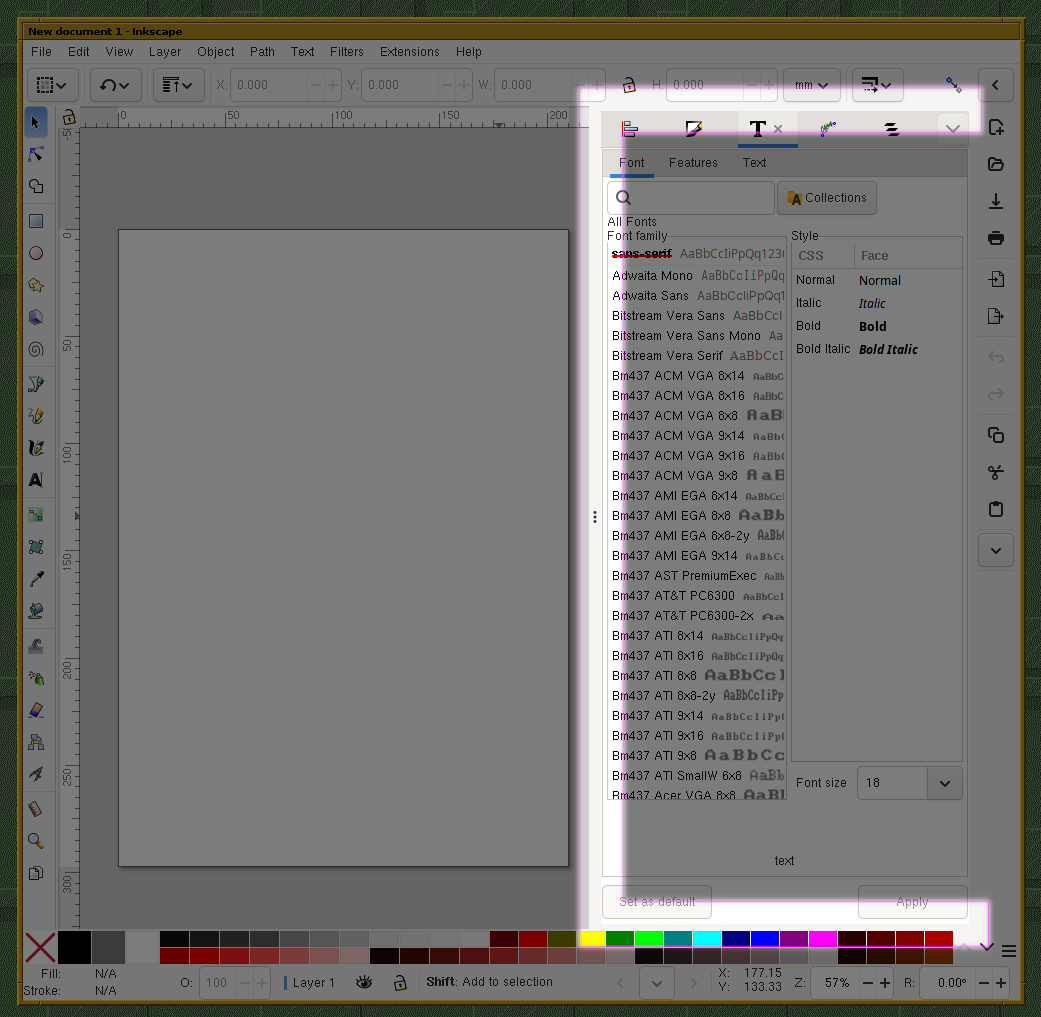
One UI element ends and the other one begins – no “transition” between them.
The style of old UIs like these two is deeply ingrained into my brain:
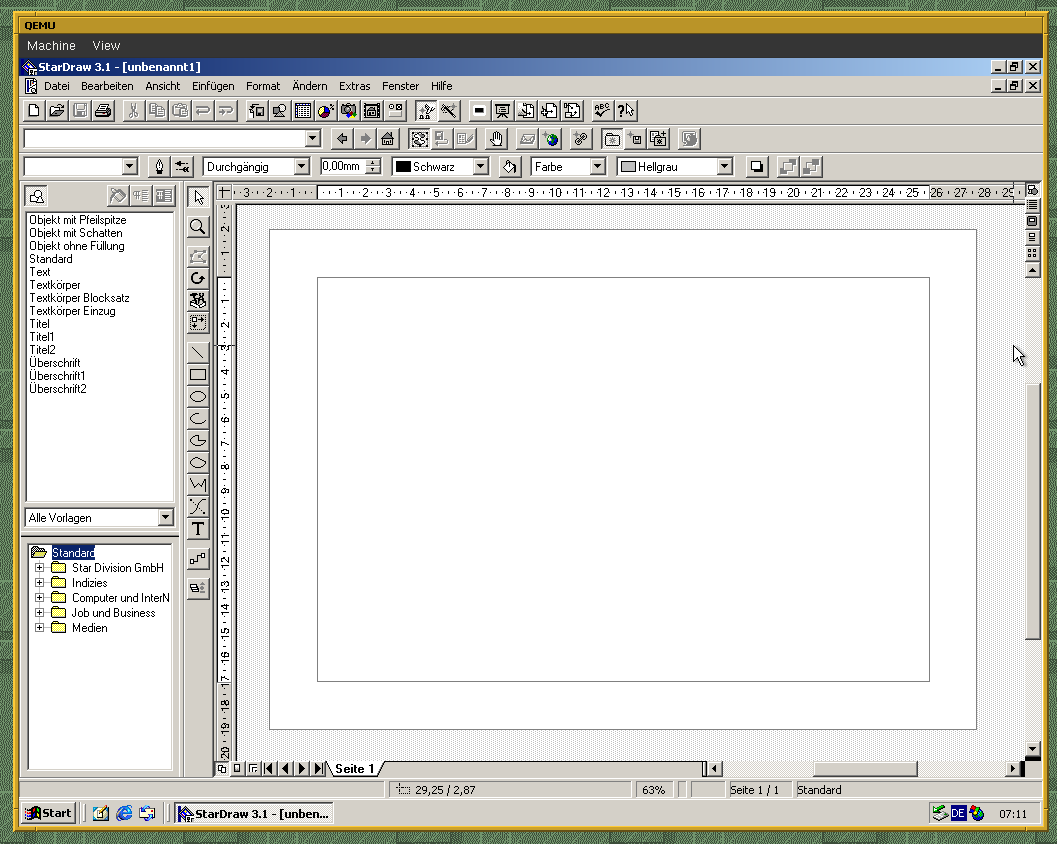
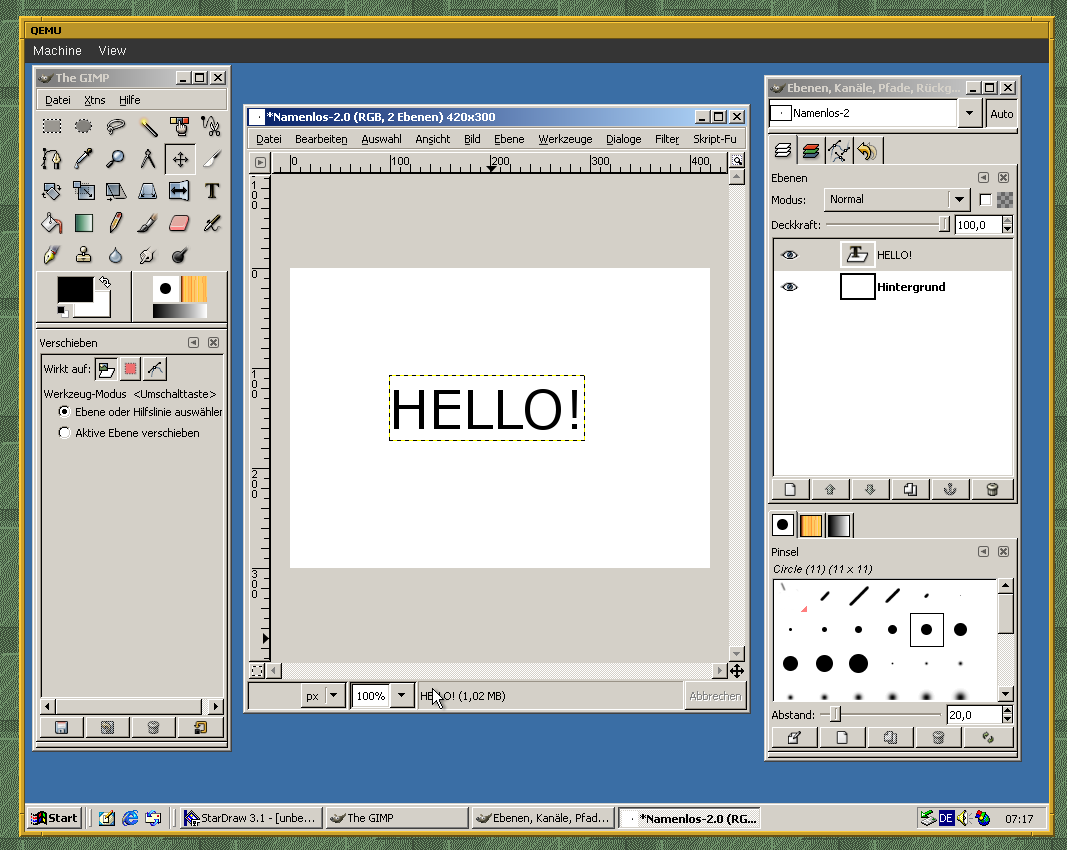
When all these little elements (borders, handles, even just simple lines, …) are no longer present, then the program looks buggy and broken to me. And I’m not sure if I’ll ever be able to un-learn that.
I did a “lecture”/“workshop” about this at work today. 16-bit DOS, real mode. 💾 Pretty cool and the audience (devs and sysadmins) seemed quite interested. 🥳
- People used the Intel docs to figure out the instruction encodings.
- Then they wrote a little DOS program that exits with a return code and they used uhex in DOSBox to do that. Yes, we wrote a COM file manually, no Assembler involved. (Many of them had never used DOS before.)
- DEBUG from FreeDOS was used to single-step through the program, showing what it does.
- This gets tedious rather quickly, so we switched to SVED from SvarDOS for writing the rest of the program in Assembly language. nasm worked great for us.
- At the end, we switched to BIOS calls instead of DOS syscalls to demonstrate that the same binary COM file works on another OS. Also a good opportunity to talk about bootloaders a little bit.
- (I think they even understood the basics of segmentation in the end.)
The 8086 / 16-bit real-mode DOS is a great platform to explain a lot of the fundamentals without having to deal with OS semantics or executable file formats.
Now that was a lot of fun. 🥳 It’s very rare that we do something like this, sadly. I love doing this kind of low-level stuff.
#TIR (Today I Realized): breadboard #electronics are actually a form of flow-based #livecoding . #programming