GStreamer 1.28-RC1 Brings A Rust-Based GIF Decoder, Other New Rust Components
On Monday the first release candidate of the GStreamer 1.28 multimedia framework was released. As is a recurring focus in recent releases, more GStreamer code is written in Rust for memory safety especially around decoding content… ⌘ Read more
Valve & AMD Developers Delivered The Most Code Contributions To Mesa In 2025
A developer from Valve working on the RADV Vulkan driver was once again the most prolific contributor to Mesa in 2025 followed by AMD’s Marek Olšák with continued improvements around RadeonSI and Gallium3D… ⌘ Read more
Intel Xe Driver Preps THP Support For “Significant” SVM Performance Gains
Intel engineer Francois Dugast today sent out the new patch series for enabling Transparent Hugepages (THP) support within the drm_pagemap code with a focus on the Intel Xe kernel driver usage. This enabling of THP support and in turn 2MB pages by the Xe driver is yielding “significant” performance improvements when using Shared Virtual Memory (SVM) such as for GPU compute workloads… ⌘ Read more
Linux Kernel AES Library Seeing Improvements For Better Performance & More
A set of 36 patches sent out overnight is making big improvements to the Linux kernel’s AES library. The patches allow for making use of the kernel’s existing architecture-optimized AES code for better performance, that code is also constant-time, lower memory use, and all-around a nice improvement over the status quo… ⌘ Read more
Spent most of the long weekend working on a few coding projects… specifically, I pushed some updates for TwtKpr to my test instance before spending some time working on the build process and demo page for my new twtxt-parsing library… which lead to me make some changes to my existing fluent-dom-esm library.
So, nothing actually got finished, but the incremental updates continue…
Spent most of the long weekend working on a few coding projects… specifically, I pushed some updates for TwtKpr to my test instance before spending some time working on the build process and demo page for my new twtxt-parsing library… which lead me to make some changes to my existing fluent-dom-esm library.
So, nothing actually got finished, but the incremental updates continue…
#Beyond40 have a #PublicDomainDay online event today!
“Discuss public domain and Creative Commons resources. Help plan #DocumentFreedomDay. Find out about public domain source code.”
From 2:00 pm to 3:30 pm (EST)
From 7:00 pm to 8:30 pm (GMT)
Linux’s Hung Task Detector Will Be Able To Be Reset For Easing System Administration
Worked on back in 2024 for the Linux kernel was a built-in counter to keep track of the number of hung tasks since boot. That feature for keeping track of the number of hung tasks since boot was merged in Linux 6.13 and exposed via /proc/sys/kernel/hung_task_detect_count. For helping ease use around it, new code working its way to the kernel will allow resetting that “hung_task_detect_count” counter… ⌘ Read more
RadeonSI Starts 2026 With NIR Compilation Refactoring For Better Performance, Lower GLSL Compile Times
Merged on New Year’s Day was a set of 36 patches authored by well known AMD Mesa developer Marek Olšák for refactoring the NIR compilation code for the RadeonSI Gallium3D driver… ⌘ Read more
European Space Agency Acknowledges Another Breach as Criminals Claim 200 GB Data Haul
The European Space Agency has acknowledged yet another security incident after a cybercriminal posted an offer on BreachForums the day after Christmas claiming to have stolen over 20GB of data including source code, confidential documents, API tokens and credentials.
The attacker claims they gained access … ⌘ Read more
Linux 6.19 Lands Fix For Dead WiFi With MediaTek MT792x Wireless
Merged to Linux Git on New Year’s Eve was a fix in the form of a code revert for broken MediaTek WiFi on the in-development Linux 6.19 kernel… ⌘ Read more
↳
In-reply-to
»
@lyse A "Hello World" binary is ~372KB in size. I currently have peephole optimization and deac code optimizations in play, and a few other performance related ones, but nothing too fancy. I have a test case that ensures
⤋ Read More
fib(35) doesn't regress too badly as I continue to evolve the language.
@lyse@lyse.isobeef.org It’s actually not nearly as half bad as I really thought it would be. Just having to eventually deal with the “lowering down” to machine code / ARM64 assembly in the end once you’ve verified the semantics in the VM.
↳
In-reply-to
»
Nice! 😊 Here are the startup latencies for the simplest Mu (µ) program.
⤋ Read More
println("Hello World"):
@lyse@lyse.isobeef.org A “Hello World” binary is ~372KB in size. I currently have peephole optimization and deac code optimizations in play, and a few other performance related ones, but nothing too fancy. I have a test case that ensures fib(35) doesn’t regress too badly as I continue to evolve the language.
Opinion / Question time…
Do you think Mu (µ)’s native compiler and therefore emitted machine code “runtime” (which obviously adds a bit of weight to the resulting binary, and runtime overheads) needs to support “runtime stack traces”, or would it be enough to only support that in the bytecode VM interpreter for debuggability / quick feedback loops and instead just rely on flat (no stacktraces) errors in natively built compiled executables?
So in effect:
Stack Traces:
- Bytecode VM Interpreter: ✅
- Native Code Executables: ❌
Nice! 😊 Here are the startup latencies for the simplest Mu (µ) program. println("Hello World"):
- Interpreter: ~5ms
- Native Code: ~1.5ms
Asahi Linux Has Experimental Code For DisplayPort, Apple M3/M4/M5 Bring-Up Still Ongoing
Prominent Asahi Linux developer Sven Peter spoke at this week’s 39th Chaos Communication Congress “39C3” in Hamburg, Germany. He provided an update around the still-in-the-works Apple M3 / M4 / M5 SoC and device support as well as other outstanding features like getting DisplayPort working on Apple Macs under Linux… ⌘ Read more
↳
In-reply-to
»
@lyse Do you have your client's code hosted anywhere?
⤋ Read More
@shinyoukai@neko.laidback.moe We finally abandoned our GitLab. I publicly mirrored my code in the Mills Data Center a few days ago: https://git.mills.io/lyse/tt2
↳
In-reply-to
»
@lyse You actually have a Markdown parser/renderer in there? Oh dear. I would have been (well, I am) way too lazy for that. 😅
⤋ Read More
@movq@www.uninformativ.de Well, just a very limited subset thereof:
- inline and multiline code blocks using single/double/triple backticks (but no code blocks with just indentation)
- markdown links using using
[text](url)
- markdown media links using

And that’s it. No bold, italics, lists, quotes, headlines, etc.
Just like mentions, plain URLs, markdown links and markdown media URLs are highlighted and available in the URLs View. They’re also colored differently, similarly to code segments.
I definitely should write some documentation and provide screenshots.
@lyse@lyse.isobeef.org Do you have your client’s code hosted anywhere?
Hurray, I finally fixed another rendering bug in tt that was bugging me for a long time. Previously, when there were empty lines in a markdown multiline code block, the background color of the code block had not been used for the empty lines. So, this then looked as if there were actually several code blocks instead of a single one.

mu (µ) now has builtin code formatting and linting tools, making µ far more useful and useable as a general purpose programming language. Mu now includes:
- An interpreter for quick “scriptinog”
- A native code compiler for building native executables (Darwin / macOS only for now)
- A builtin set of developer tools, currently: fmt (-fmt), check (-check) and test (-test).
I just fixed another bug in tt where the language hint in multiline markdown code blocks had not been stripped before rendering. It just looked like it was part of the actual code, which was ugly. I now throw it away. Actually, it’s already extracted into the data model for possible future syntax highlighting.
↳
In-reply-to
»
@shinyoukai Cool, I didn't know about
⤋ Read More
os.UserConfigDir() up until a few seconds ago! I always implemented that myself.
@shinyoukai@neko.laidback.moe Yeah, they don’t truly support XDG. In fact, I looked in the Go stdlib source code to notice all the differences and shortcomings.
↳
In-reply-to
»
Hmm, mine also resolves a leading tilde in these variables. And if
⤋ Read More
$HOME is not specified it tries to resolve the user's home directory by user.Current().HomeDir. Maybe that's overkill, I have to check the XDG spec.
Ok, the standard library implementation is wonky at best, at least in regards to XDG, because it really doesn’t implement it properly. https://github.com/golang/go/issues/62382 I stick to my own code then. It doesn’t properly support anything else than Linux or Unixes that use XDG, but personally, I don’t care about them anyway. And the cross-platform situation is a giant mess. Unsurprisingly.
↳
In-reply-to
»
@lyse Well, I used SnipMate years ago (until 2012). IIRC, it’s more than just “insert a bit of text here”, it can also jump to the correct next location(s) and stuff like that. Don’t remember why I stopped using it.
⤋ Read More
@movq@www.uninformativ.de Thanks! I’ll have a look at SnipMate. Currently, I’m (mis)using the abbreviation mechanism to expand a code snippet inplace, e.g.
autocmd FileType go inoreab <buffer> testfunc func Test(t *testing.T) {<CR>}<ESC>k0wwi
or this monstrosity:
autocmd FileType go inoreab <buffer> tabletest for _, tt := range []struct {<CR> name string<CR><CR><BS>}{<CR> {<CR> name: "",<CR><BS>},<CR><BS>} {<CR> t.Run(tt.name, func(t *testing.T) {<CR><CR>})<CR><BS>}<ESC>9ki<TAB>
But this of course has the disadvantage that I still have to remove the last space or tab to trigger the expansion by hand again. It’s a bit annoying, but better than typing it out by hand.
NTFSPLUS Linux Driver Renamed To Just “NTFS” With Latest Code Restructuring
One of the unexpected Linux kernel surprises of 2025 was NTFSPLUS being announced as a new driver for Microsoft’s NTFS file-system with better performance and more features compared to the classic read-only NTFS driver or the “NTFS3” kernel driver that Paragon Software submitted upstream. That NTFSPLUS driver has continued expanding its feature set and robustness and sent out today was the third iteration of the patches. Now this driver is s … ⌘ Read more
↳
In-reply-to
»
@lyse Yeah I remember you said some days back that your interest in compilers was rekindled by my work on mu (µ) 😅
⤋ Read More
@lyse@lyse.isobeef.org I can tell you this right now, writing assembly / machine code is fucking hard work™ 😓 I’m sure @movq@www.uninformativ.de can affirm 🤣 And when it all goes to shit™ (which it does often), man is debugging fucking hard as hell! Without debug symbols I can’t use the regular tools like lldb or gdb 😂
↳
In-reply-to
»
@lyse Yeah I remember you said some days back that your interest in compilers was rekindled by my work on mu (µ) 😅
⤋ Read More
@prologic@twtxt.net Yeah, the parser part is what I typically enjoy. Haven’t really looked into code generation itself.
I’m currently looking at your µ commits from the last few days. Holy cow! :-)
Whoo! I fixed one of the hardest bugs in mu (µ) I think I’ve had to figure out. Took me several days in fact to figure it out. The basic problem was, println(1, 2) was bring printed as 1 2 in the bytecode VM and 1 nil when natively compiled to machine code on macOS. In the end it turned out the machine code being generated / emitted meant that the list pointers for the rest... of the variadic arguments was being slot into a register that was being clobbered by the mu_retain and mu_release calls and effectively getting freed up on first use by the RC (reference counting) garbage collector 🤦♂️
↳
In-reply-to
»
Hmmm I need to figure out a way to reduce the no. of lines of code / complexity of the ARM64 native code emitter for mu (µ). It's insane really, it's a whopping ~6k SLOC, the next biggest source file is the compiler at only ~800 SLOC 🤔
⤋ Read More
@shinyoukai@neko.laidback.moe Nah it’s more like there’s a lot of repeated code, because when you go from source language to intermediate representation to machine code, well you just end up writing a lot of the same patterns over and over again. I need to dedupe this I think.
↳
In-reply-to
»
Hmmm I need to figure out a way to reduce the no. of lines of code / complexity of the ARM64 native code emitter for mu (µ). It's insane really, it's a whopping ~6k SLOC, the next biggest source file is the compiler at only ~800 SLOC 🤔
⤋ Read More
@prologic@twtxt.net code generation on demand or something?
44% Of GNOME Core Apps Are Written In C, 13% In JavaScript & 10% In Rust
GNOME developer Sophie Herold has shared some interesting end-of-year code stats for the GNOME project. The “GNOME” codebase is up to 6,692,516 lines of code at the end of 2025 with 1,611,526 lines of that being from GNOME apps. Where the data gets interesting is on the programming language breakdown in different areas… ⌘ Read more
↳
In-reply-to
»
Hmmm I need to figure out a way to reduce the no. of lines of code / complexity of the ARM64 native code emitter for mu (µ). It's insane really, it's a whopping ~6k SLOC, the next biggest source file is the compiler at only ~800 SLOC 🤔
⤋ Read More
The compiler technique I’m using here is to not “emit” most of the runtime if it’s actually never used in your program, and also dropping dead code in the SSA pass.
Hmmm I need to figure out a way to reduce the no. of lines of code / complexity of the ARM64 native code emitter for mu (µ). It’s insane really, it’s a whopping ~6k SLOC, the next biggest source file is the compiler at only ~800 SLOC 🤔
↳
In-reply-to
»
My little toy operating system from last year runs in 16-bit Real Mode (like DOS). Since I’ve recently figured out how to switch to 64-bit Long Mode right after BIOS boot, I now have a little program that performs this switch on my toy OS. It will load and run any x86-64 program, assuming it’s freestanding, a flat binary, and small enough (< 128 KiB code, only uses the first 2 MiB of memory).
⤋ Read More
@movq@www.uninformativ.de I think I can get binaries even smaller with a bit more work and effort 🤔 But yeah still working on the native code generation (at least for macOS targets)
↳
In-reply-to
»
My little toy operating system from last year runs in 16-bit Real Mode (like DOS). Since I’ve recently figured out how to switch to 64-bit Long Mode right after BIOS boot, I now have a little program that performs this switch on my toy OS. It will load and run any x86-64 program, assuming it’s freestanding, a flat binary, and small enough (< 128 KiB code, only uses the first 2 MiB of memory).
⤋ Read More
@movq@www.uninformativ.de Oh that’s fine, Mu can compile to native code and so far binaries. at least on macOS are in the order of Kb in size 😂
FFmpeg Developer Files DMCA Against Rockchip After Two-Year Wait for License Fix
GitHub has disabled Rockchip’s Media Process Platform repository after an FFmpeg developer filed a DMCA takedown notice, nearly two years after the open-source project first publicly accused the Chinese chipmaker of license violations. The notice, filed December 18, claims Rockchip copied thousands of lines of code fr … ⌘ Read more
My little toy operating system from last year runs in 16-bit Real Mode (like DOS). Since I’ve recently figured out how to switch to 64-bit Long Mode right after BIOS boot, I now have a little program that performs this switch on my toy OS. It will load and run any x86-64 program, assuming it’s freestanding, a flat binary, and small enough (< 128 KiB code, only uses the first 2 MiB of memory).
Here I’m running a little C program (compiled using normal GCC, no Watcom trickery):
https://movq.de/v/b27ced6dcb/los86%2D64.mp4
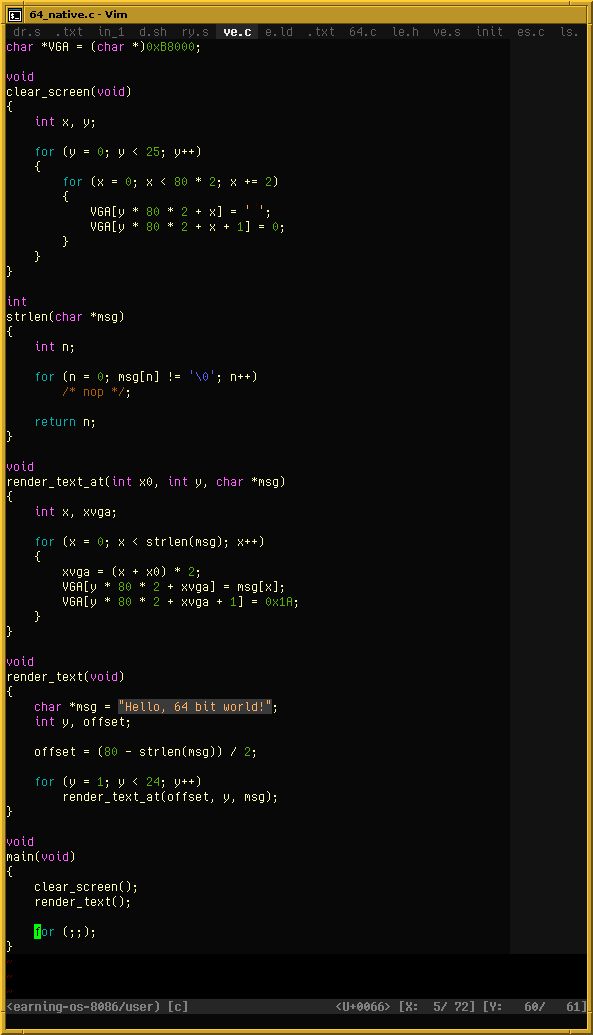
Next steps could include:
- Use Rust instead of C for that 64-bit program?
- Provide interrupt service routines. (At the moment, it just keeps interrupts disabled.)
Cursor CEO Warns Vibe Coding Builds ‘Shaky Foundations’ That Eventually Crumble
Michael Truell, the 25-year-old CEO and cofounder of Cursor, is drawing a sharp distinction between careful AI-assisted development and the more hands-off approach commonly known as “vibe coding.” Speaking at a conference, Truell described vibe coding as a method where users “close your eyes and you don’t look at … ⌘ Read more
Apple’s App Course Runs $20,000 a Student. Is It Really Worth It?
Apple’s Developer Academy in Detroit has spent roughly $30 million over four years training hundreds of people to build iPhone apps, but not everyone lands coding jobs right away, according to a WIRED story published this week.
The program launched in 2021 as part of Apple’s $200 million response to the Black Lives Matter protests and costs an esti … ⌘ Read more
What Might Adding Emojis and Pictures To Text Programming Languages Look Like?
theodp writes: We all mix pictures, emojis, and text freely in our communications. So why not in our code? That’s the premise of “Fun With Python and Emoji: What Might Adding Pictures to Text Programming Languages Look Like?” (two-image Bluesky explainer; full slides), which takes a look at what mixing emoji with … ⌘ Read more
Linux’s sched_ext Has Plans For GPU Awareness, Energy-Aware Abstractions
Sched_ext as the extensible scheduler code for the Linux kernel that allows loading schedulers from user-space via eBPF code has shown a lot of interesting possibilities. Andrea Righi of NVIDIA who has been heavily involved in sched_ext development shared some of the future plans being looked at as we move into 2026… ⌘ Read more
LLVM Considering An AI Tool Policy, AI Bot For Fixing Build System Breakage Proposed
Last week a request for comments (RFC) was issued around establishing an LLVM AI Tool Use Policy. The proposed policy would allow AI-assisted contributions to be made to this open-source compiler codebase but that there would need to be a “human in the loop” and the contributor versed enough to be able to answer questions during code review. Separately, yesterday a proposal was sent out for creating an AI-assisted fixer bot to hel … ⌘ Read more
Microsoft To Replace All C/C++ Code With Rust By 2030
Microsoft plans to eliminate all C and C++ code across its major codebases by 2030, replacing it with Rust using AI-assisted, large-scale refactoring. “My goal is to eliminate every line of C and C++ from Microsoft by 2030,” Microsoft Distinguished Engineer Galen Hunt writes in a post on LinkedIn. “Our strategy is to combine AI and Algorithms to rewrite Microsoft’s … ⌘ Read more
Inaugural ‘Hour of AI’ Event Includes Minecraft, Microsoft, Google and 13.1 Million K-12 Schoolkids
Long-time Slashdot reader theodp writes: Last September, tech-backed nonprofit Code.org pledged to engage 25 million K-12 schoolchildren in an “Hour of AI” this school year. Preliminary numbers released this week by the Code.org Advocacy Coalition showed that [halfway through the f … ⌘ Read more
↳
In-reply-to
»
The original twt is unavailable. It may have been edited or deleted, or is from an unknown or muted feed.
⤋ Read More
@prologic@twtxt.net You write so much code … it’s incredible. 😅
WMI Marshalling Support For Linux Aims To Match Windows’ ACPI/WMI Handling
Open-source developer Armin Wolf has been working most recently on marshalling support for the Windows Management Instrumentation (WMI) platform code within the Linux kernel. This WMI marshalling support is to better match the behavior of Microsoft Windows’ WMI ACPI driver and ultimately to allow for better compatibility with some ACPI firmware and enhancing some WMI drivers… ⌘ Read more
Does AI Really Make Coders Faster?
One developer tells MIT Technology Review that AI tools weaken the coding instincts he used to have. And beyond that, “It’s just not fun sitting there with my work being done for me.”
But is AI making coders faster? “After speaking to more than 30 developers, technology executives, analysts, and researchers, MIT Technology Review found that the picture is not as straightforward as it might seem…”
… ⌘ Read more
Gemini AI Yielding Sloppy Code For Ubuntu Development With New Helper Script
A few weeks ago it was mentioned by a Canonical engineer how trying to use AI to modernize the Ubuntu Error Tracker yielded some code that was “plain wrong” and other issues raised by that Microsoft GitHub Copilot code. The same Ubuntu developer shifted to trying Gemini AI to generate a helper script to assist in Ubuntu’s monthly ISO snapshot releases. Google’s Gemini AI also generated some sloppy code for a Python script to assist in tho … ⌘ Read more
↳
In-reply-to
»
The original twt is unavailable. It may have been edited or deleted, or is from an unknown or muted feed.
⤋ Read More
@movq@www.uninformativ.de @kiwu@twtxt.net it just so happens to be a happy coincidence that I’m extending mu’s capabilities to now include a native toolchain-free compiler (doesn’t rely on any external gcc/clang or linkers, etc) that lowers the mu source code into an intermediate representation / IR (what @movq@www.uninformativ.de refers to as “thick layers of abstractions”…) and finally to SSA + ARM64 + Mach-O encoder to produce native binary executables (at least for me on my Mac, Linux may some later?) 🤣